

Trust Through Appropriate Transparency, Not Absolute Visibility
Traditional blockchain treats all state equally: every transaction, balance, and interaction lives on a public ledger, visible to every participant. This design emerged from a specific philosophy—radical transparency as the foundation of trustlessness—yet creates a practical contradiction. If complete visibility is required for trust, then no financial institution, enterprise, or privacy-conscious user can participate meaningfully. @MidnightNetwork challenges this assumption by asking: what if we could prove integrity without requiring universal visibility?
What if public and private states could coexist as complementary infrastructure rather than competing concerns?
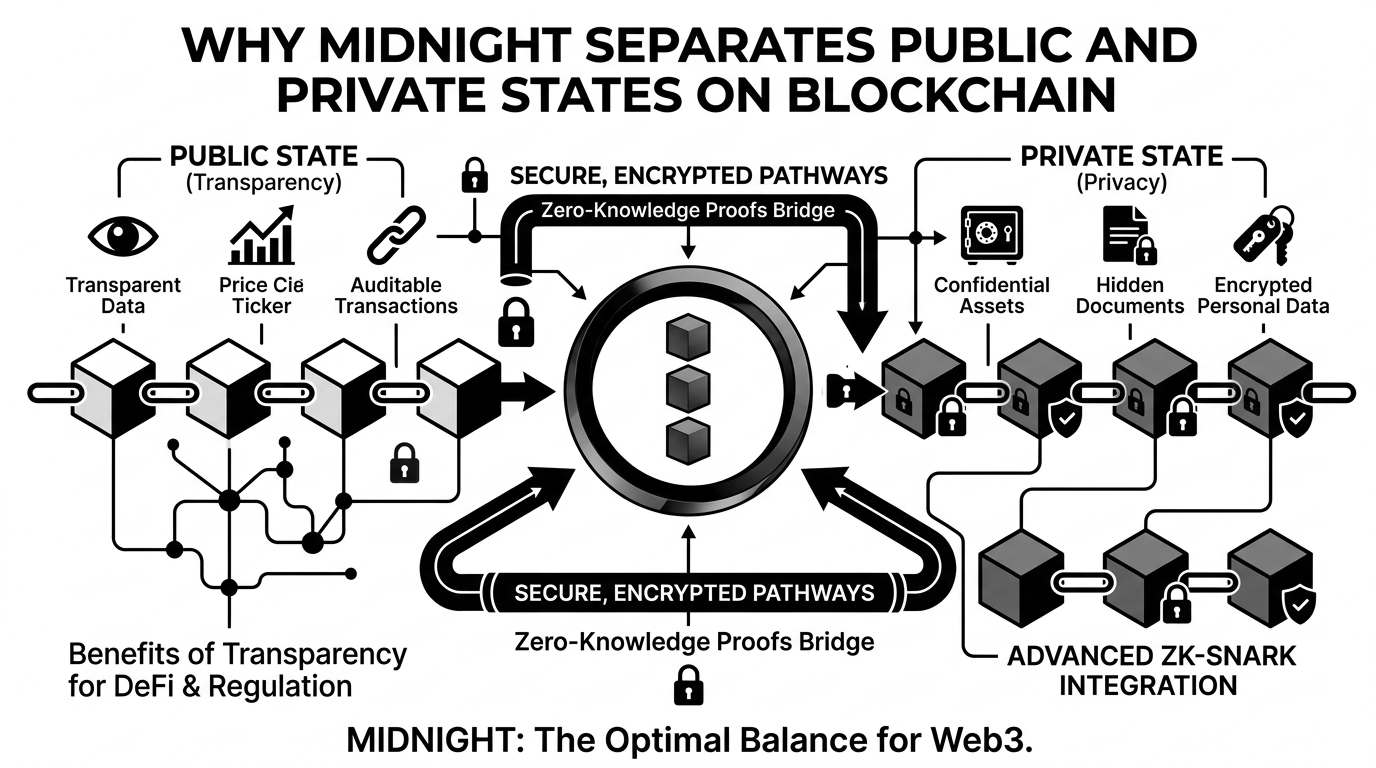
The insight is consequential. Not all information requires universal visibility to be trustworthy. A transaction's cryptographic proof of validity can be publicly verifiable without transaction details being legible. Collateral backing a loan can be mathematically proven without revealing the borrower's full financial position. By separating public attestation from private content, Midnight enables systems that are simultaneously cryptographically sound and operationally confidential.
Different Participants, Different Transparency Needs
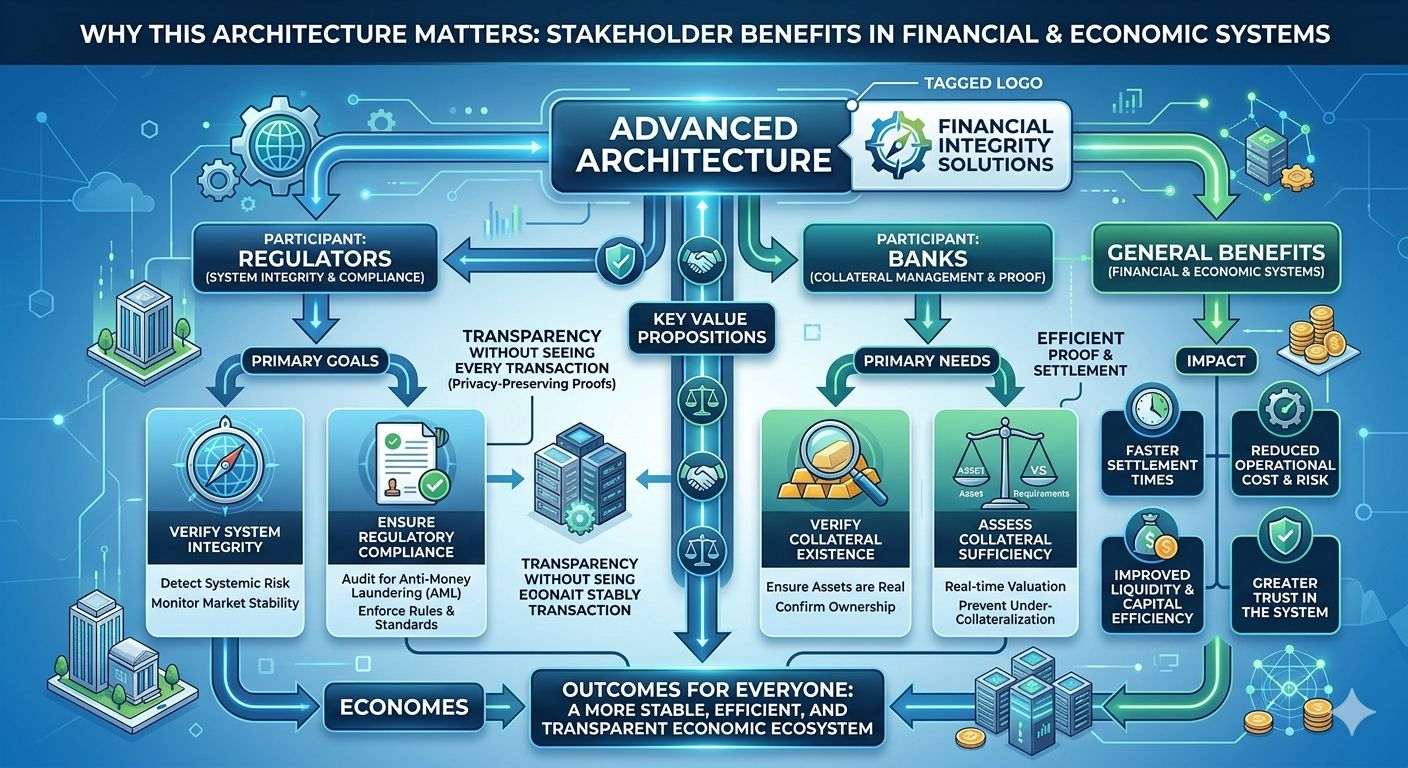
Different stakeholders genuinely require different information. Regulators need proof that participants follow consensus rules and comply with requirements—not visibility into every transaction.
Banks need assurance that collateral exists and is sufficient—not insight into whether that collateral supports one loan or twenty. Users need confidence that transactions settle as intended—not visibility into others' financial details. Supply chain participants need visibility into product routes—not supplier capacity or customer relationships.
Midnight's architecture recognizes this reality. Public state handles what genuinely requires universal verification: proof of consensus adherence, prevention of double-spending, maintenance of cryptographic invariants. Private state handles everything else: transaction details, asset ownership, business relationships, financial positions. This separation allows each category to optimize for its actual use case rather than forcing everything into a single model.
Enabling Both Privacy and Composability
This architecture enables a new kind of composability. Applications can verify private state through zero-knowledge proofs without accessing it directly. A lending protocol can confirm sufficient collateral without seeing composition. Multiple applications can share underlying asset representations where each knows only what they're cryptographically entitled to know.
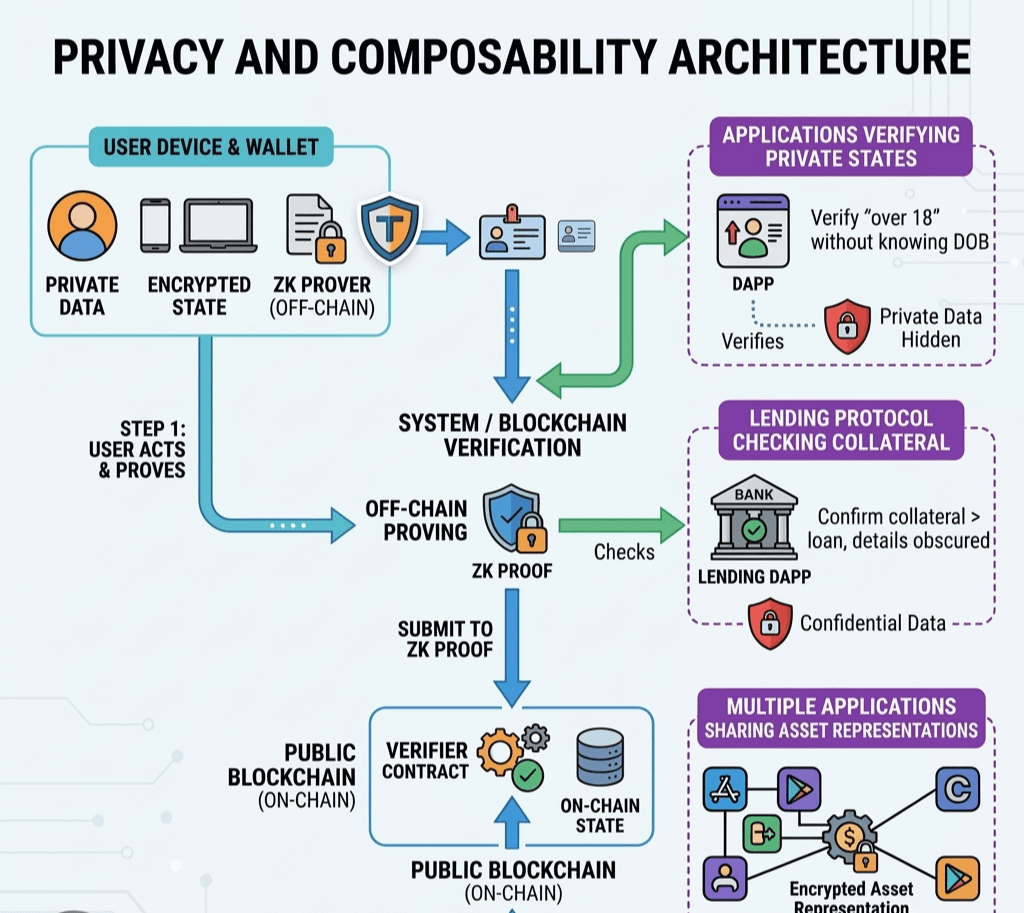
Institutions benefit particularly: they can operate within private domains while proving compliance through explicit proofs, gaining economic efficiency and settlement resilience. Users gain confidentiality without sacrificing integrity assurance. The result is infrastructure that works for all participants simultaneously—not by compromising with everyone, but by being precise about what each actually needs to trust.
