Sometimes the most interesting crypto ideas appear when you are not even looking for them. You read a few posts, jump between threads, and suddenly you discover a project trying to fix a problem that has quietly existed since the early days of blockchain. That’s the feeling many people get when they first come across Midnight Network.
For years the crypto industry celebrated transparency. Public blockchains made it possible for anyone to verify transactions without trusting a central authority. In theory that was revolutionary. The system could prove its own integrity.
But over time something uncomfortable became clear.
Total transparency also means total exposure.
Every transaction, wallet balance, and activity history can sit permanently on-chain. If someone connects your wallet to your identity, your entire financial behavior becomes visible. Not just one transaction — everything you have ever done on that network.
That creates a strange contradiction. Blockchain promises financial independence, yet it can also reveal more personal information than traditional systems.
This is the problem Midnight Network is trying to approach from a different angle.
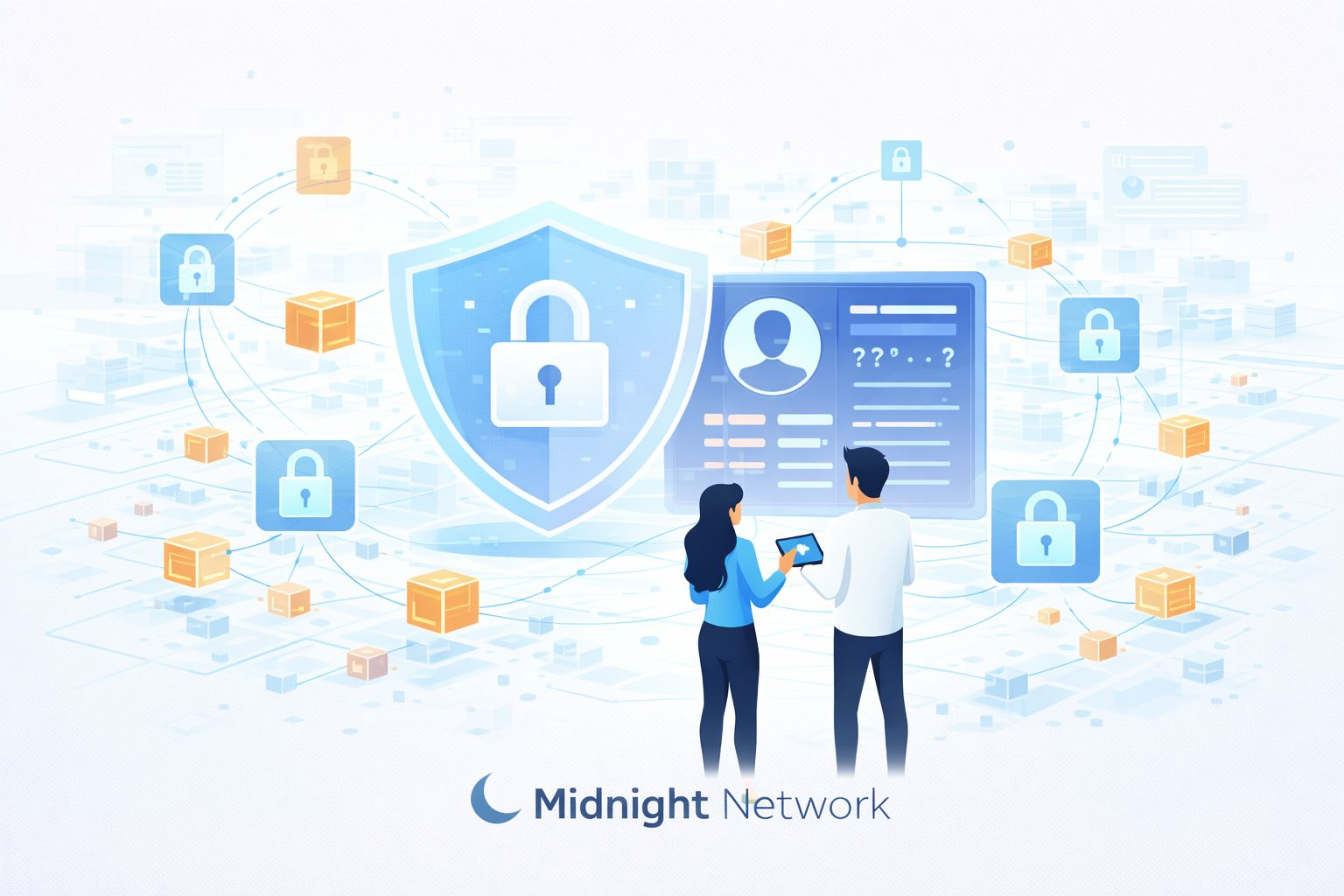
Instead of forcing every piece of data to be public, Midnight introduces privacy through zero-knowledge proofs (ZK technology). The idea sounds complex, but the concept is actually simple. A user can prove something is true without revealing the full details behind it.
For example, someone could prove they have enough funds for a transaction without showing their full wallet balance. A person could confirm eligibility for a service without exposing private identity information. The network verifies the logic while the sensitive data remains hidden.
Think of it like proving a locked box contains the right document without opening the box in front of everyone.
What makes Midnight interesting is that it treats privacy as infrastructure rather than an optional feature. Many blockchains added privacy tools later as extensions. Midnight is trying to design the entire system around programmable privacy, where developers can build applications that protect sensitive information by default.
Another important idea in the project is selective disclosure. Instead of complete anonymity, Midnight allows certain information to be revealed when necessary for verification, auditing, or compliance. This balance might be more realistic for real-world use cases where privacy and accountability both matter.
In simple terms, Midnight is trying to solve a tension that has existed in blockchain design for a long time. Networks need transparency to remain trustworthy, but users also need privacy to feel secure.
Finding a middle path between those two forces is not easy.
Of course, technology alone does not guarantee success. Many blockchain systems have strong engineering but struggle with adoption. For Midnight to truly matter, developers must build applications on top of it, and those applications need to attract real users.
Infrastructure projects often grow slowly. They rarely explode with attention overnight. Instead they develop quietly while builders experiment with new possibilities.
If decentralized finance, digital identity, or enterprise blockchain systems eventually demand stronger privacy protection, networks like Midnight could become extremely valuable. Businesses and individuals may not want all their sensitive information permanently visible on public ledgers.
But like many things in crypto, timing will play a huge role.
Right now Midnight Network represents an attempt to make blockchain systems more responsible with data, not just more transparent. It is less about hiding everything and more about controlling what should actually be visible.
Maybe privacy becomes one of the most important layers of Web3 in the coming years.
Or maybe the industry keeps chasing the next big narrative before fully solving this one.
Either way, Midnight is exploring a problem that has been sitting quietly in the background of blockchain for a long time.
And sometimes, the quiet problems end up being the most important ones to solve.