
O Outset Media Index (OMI) entrou em sua fase de lançamento suave em 12 de março, introduzindo uma plataforma onde centenas de canais de mídia podem ser revisados por meio de um único conjunto de dados. O índice atualmente abrange mais de 340 canais focados no espaço cripto, incluindo publicações especializadas, bem como mídia financeira, tecnológica e de notícias gerais que possuem seções regulares sobre cripto.
O índice foi criado para anunciantes, agências de PR e comunicação, editores e outros profissionais que precisam de uma maneira de analisar os canais antes de alocar orçamentos, planejar campanhas ou moldar estratégias de crescimento.
Ao mesmo tempo, as equipes editoriais também estão tentando entender como o crescimento digital se parece agora. A Pesquisa de Insights da Indústria do Local Media Consortium descobriu que 72% dos editores relataram que sua receita digital aumentou ou permaneceu estável em 2025, e 85% esperam resultados semelhantes em 2026.
À medida que a publicidade se espalha por mais formatos e plataformas, escolher os veículos certos se tornou uma questão maior. Com o Outset Media Index, frequentemente referido simplesmente como OMI, os usuários ganham um lugar para olhar para os diferentes sinais de desempenho e tomar decisões informadas sobre a mídia. A plataforma se baseia em dados de fontes como Similarweb e Moz, juntamente com seus próprios indicadores práticos e escores numéricos.
No total, o OMI baseia-se em 37 métricas agrupadas em áreas como tráfego e alcance, SEO e visibilidade de IA, engajamento do leitor e sinais operacionais relacionados ao trabalho com equipes editoriais.
O mesmo conjunto de dados também alimenta o Outset Data Pulse (ODP), onde os números são estudados e explicados em pesquisa escrita. O OMI permite que os usuários analisem os veículos em si, enquanto o ODP se concentra no que esses números realmente significam.
Analisar todos os indicadores pode levar tempo, então a plataforma também os reúne em dois escores resumidos para momentos em que decisões precisam ser tomadas sem atraso.
Um deles, o General Score, reflete quão forte uma publicação se sai no geral com base em sinais como alcance de audiência, visibilidade e consistência ao longo do tempo. O outro é chamado de Convenience Score, e analisa como é realmente trabalhar com esse meio. Ele leva em consideração quão rigorosas as equipes editoriais tendem a ser, quão rapidamente respondem e como a colaboração com elas geralmente se desenrola.
A tela principal apresenta os veículos em uma tabela. Cada linha é uma publicação, enquanto as colunas mostram os indicadores associados a ela. A partir daí, os usuários podem classificar e filtrar a lista dependendo do tipo de análise que precisam. O OMI também permite que os usuários selecionem quais indicadores aparecem na tabela, para que os veículos possam ser revisados usando apenas os dados relevantes para uma tarefa específica.
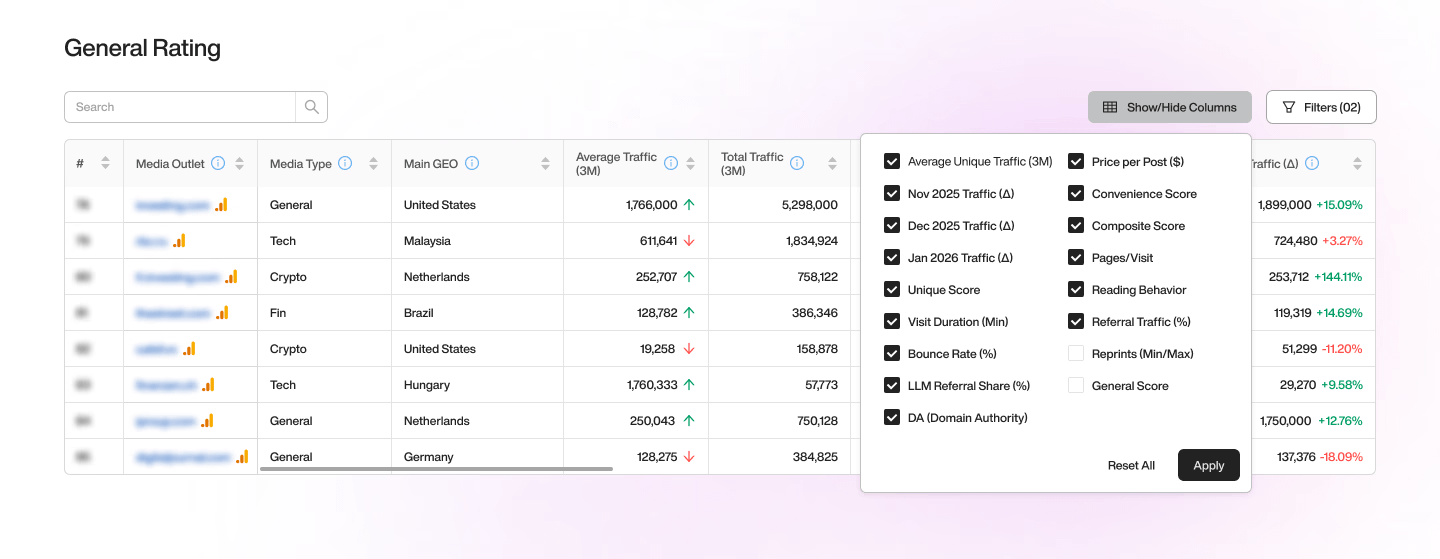
Imagem retirada de omindex.io
Clicar em uma publicação abre seu perfil, mostrando indicadores adicionais, como participação de referência LLM, quão antigo é o domínio, quanto tempo os visitantes permanecem no site, taxa de rejeição, atributos de link e outros detalhes.
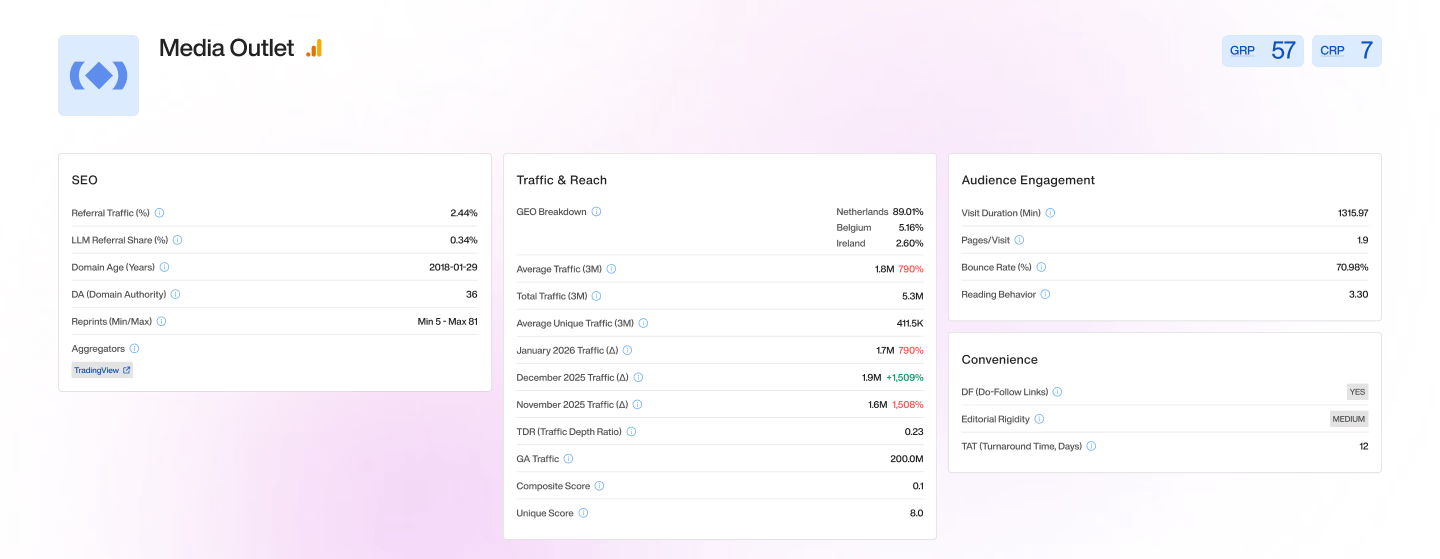
Imagem retirada de omindex.io
Sofia Belotskaia, gerente de produto da Outset Media Index, explica o pensamento que moldou o design do OMI:
"O objetivo não era sobrecarregar as pessoas com painéis. Queríamos um espaço onde você pode olhar para a mídia da maneira como os analistas realmente fazem – olhar para a paisagem da mídia, ver como as coisas se conectam e depois focar em um veículo quando algo chama sua atenção."
Antes que os indicadores sejam usados no índice, o conjunto de dados passa por um processo de normalização. Essa etapa ajusta os valores brutos para que números excepcionalmente grandes não distorçam as comparações entre os veículos. Ao padronizar as entradas dessa maneira, o sistema ajuda a garantir que as métricas reflitam o desempenho relativo em vez de números inflacionados causados por diferenças de escala.
A Pesquisa de Insights da Indústria destaca a mudança de prioridades nas redações
A Pesquisa de Insights da Indústria do Local Media Consortium também oferece uma visão do que está acontecendo dentro das organizações de notícias. Muitos editores dizem que as equipes de redação agora precisam pensar não apenas sobre reportagens, mas também sobre como suas histórias alcançam os leitores online, quais plataformas trazem leitores e como parcerias com anunciantes ou outros veículos se encaixam nesse quadro.
Essas questões são parte da razão pela qual projetos como o Outset Media Index estão surgindo. Quando o tráfego pode chegar por meio de motores de busca, feeds sociais, agregadores ou aplicativos de mensagens, torna-se mais difícil entender como uma publicação está se saindo com seu público.
Esse tipo de visão também ajuda a explicar o papel do OMI no trabalho cotidiano. Em vez de depender de um único número, como visitas totais, analistas e planejadores de campanhas podem olhar para vários indicadores ao mesmo tempo. Em um ambiente midiático onde as histórias chegam aos leitores de muitas maneiras diferentes, ter essa visão mais ampla pode simplificar muito as decisões sobre parcerias, campanhas e alcance na mídia.