
The evolution of Web3 is entering a new phase where artificial intelligence and decentralized systems are beginning to merge. One project that stands out in this space is @Fabric Foundation , which is building an ecosystem designed to support autonomous AI agents operating within a decentralized environment.
Traditional AI systems are often controlled by centralized entities, which can limit transparency and control. Fabric Foundation introduces a decentralized approach where intelligent agents can operate independently, interact with blockchain-based applications, and perform complex tasks without relying on a single authority. This creates a more open, secure, and scalable infrastructure for automation.

At the heart of this ecosystem lies the $ROBO token. $ROBO serves as the backbone of the network by enabling transactions, rewarding contributors, and facilitating coordination between AI agents and users. As more developers begin to explore decentralized AI solutions, the demand for a functional utility token like $ROBO could increase significantly.
Fabric Foundation’s vision goes beyond simple automation. It aims to create an environment where AI-driven processes can be seamlessly integrated into decentralized applications, opening opportunities in areas such as data processing, decentralized services, and intelligent workflows. This has the potential to reshape how digital ecosystems operate in the future.
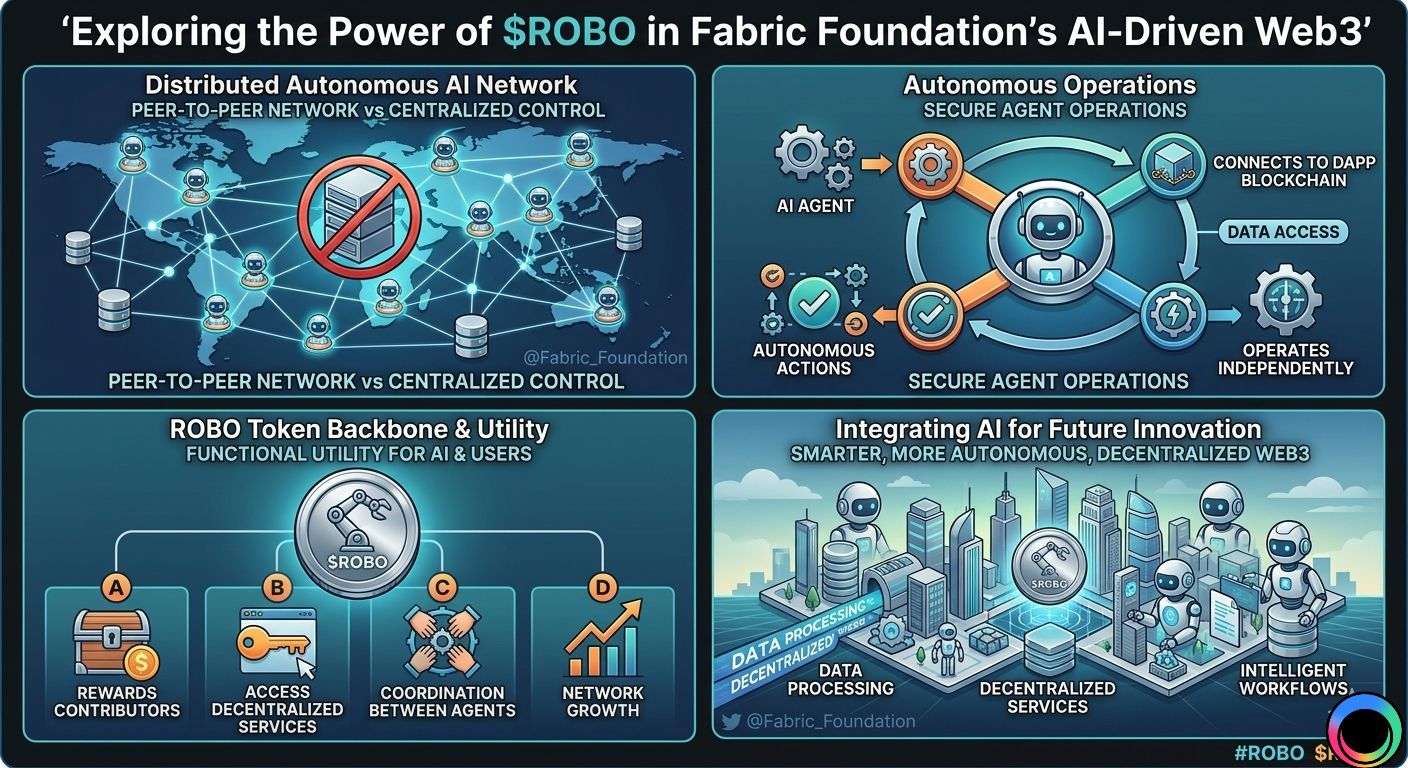
As the integration of AI and blockchain continues to grow, projects like @Fabric Foundation are positioning themselves at the forefront of innovation. With $ROBO powering its ecosystem, the platform represents a promising step toward a smarter, more autonomous, and decentralized Web3 landscape.