
I was going through @MidnightNetwork docs last night and honestly… I kept getting stuck on one thing. Everyone just says “privacy chain, privacy good” and moves on. But that’s not the interesting part. What actually matters is how they’re doing it.
There’s this off-chain proving model they use, and once it clicked, everything made more sense. Basically, your real data like balances, trades, and identity stuff never actually goes on-chain. Computation is pushed off-chain, often to the user side or external environments, and you generate a proof that says “this is valid,” then send only that proof. So the chain isn't seeing your activity. It’s just verifying the math and moving on.
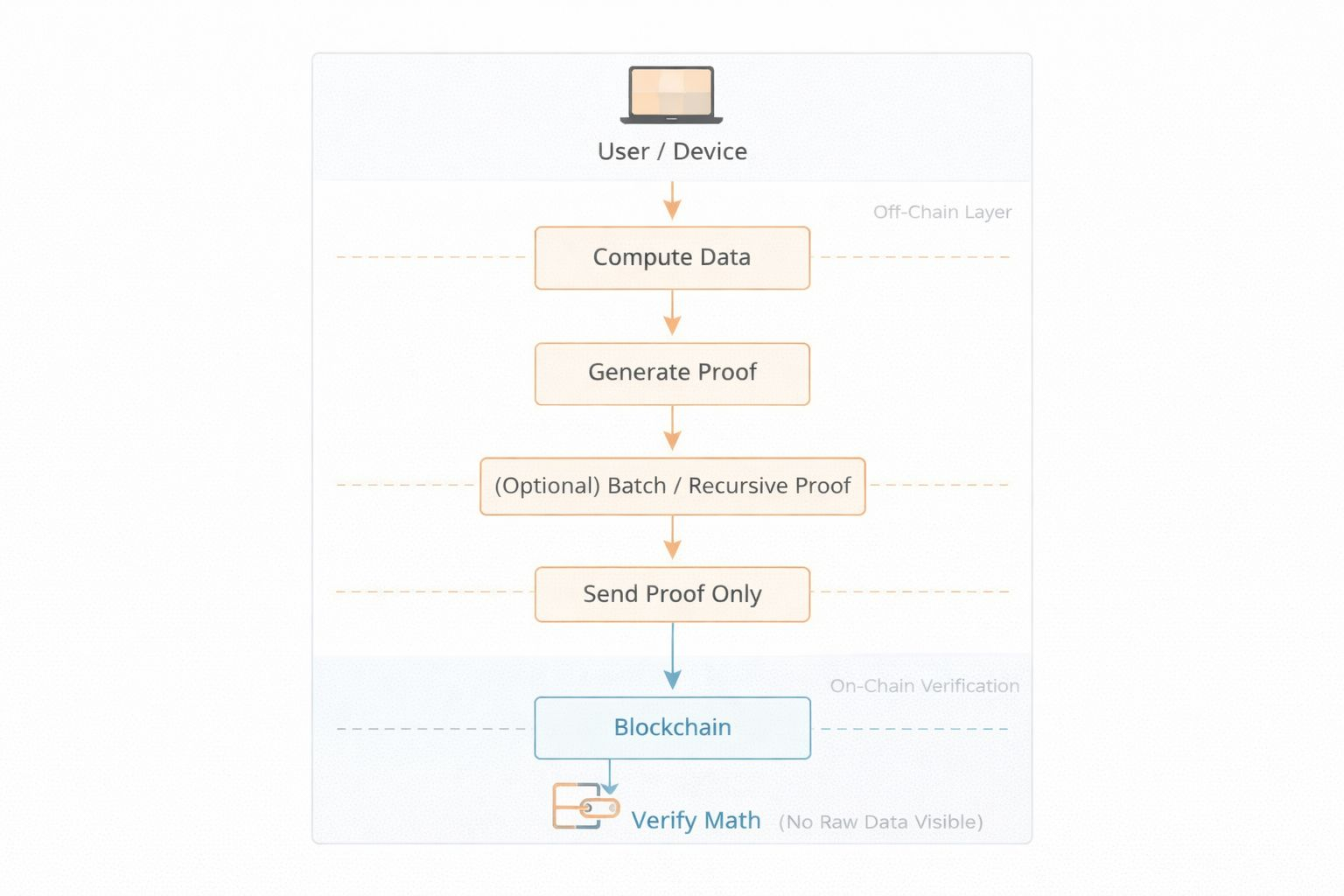 It's not even about hiding everything either. You can choose what to reveal and what stays private depending on the situation. That alone already fixes a lot of the usual privacy versus transparency problem.
Then there’s the recursive part, which I didn't fully appreciate at first. Normally it’s like one proof per transaction. But here, you can stack them. Instead of proving each action separately, you can prove a whole batch at once. That can reduce on-chain load and potentially lower gas depending on how it’s used. And since verification is relatively fast compared to proving, it doesn’t necessarily slow the chain down.
So in theory, Midnight Network is trying to give you privacy and something that can actually scale.
But the more I thought about it, something became obvious.
The cost doesn't disappear. It just moves.
What Midnight is doing is pushing most of the computation off-chain. Which means your device or wherever the proving happens is doing the heavy work. And proof generation isn’t exactly light. If you're on a decent machine, maybe it’s fine. But on a low-end laptop or phone, I can already see it struggling. So yes, you save on gas, but you’re paying with CPU instead.
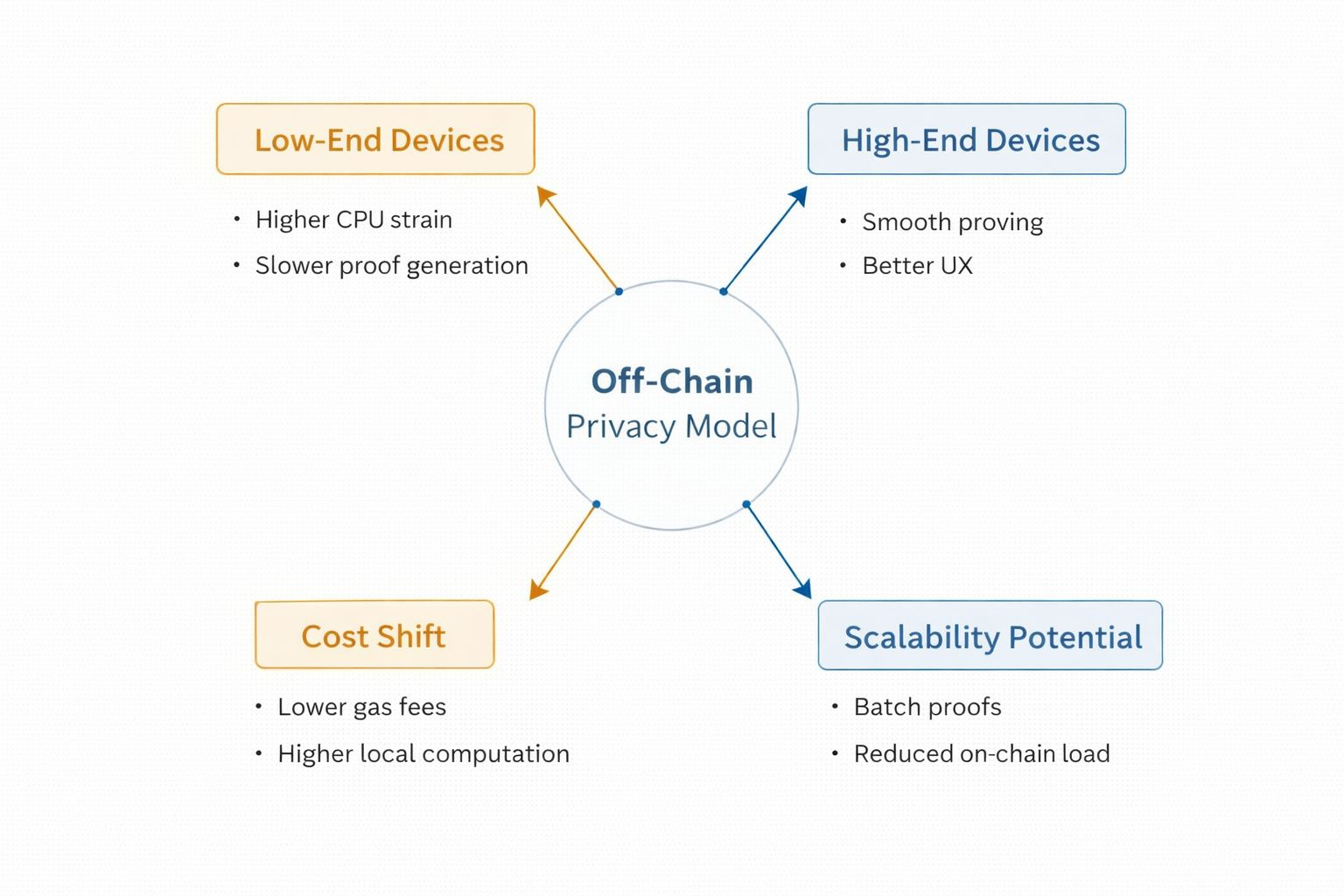 And recursion, as nice as it sounds, also adds complexity. More layers, more things that can go wrong. Not in a “privacy is gone” way, but in a “this might slow down or become harder to manage” way.
Plus, as the network is still evolving, there are likely tradeoffs in how all of this is currently handled.
Still… I can’t ignore what this enables.
Something like payroll is the easiest example. You can prove the total payouts are correct, but no one sees individual salaries. That’s actually useful in a real-world way, especially where privacy and verifiability need to coexist.
Even compared to something like Zcash, which is strong on privacy but limited in programmability, this feels more flexible.
So I’m kind of in between on it.
If Midnight figures out how to optimize or better distribute the proving workload, this could be really solid. If not, the performance cost might turn people away.
Would I use it?
For fast trading, probably not immediately. But for anything where privacy actually matters, I’d definitely consider it.


