
Privacy tech usually sounds cool until you imagine actually building with it
That is where a lot of projects get weird fast
Midnight feels like it is trying to remove that headache
When I first started reading through Midnight’s architecture I expected the usual story. Strong privacy. Fancy zero knowledge language. Big promises. Then developers quietly suffer in the background trying to make the thing usable. That pattern happens a lot in crypto. The tech looks genius on paper and then the learning curve smacks everyone in the face 😅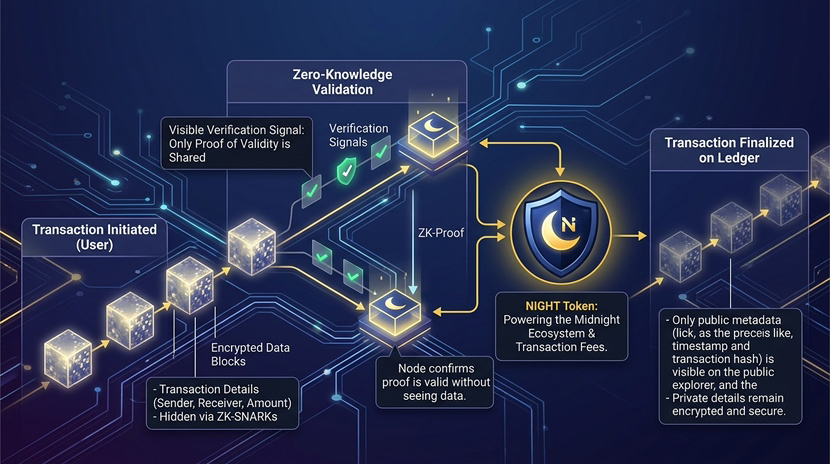
What surprised me with Midnight is that the paper seems oddly aware of this problem. It does not just talk about privacy as a feature. It talks about developer fatigue. That stood out to me because it feels honest. Developers are already juggling APIs databases infra tooling security and product deadlines. If a privacy chain shows up and basically says hey buddy now go become a cryptography researcher too that is not a product strategy. That is punishment.
Midnight seems to get that.
The lightweight part of the architecture matters because the network uses TypeScript API definitions for smart contract integration and a TypeScript based domain specific language called Compact to describe contracts. That is a pretty deliberate choice. TypeScript is one of the most widely used languages in development and the paper points out it was the second most popular programming language as of H1 2024. That means Midnight is not trying to recruit only cryptography natives. It is trying to meet regular developers where they already live.
That is a bigger deal than it sounds.
A lot of blockchain infrastructure still behaves like it was designed for people who enjoy suffering a little too much. Complex environments. Niche languages. Tooling gaps. Strange documentation. Midnight is taking a different swing by making privacy development look more like ordinary application development.
The real trick sits in how the architecture separates the application layer from the data layer. Compact abstracts the smart contract logic away from the cryptographically heavy stuff. So the developer can focus on business logic while the system handles the proof related machinery underneath. When I got to that part I kind of laughed because yeah this is exactly how it should work. Privacy should be usable without asking every builder to understand the guts of zero knowledge circuits.
That separation matters for speed too.
If every privacy enabled app required deep custom cryptographic engineering then the number of teams willing to build would stay tiny. Midnight is clearly trying to widen that funnel. The paper even says the architecture is meant to enable easy prototyping and broader developer access. In plain English that means the team knows adoption does not come from sounding smart. It comes from reducing friction.
And honestly I think this is where Midnight has a stronger market position than people may realize.
There are plenty of projects working on privacy and zero knowledge infrastructure. Some are technically brilliant. But technical brilliance alone does not guarantee ecosystem growth. Developers usually choose environments that let them ship products without burning six months on setup pain. Midnight’s lightweight design looks like an attempt to make privacy less of a specialist niche and more of a practical option for mainstream builders.
That could matter a lot as crypto moves closer to real business use cases.
The paper keeps tying Midnight to business needs like data protection uptime assurance and cost control. That connection feels important. Privacy is often discussed like a moral upgrade or a cypherpunk preference. Midnight frames it more like infrastructure for serious operators. If a business wants programmable data protection and selective disclosure it needs tools that actual product teams can learn and deploy. That is where lightweight design stops being a nice detail and starts looking like the whole game.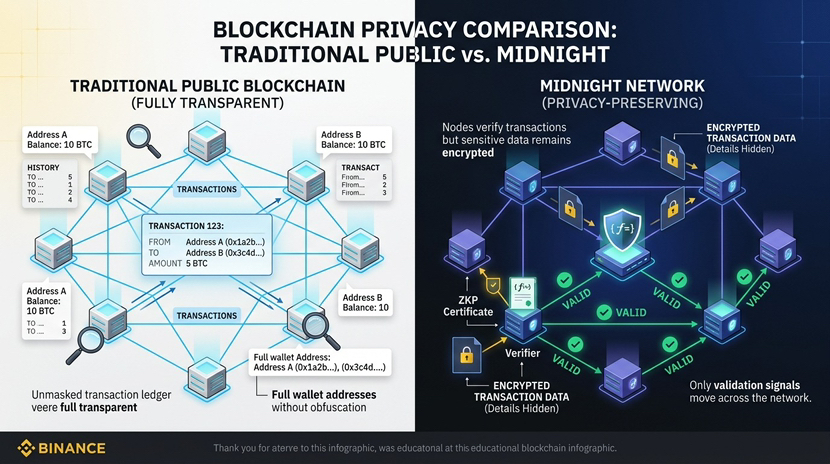
The second thing that caught my attention is interoperability. Midnight is not trying to live in a sealed bubble. The architecture is designed to integrate with existing systems and other chains and the paper links that to Cardano as a launch partner while also referencing cross chain integration with networks like Ethereum through its Halo2 based zkSNARK design. That matters because developers rarely want to rebuild everything from zero. They want privacy layers that can plug into systems they already use.
Halfway through reading it I had a thought that felt kind of obvious once it appeared.
The hard part of privacy in Web3 might not be the math
It might be the workflow
You can have amazing proof systems and still lose if the development experience is miserable. Traditional finance figured this out a long time ago. Institutions do not adopt tools just because the theory is elegant. They adopt systems that fit process risk management and staffing reality. Midnight seems to understand that privacy adoption is not only a cryptography problem. It is a product design problem and a labor market problem too.
That is also where the risks show up.
Making development easier is powerful but it can also create expectations that the ecosystem must actually fulfill. If the tooling feels unfinished or the documentation does not deliver then the lightweight narrative falls apart fast. Developers are patient with hard problems but not with avoidable friction. Another risk is competition. Other ecosystems are also trying to make zero knowledge tooling more accessible. Midnight does not get to win just by being easier than older privacy models. It has to keep being easier in practice.
There is also the policy angle. Midnight’s developer friendly approach is attractive partly because it supports selective disclosure and business policy requirements. That is smart because pure opacity scares regulators. Still privacy infrastructure will always attract more scrutiny than vanilla public chains. If the regulatory environment tightens too much some companies may still hesitate even if the tools are excellent. So usability alone does not erase policy risk. It just gives Midnight a better shot at navigating it.
What I keep coming back to is this.
Crypto has spent years talking like adoption happens when the public finally understands the technology. I am not sure that is true. A lot of adoption happens when the technology stops demanding so much understanding from the user and the builder. Midnight’s lightweight design points in that direction. It tries to make privacy development less like climbing a mountain and more like opening a toolkit you already sort of know.
That feels underrated.
Because if privacy stays hard to build then it stays niche. If it becomes easier to build then suddenly it can show up in identity products enterprise apps financial workflows and hybrid systems without every team reinventing the wheel. That is when privacy stops being an ideology and starts becoming normal infrastructure.
And maybe that is the real play here.
The future winners in privacy may not be the projects with the most intimidating cryptography
They may be the ones that make smart developers feel a little less scared to build 🔐
@MidnightNetwork #night $NIGHT
