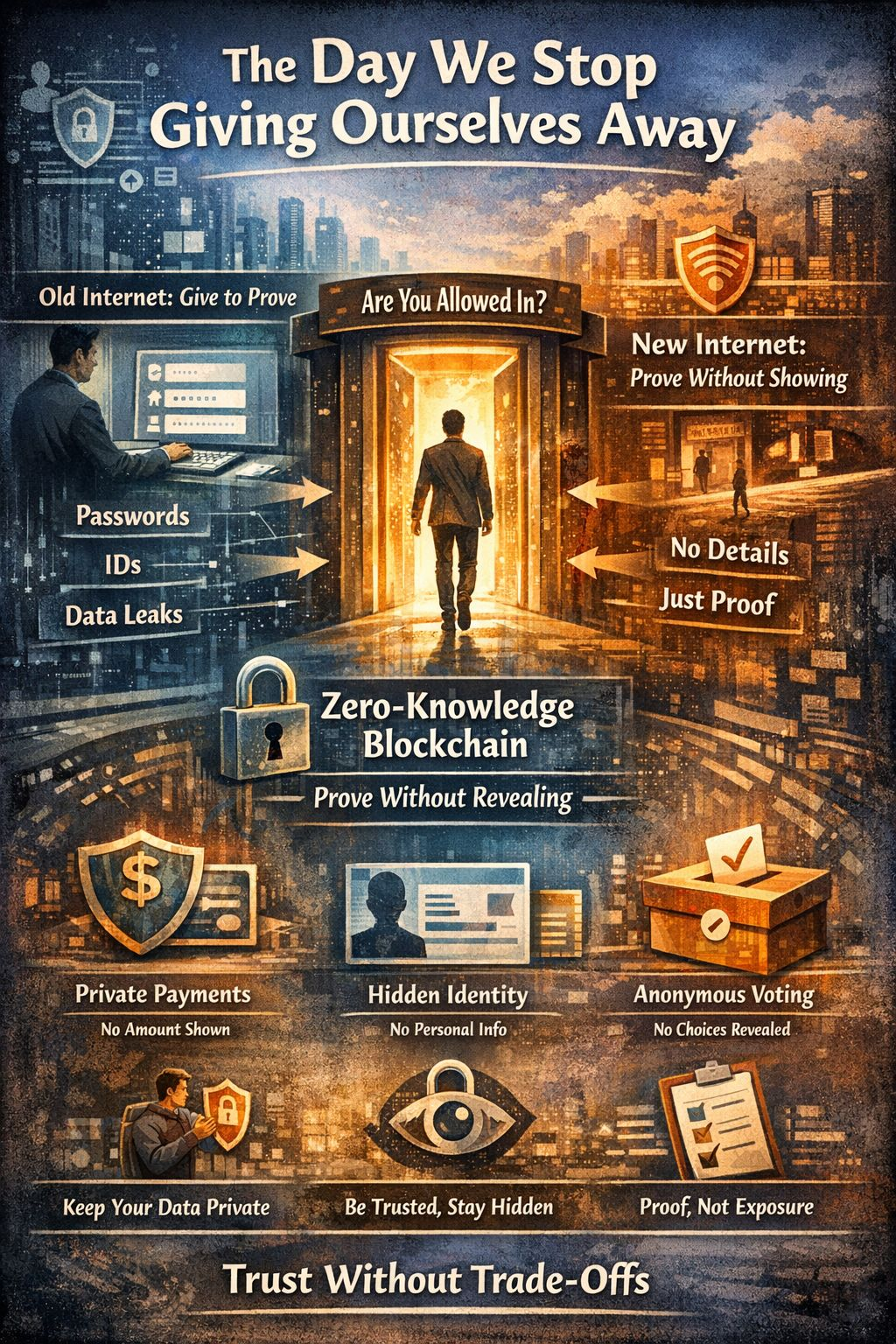
Você já fez isso centenas de vezes sem pensar. Digitou sua senha, enviou sua ID, inseriu os detalhes do seu cartão, clicou em “Eu concordo” sem ler uma palavra. A cada vez, um comércio silencioso ocorre—acesso em troca de exposição. Aceitamos isso como normal, quase invisível. Mas e se um dia, você não precisasse dar nada em troca para ser confiável? É aí que a história da blockchain de zero conhecimento começa—não como um pedaço frio de tecnologia, mas como algo profundamente humano.
A internet que usamos hoje nunca foi realmente construída para a privacidade. Foi construída para conectar pessoas, compartilhar informações, mover-se mais rápido do que qualquer coisa antes disso. Mas em algum lugar ao longo do caminho, a conexão se transformou em coleta. Agora, provar até mesmo as coisas mais simples—quem você é, se você pode pagar, se você se qualifica—exige revelar muito mais do que o necessário. É como ser solicitado a mostrar toda a sua casa apenas para provar que você possui a chave. E com o tempo, paramos de questionar isso.
A tecnologia de zero conhecimento oferece um caminho diferente, que parece quase surpreendentemente simples. Imagine-se se aproximando de uma porta que não pede seu nome, sua história ou seus dados pessoais. Ela pede apenas uma coisa: “Você está autorizado a entrar?” Você não explica, não revela nada—você simplesmente prova. A porta se abre. Essa é a ideia central por trás do zero conhecimento: provar que algo é verdadeiro sem expor as informações por trás disso.
Quando essa ideia é trazida para o blockchain, ela muda silenciosamente tudo. Blockchains tradicionais construíram confiança tornando tudo visível—transações, saldos, atividades. Funcionou, mas veio com um custo: rastreabilidade constante. Blockchains de zero conhecimento adotam uma abordagem mais reflexiva. Eles permitem que os sistemas confirmem que algo é válido sem mostrar os detalhes. Um pagamento pode ser verificado sem revelar o valor. Uma identidade pode ser confirmada sem expor quem você é. O sistema ainda funciona, ainda permanece seguro, mas não precisa mais ver tudo.
Pense em um jovem graduado se candidatando a um emprego. Hoje, eles enviam documentos, registros e dados pessoais apenas para provar uma coisa—que têm um diploma. Com zero conhecimento, esse processo se torna mais leve. Em vez de compartilhar tudo, eles enviam uma prova que simplesmente confirma a verdade: eles se formaram e atendem ao requisito. Nada mais. Parece pequeno, mas muda toda a dinâmica. Substitui o excesso de compartilhamento por precisão.
O que torna essa mudança poderosa não é apenas a tecnologia—é a sensação que cria. Pela primeira vez em muito tempo, as pessoas podem manter o que lhes pertence. Os dados não precisam ficar no banco de dados de outra pessoa, esperando para ser vazados ou vendidos. Você compartilha menos, e por causa disso, arrisca menos. Você é confiável não por tudo sobre você, mas exatamente pelo que importa naquele momento.
Há também uma mudança mais profunda acontecendo sob a superfície. Por anos, os sistemas digitais funcionaram com uma suposição simples: “Mostre-me tudo para que eu possa confiar em você.” O zero conhecimento muda completamente esse tom. Ele diz: “Não preciso ver tudo. Apenas prove que é verdade.” Ele separa a verdade da visibilidade. E uma vez que essa separação existe, novas possibilidades inteiramente se abrem.
Você pode não perceber imediatamente, mas essa mudança começará a aparecer na vida cotidiana. Fazer login sem senhas, fazer pagamentos sem expor saldos, provar sua idade sem mostrar sua identidade, até mesmo votar sem revelar sua escolha. Essas não são ideias distantes—são extensões naturais de um sistema que valoriza a prova em vez da exposição. A experiência se torna mais suave, mais silenciosa e muito mais respeitosa do espaço pessoal.
É claro que não é sem desafios. Quando a informação não é visível, surgem perguntas. Como prevenimos o uso indevido? Como fazemos cumprir as regras? Essas preocupações são reais e moldam como essa tecnologia evolui. O objetivo não é remover a responsabilidade, mas redesenhá-la—criando sistemas onde a verdade pode ser verificada quando necessário, sem transformar os dados privados de todos em propriedade pública.
No seu núcleo, isso não é apenas uma evolução técnica. É uma mudança na forma como nos relacionamos com o mundo digital. Por anos, participar significava abrir mão de algo. Agora, pela primeira vez, não precisa ser assim. Você pode existir, interagir e ser confiável sem se sentir exposto ou observado. Você pode simplesmente participar, em seus próprios termos.
Por muito tempo, acreditamos que a confiança exigia transparência—que tudo precisava ser visível para ser real. Mas talvez a confiança nunca tenha sido sobre ver tudo. Talvez sempre tenha sido sobre saber que o que importa é verdadeiro. E agora, finalmente temos uma maneira de provar isso—sem nos expor.
#night $NIGHT @MidnightNetwork