
been sitting with the Lost-and-Found section since yesterday and honestly the more i read it the more one specific tension keeps sharpening just like when i was trading on $RIVER last week😂
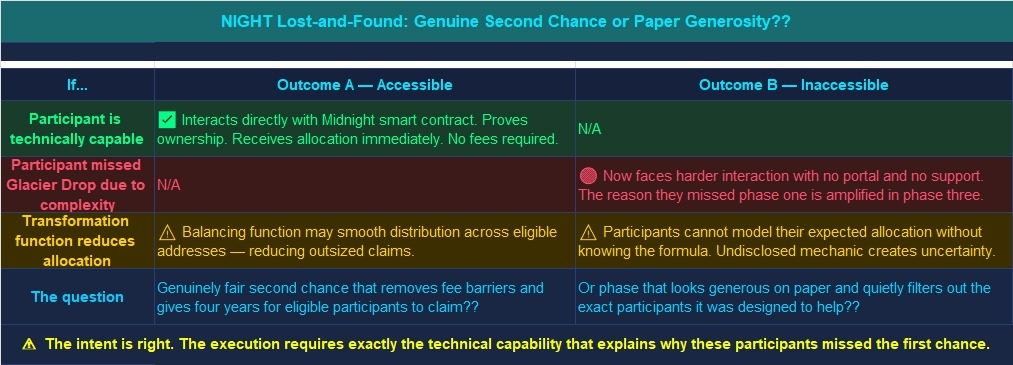
the third and final claim phase exists for one reason. some Glacier Drop participants missed the original 60-day window
maybe they didnt know about it
maybe the process was too technically complex
maybe they simply werent paying attention. Lost-and-Found gives them another chance - a fraction of their original allocation, claimable over four years.that framing sounds generous. four years is a long time. but heres how the phase actually works and why the generosity is more complicated than it appears.
to claim in Lost-and-Found, a participant must input proof of ownership of their original Glacier Drop address directly to a smart contract hosted on the Midnight network. not the Cardano network where the earlier phases lived. the Midnight network. the proof unlocks the claim and allows immediate transfer to a destination Midnight address of their choosing. the transaction is supported by DUST owned by the Lost-and-Found smart contract itself, so participants dont pay fees.
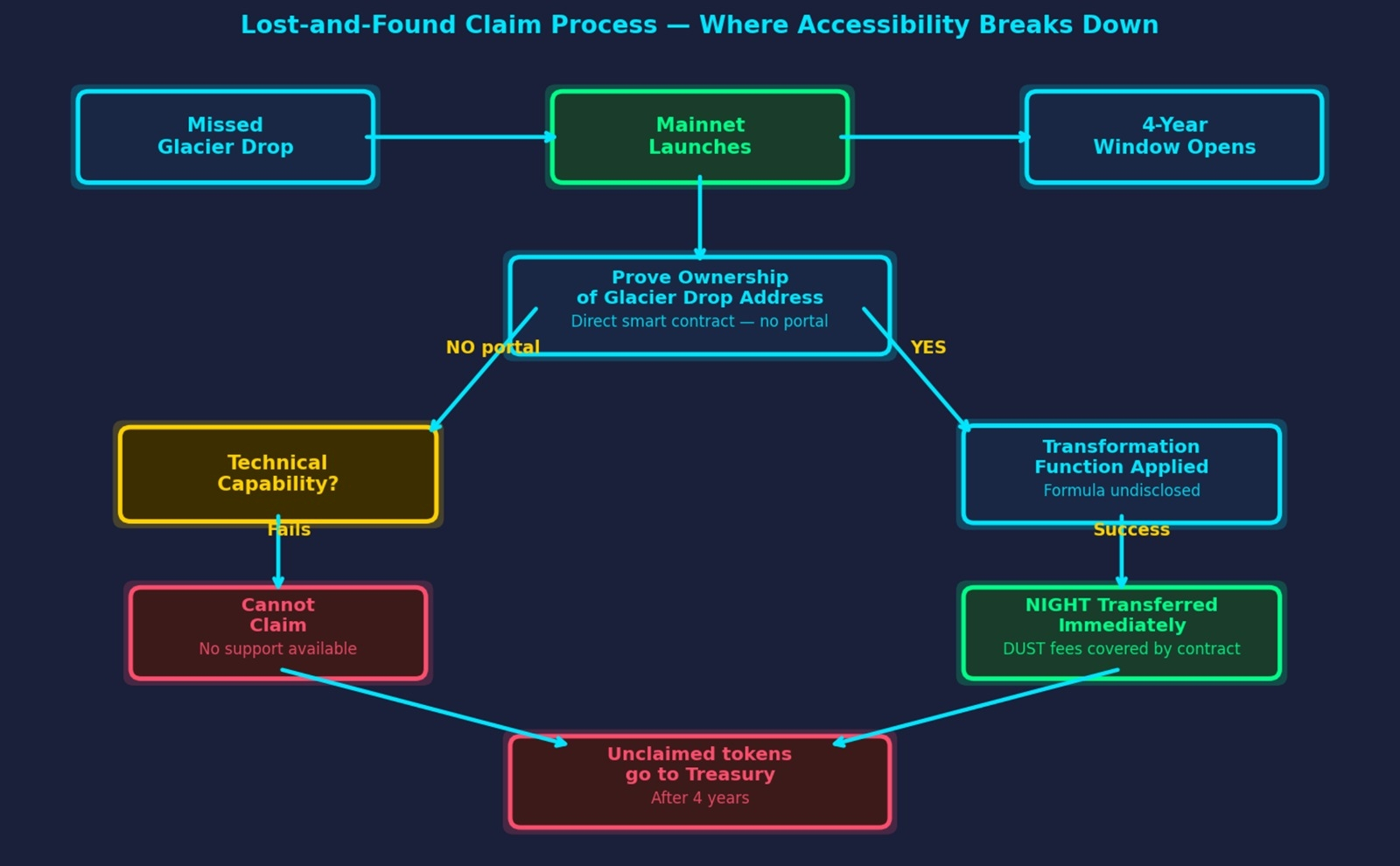
and then this line: no further support or resources - such as the NIGHT Claim Portal website - are anticipated to be provided to facilitate this phase.no portal. no guided interface. no support documentation. participants who struggled to navigate a purpose-built website during Glacier Drop now need to interact directly with a smart contract on a network that didnt exist when they missed the first phase.
the allocation mechanic adds another layer
individual allocations are not simply a fraction of the original Glacier Drop amount. they are calculated using a transformation function designed to balance the distribution across the full set of eligible addresses. the whitepaper does not describe what that transformation function looks like. the amount a missed participant receives is determined by a formula that has not been published.what the design gets right is the intent. a four-year window is genuinely long. funding the transactions with the smart contract's own DUST removes a real barrier. and capping the phase at the same token amount as Scavenger Mine participant rewards means the allocation is meaningful rather than token.
but i cant resolve the combination. the participants most likely to need Lost-and-Found are the ones who found the earlier phases hardest to navigate. and this phase, designed specifically for them, is the most technically demanding interaction in the entire distribution - with no guidance, no portal, and an undisclosed allocation formula
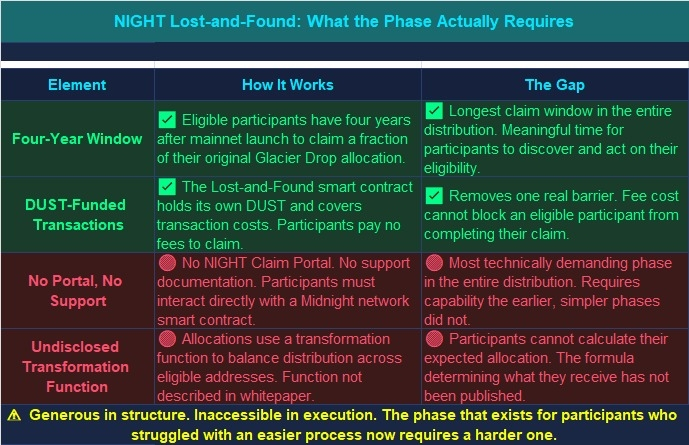
I dont know if Lost-and-Found is a genuinely fair second chance designed with real accessibility in mind or a phase that looks generous on paper and quietly assumes a level of technical capability the people who need it most are unlikely to have?? 🤔
#night @MidnightNetwork $NIGHT
