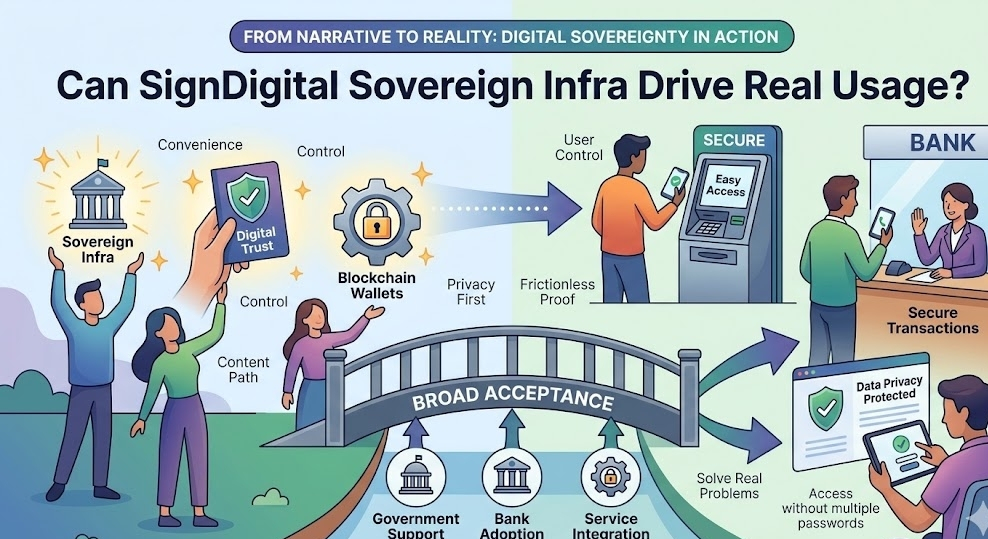
When we talk about digital identity in 2026, it’s easy to drown in buzzwords — “sovereign infra”, “digital trust”, “blockchain wallets,” and so on. But beneath all that jargon there’s a really human question: Can these systems actually make life easier for real people?
Let’s be honest. Most of us don’t wake up excited about identity frameworks. What we care about is convenience and control. I don’t want to create 15 passwords just to prove who I am, and I definitely don’t want some giant company owning my data. That’s where the promise of SignDigital Sovereign Infrastructure gets interesting: it’s meant to put you in charge of your digital identity, not Google or Facebook.
Think about your passport. It’s yours, it doesn’t live in a company server, and you only show it when you need to. Sovereign digital identity aims to do the same thing online: give you a secure, private, reusable credential you control. That sounds great on paper — but here’s the tricky part: real usage depends on real value.
People will only adopt it if it’s easier than what they already use. If proving identity becomes smoother — like tap your phone and you’re done — then everyday users will begin to care. Governments, banks, and services need to support it too. The tech can be solid, but without broad acceptance, it stays a concept.
So, can SignDigital Sovereign Infra drive real usage? I think it can — but only if it solves real problems simply. When convenience meets control, that’s when narratives become reality.
#signdigitalsovereigninfra $SIGN