


I was checking eligibility conditions this morning when a credential came back clean.
But nothing responded behind the issuer.
I checked the attestation again.
Still valid. Clean.
Then I followed the issuer address tied to it.
No recent interactions.
No revocations.
Nothing touching anything it had issued.
At first I thought I pulled the wrong record.
Checked again.
Same address.
Same credential.
Still verifying.
That’s where I paused.
The attestation hadn’t changed.
The schema resolved the same way.
But the issuer looked… gone.
No signal it could still act on anything.
No updates.
Just silence.
So I tried a second credential from the same address.
Same result.
Both passed.
Neither showed any sign the issuer could still do anything.
That’s when it stopped feeling like inactivity.
And started looking like a pattern.
Issued.
Then it just stayed true.
I keep coming back to this as issuer shadow.
A credential that keeps verifying.
Even when nothing behind it can change anymore.
From the outside, nothing breaks.
Verification passes.
Everything looks normal.
But the path that could invalidate it isn’t moving.
So I pushed it further.
Used the credential in an eligibility check.
It passed.
No difference.
No warning.
Nothing in the result reflected that the issuer wasn’t active anymore.
That part stuck with me.
Because the credential didn’t just exist.
It was being used.
And once it’s being used, it’s not just a record anymore.
It’s deciding things.
So I tried something else.
I compared it against a credential from an issuer that was still active.
Same structure.
Same verification result.
No difference in output.
Nothing in the response told me which one still had an issuer behind it and which one didn’t.
That’s where it shifted for me.
Not just that issuer shadow exists.
But that the system reads it exactly the same way.
That’s where this stops being abstract.
Distribution. Access. Claims.
Moments where verification turns into a decision, and the system can’t tell whether the authority behind that decision still exists.
The decision just… happens.
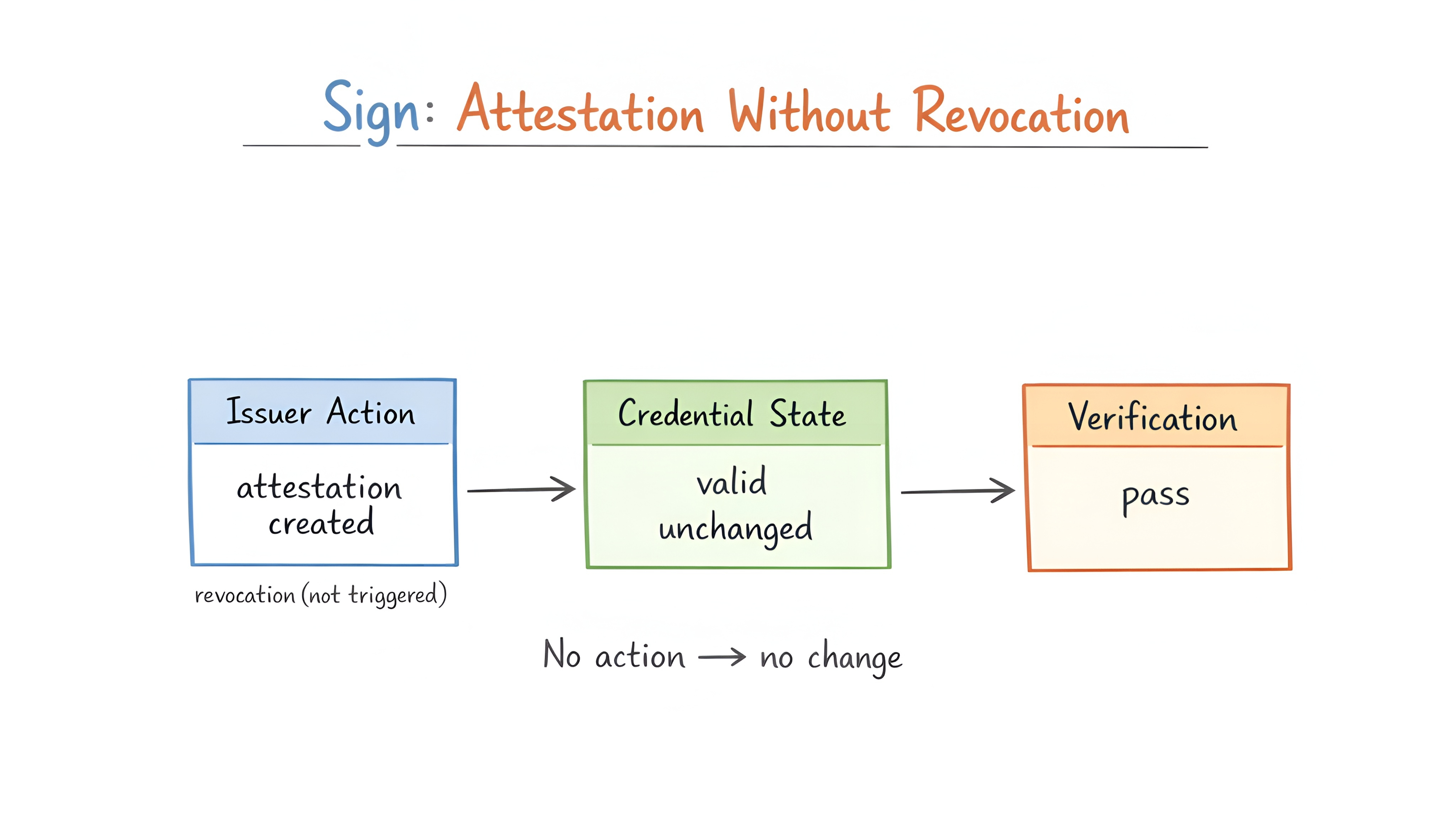
I thought revocation would surface it.
It didn’t.
The same issuer would have to act.
Nothing changed.
So the credential stays valid.
Not because it was confirmed again.
Because no one is there to change it.
I checked a few more issuers after that.
Not many.
But enough that it didn’t feel rare.
Especially credentials that were issued once and never revisited.
And the pattern held.
Same behavior.
Same output.
Nothing breaking.
Nothing updating.
Everything just… continuing.
$SIGN only matters if verification can tell the difference between credentials backed by issuers that can still act on them and those continuing under issuer shadow.
Because once distribution depends on credentials without active authority behind them, the system isn’t verifying trust anymore.
It’s replaying history.
The test is simple.
Watch credentials tied to issuers that haven’t interacted in weeks.
See where they still pass.
See where they still trigger outcomes.
If nothing changes at that boundary,
issuer shadow isn’t an edge case.
It’s already deciding things.
Still watching what happens the first time a distribution depends on an issuer that isn’t there to revoke anything anymore.
#SignDigitalSovereignInfra #Sign
