
The proof checked.
Then the question hit me. Who signed this
Not the privacy. Not the proof. The approval path. Once the workflow goes hidden enough the hand on it gets harder to see and somehow the room still expects ownership to stay obvious
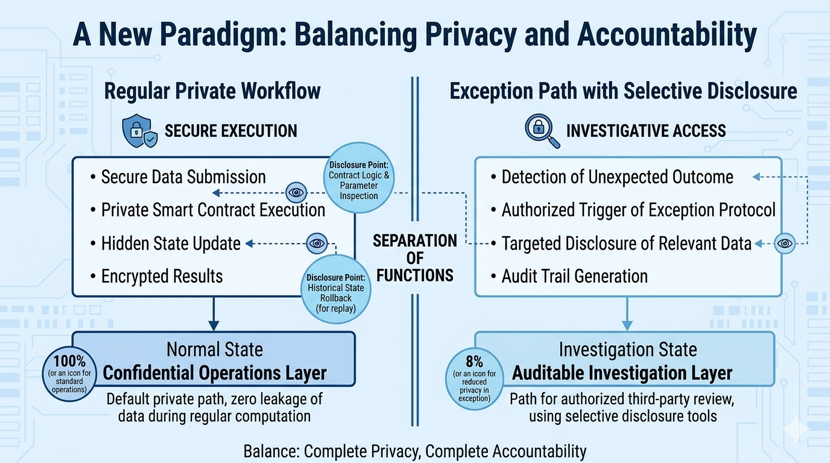
A payment clears. A file moves. A counterparty gets approved. The packet stays narrow because nobody wants to open more than they have to
Alright
Then somebody higher up has to defend it
And suddenly the proof being valid is not the whole story anymore. Useful sure Still not the same as a name under the decision
That’s the Midnight bit people keep trying to smooth over
Because hidden workflow does not mean ownerless workflow. It just means the ownership gets harder to see. And that’s worse honestly
On a public chain you can usually trace the mess enough to start attaching responsibility somewhere. Midnight changes that. Private smart contracts selective disclosure bounded packets less state leaking into public view. Good. Real use for that
Still leaves the same stupid question sitting in the room
Who was holding the pen
Not in theory. Not “the system.” In the actual workflow. Whose approval made this live. Whose judgment narrowed the disclosure. Whose name sits under the path now that somebody wants the story not just the proof
I caught myself noticing something else the other day
One rule changed on Tuesday. Another on Friday. The workflow cleared in between
Now go explain that on a private system
The proof still verified. Great. Very helpful. But now answer the version question
Because a valid proof on Midnight only tells you the condition passed under some live rule set. Amazing. Which one? Before the threshold moved? After disclosure condition narrowed? Before somebody tightened the exception path because last week got noisy? After the review packet got cut down because everyone was tired of opening too much
That’s where it gets stupid
At first nobody calls it a failure. They call it alignment. A policy update. Cleanup. Lovely. Until one workflow clears under the wrong version — or maybe the right one honestly who knows yet — and suddenly the room is arguing over history not cryptography
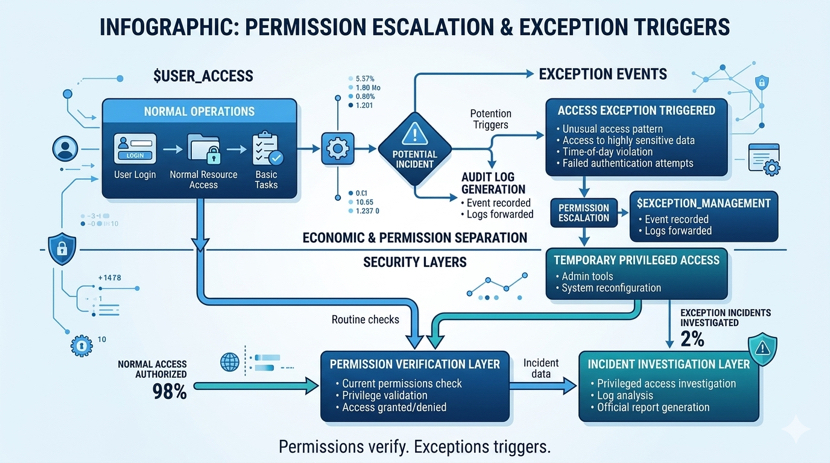
And that’s exactly why governance matters more here than it ever did on transparent systems. The proof is still there. The cryptography is still there. Midnight is still doing what @MidnightNetwork said it would do. But the trust story is not living in the proof logic anymore. It’s sitting in the permission table
One app can make disclosure escalation multi-party and narrow. Another can hide the whole thing behind one ops role and still call the workflow privacy-preserving. Same Midnight base layer. Very different trust model once anything goes sideways
The hardest part isn’t proving something without revealing it
It’s deciding again and again not to reveal more than you should. Especially when identity moves. Credentials expire. Risk flags change. Sanctions lists update. Residency buckets shift. One team thinks the old proof is still good. Another thinks it died yesterday and nobody told the rest of the system
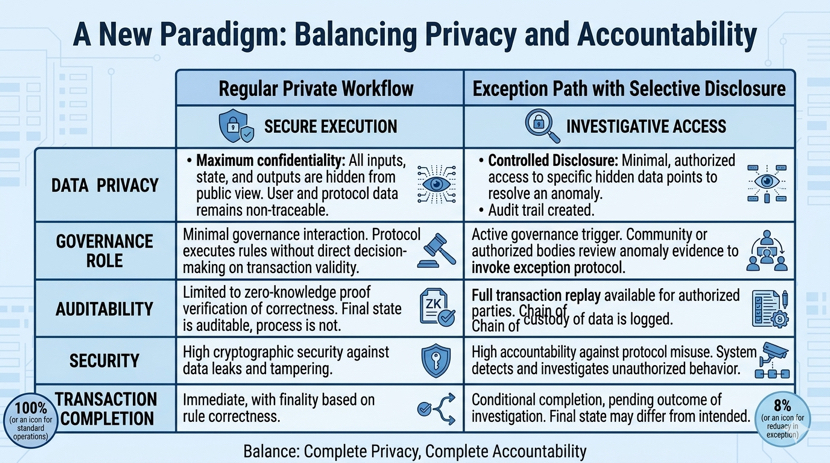
Then Thursday happens. The upstream system updates the status. Maybe a credential expires. Maybe a watchlist hit appears. Friday the app still treats Tuesday’s proof like it means something
Access is still open. Stale yes floats around. Nobody owns the kill switch. Bank partner says recheck it. App team says the proof satisfied the rule the product was built around. Compliance says access should have been suspended. Ops inherits the mess
Same user. Same file. Different clocks. Different assumptions. That’s the part that keeps privacy systems honest, or exposes them
Because the version that matters is not the proof. Not the protocol. Not the cryptography
It’s the human decision embedded in the exception path.
It’s the hand holding the pen.
It’s the one person who had to answer for opening the file narrower than they probably wanted but still enough to let the workflow survive
And that is exactly where Midnight surfaces the real question
Not whether privacy can work
Not whether the proof checks
Who gets to make the messy decision in the middle of a live workflow and still call it private
That’s why I keep coming back to it
Midnight makes private workflows programmable. It hides the hard stuff. It solves selective disclosure beautifully. But it also exposes the human trust surface that nobody ever talks about
That’s the one you can’t automate
And it is fascinating