
Sign is built on unique concepts to help specially common people from Geopolitical crises. In this article we will understand how it actually works.
The concept of a "digital lifeboat" isn't just marketing—it’s a response to a world where a single cyberattack or a geopolitical rift can delete a nation’s access to its own money and identity.
As we navigate 2026, the Sign (SIGN) project has evolved from a simple document-signing tool into something far more ambitious: a fail-safe digital backbone for sovereign nations.
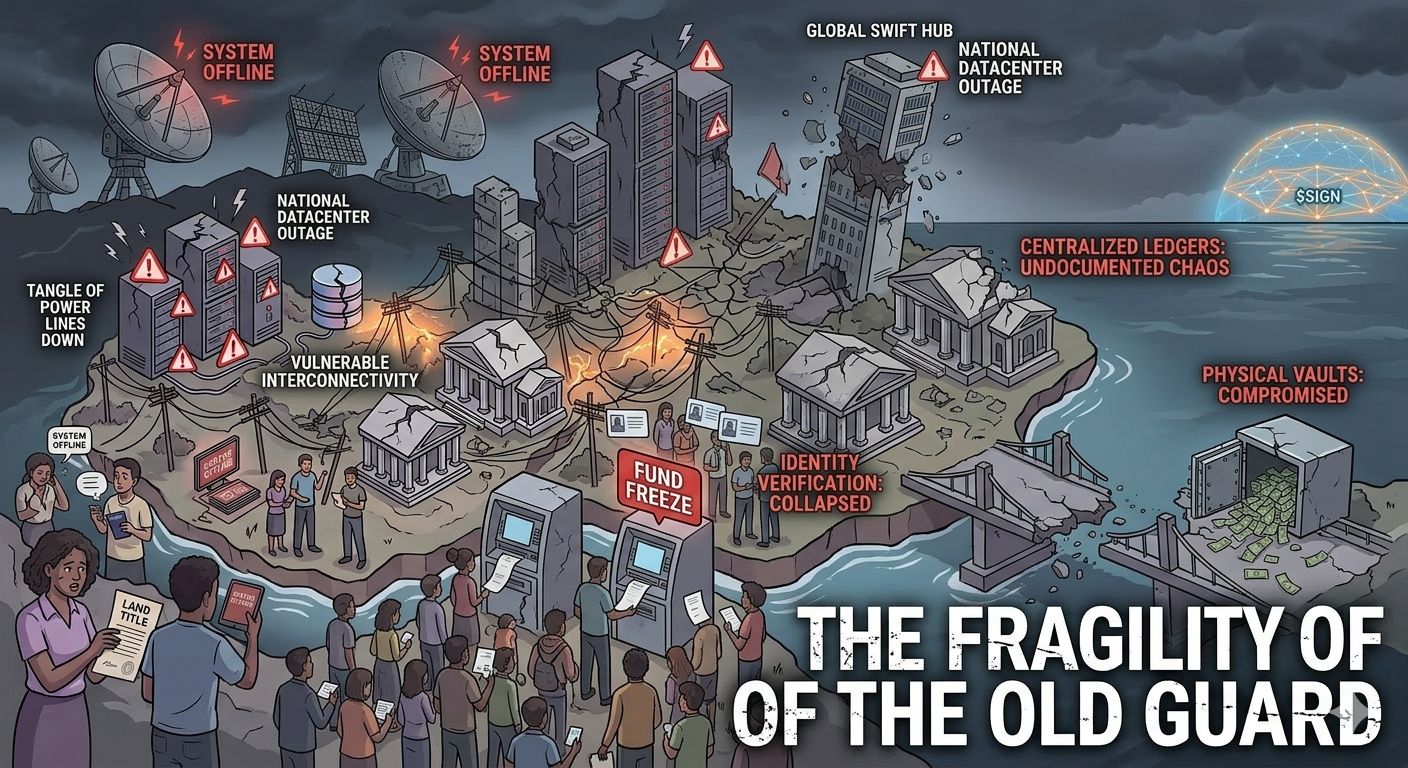
The Fragility of the "Old Guard
For decades, the world relied on a centralized, interconnected web of servers. If you lived in a developing nation, your "sovereignty" was often rented from foreign tech giants or global financial intermediaries. When geopolitical crises strike—be it sanctions, war, or infrastructure collapse—these centralized points of failure turn into economic traps.
Imagine a citizen who cannot prove they own their home because the land registry server was bombed, or a small business that cannot receive payments because its country was disconnected from global banking rails. This is the "sinking ship" scenario that $SIGN aims to solve.
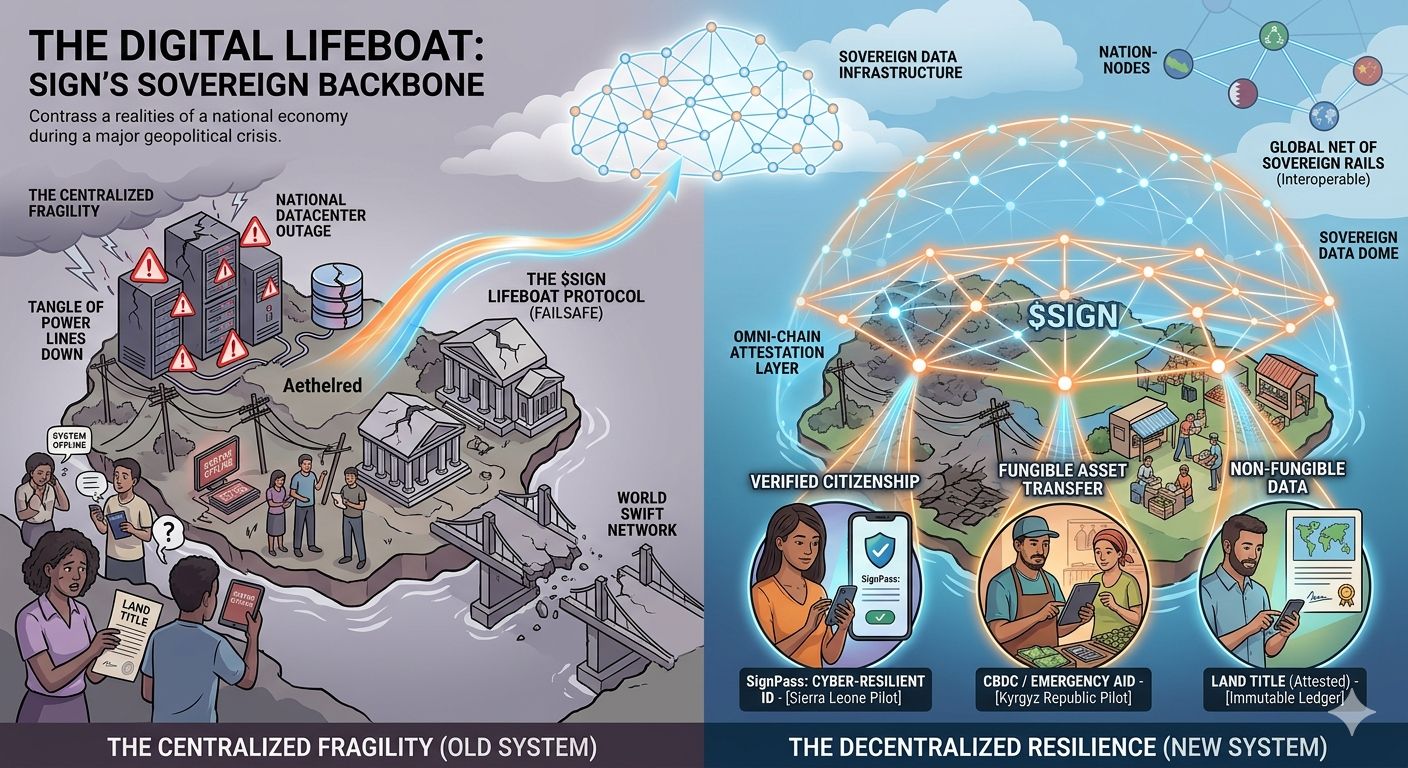
Enter the Digital Lifeboat
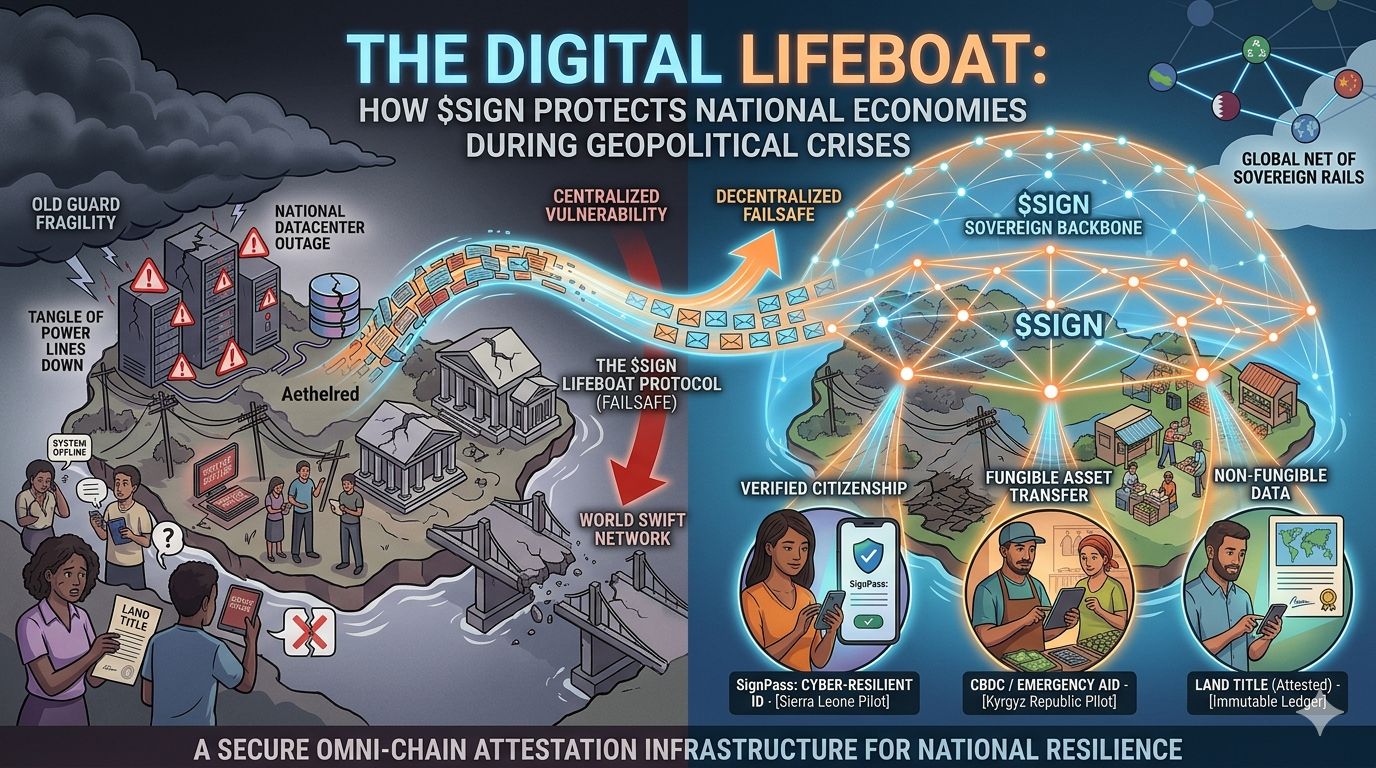
Sign (formerly EthSign) has spent the last year deploying its S.I.G.N. (Sovereign Infrastructure for Global Nations) framework. Unlike traditional databases, this is an omni-chain attestation protocol.
Identity as an Unsinkable Asset
Through SignPass countries like Sierra Leone and the Kyrgyz Republic are moving toward decentralized digital IDs. If a national data center goes offline during a crisis, a citizen’s identity isn't lost. It exists as a cryptographically signed attestation on a distributed ledger. This allows refugees or displaced citizens to prove their identity, qualifications, and ownership rights anywhere in the world, independent of a physical government building.
The Economic Failsafe
The partnership with the National Bank of the Kyrgyz Republic highlights the most critical "lifeboat" function: Money. By integrating with CBDCs (Central Bank Digital Currencies) and stablecoin payment systems, Sign ensures that internal trade can continue even if the country is cut off from the SWIFT network.
TokenTable allows for the transparent distribution of emergency aid or government subsidies directly to wallets, bypassing corrupt or broken middle-man systems.
Verification Without Permission
In a crisis, "truth" is the first casualty. Sign Protocol acts as a "super-sovereign database." Because every piece of data—from a land deed to a medical record—is an on-chain attestation it can be verified by anyone, anywhere, without needing to "ask" the original government server for permission. It turns a nation's data into an immutable, global source of truth.
Why the Market is Paying Attention
In March 2026, while speculative "meme coins" struggled, SIGN surged over 100%. The reason? Investors are beginning to view SIGN not as a crypto-toy, but as Strategic National Infrastructure
We aren't replacing governments," Sign's leadership often notes. "We are providing them with a redundant, shock-resistant layer so that when the world gets loud and messy, the nation's core functions stay quiet and operational
The Future: A Fleet of Lifeboats
The goal for Sign isn't just to help one or two nations. With pilots active in over 20 countrie including Thailand, Barbados, and the UAE—the project is building a global network of interoperable sovereign rails.
In the event of a total systemic failure in one part of the world, these "digital lifeboats" ensure that the people—the true heart of any economy—can carry their identity, their assets, and their dignity with them into the next chapter.
$SIGN @SignOfficial #SignDigitalSovereignInfra
