


Been watching NIGHT pretty closely this week, and today’s chart feels like one of those “decision zone” setups where the market is trying to figure out if the Binance listing was just launch volatility or the start of a real trend. Binance opened $NIGHT spot trading on March 11, 2026 at 15:30 UTC, and the Binance NIGHT/USDT page was showing 0.04618 when I checked. Not gonna lie, fresh listings like this can get messy fast, so I’m less interested in random candles and more interested in how price behaves after the first wave of excitement.
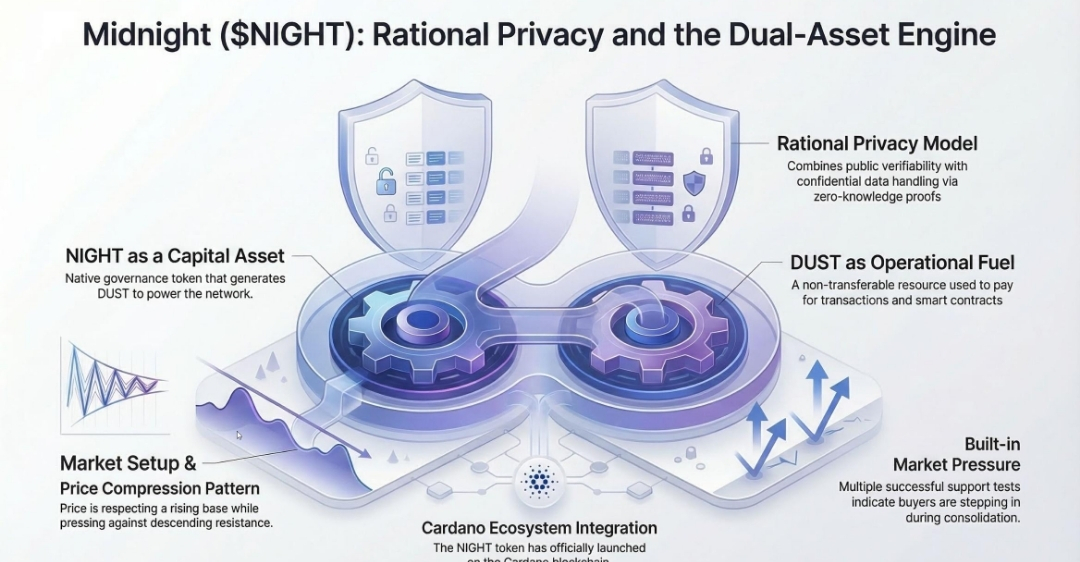
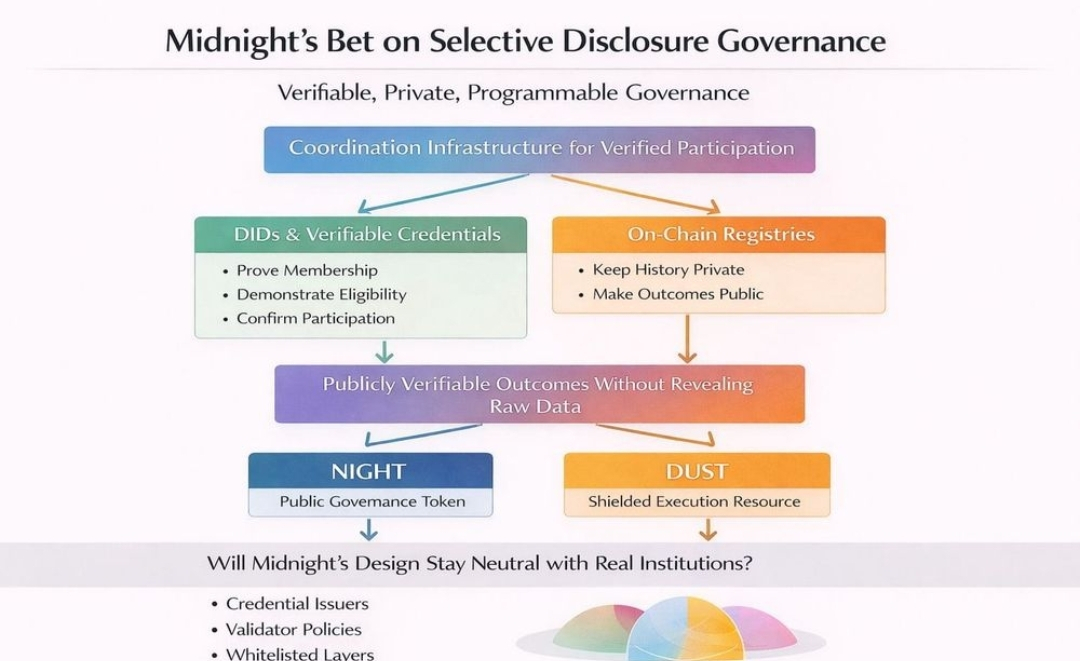
What I noticed: NIGHT has more behind it than a simple exchange debut. Midnight describes $NIGHT as the public native and governance token of the network, while DUST is the shielded, non-transferable resource used to pay transaction fees and execute smart contracts.
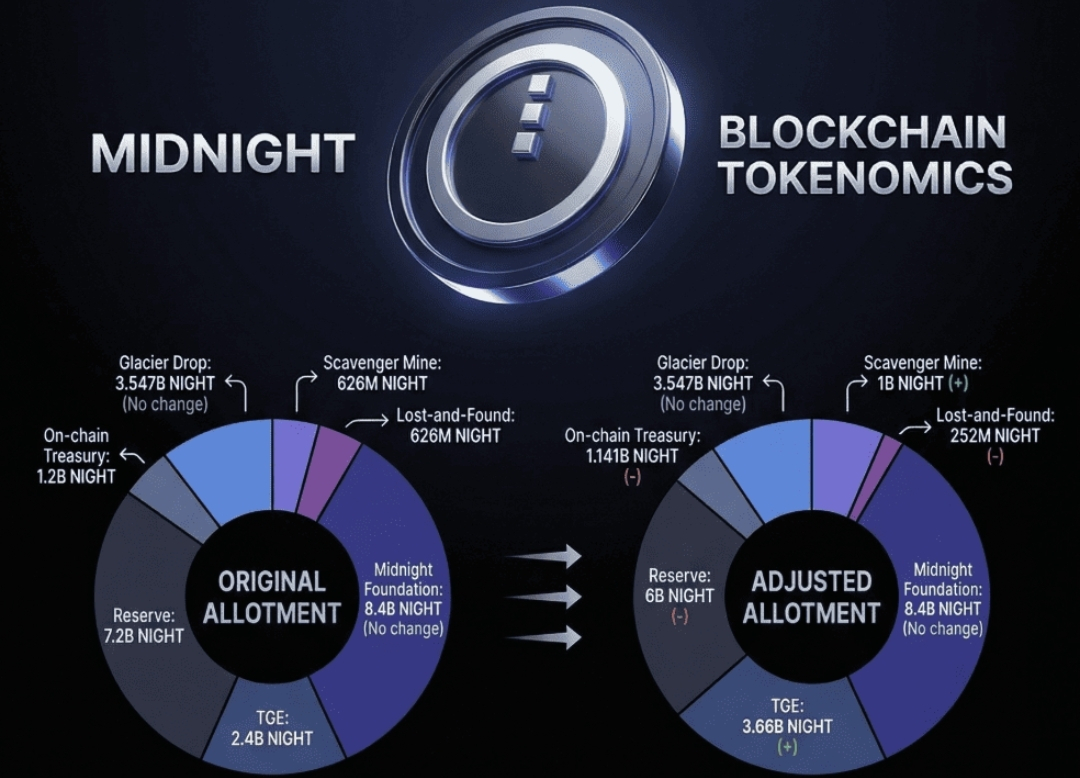
That two-part model is interesting because it separates the asset people hold from the resource the network consumes, which is a bit different from the usual “buy token, spend token” setup. Worth noting, Midnight says the total supply is 24 billion NIGHT, and Binance said circulating supply at listing was 16,607,399,401 NIGHT, or 69.19% of total supply.
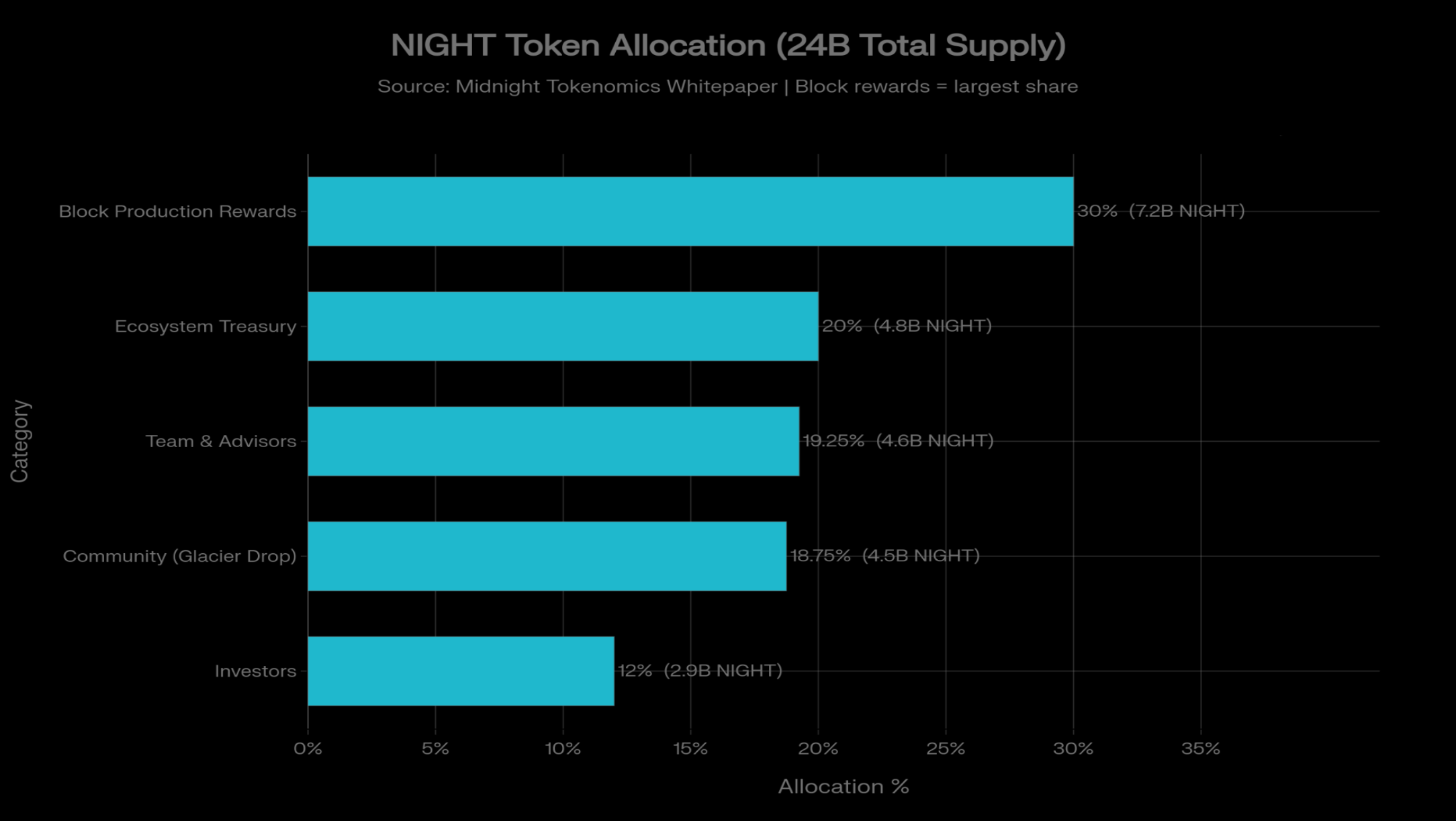
The distribution side also explains why the chart can feel noisy, tbh. Midnight says more than 3.5 billion NIGHT were claimed by 170,000+ wallet addresses in the Glacier Drop, and Binance separately allocated 240 million NIGHT through its HODLer Airdrops program, equal to 1% of total supply.
When you combine a wide token distribution with a major exchange listing, price discovery usually takes time because some holders are rotating out while others are only starting to build positions. That does not automatically make the chart bearish, but it does mean I’d be careful about reading too much into one green day or one red day.
My analysis: compared with a lot of new listings, NIGHT at least has a clearer utility story. Binance Academy describes NIGHT as a public token that generates DUST, and Midnight adds that DUST is renewable, non-transferable, and designed to power transactions without forcing users to spend their principal NIGHT holdings.
I think that matters more than people realize, because if the market starts valuing the token on network design instead of pure listing hype, the conversation shifts from “quick flip” to “does this model actually work at scale?” Heads up, that shift usually takes longer than traders want.
Personally, I’m in watch mode rather than blindly bullish. I think $NIGHT gets more interesting if buyers can defend current levels and build a cleaner trend after this early volatility, but if rebounds keep getting sold, then the market is still treating it like a distribution event first and a long-term narrative second.
Midnight Network is definitely on my radar because the structure is different, which is wild, but I’m still waiting for stronger confirmation before getting too confident. What’s your position on NIGHT right now — accumulating, trading the volatility, or still waiting on a clearer setup?