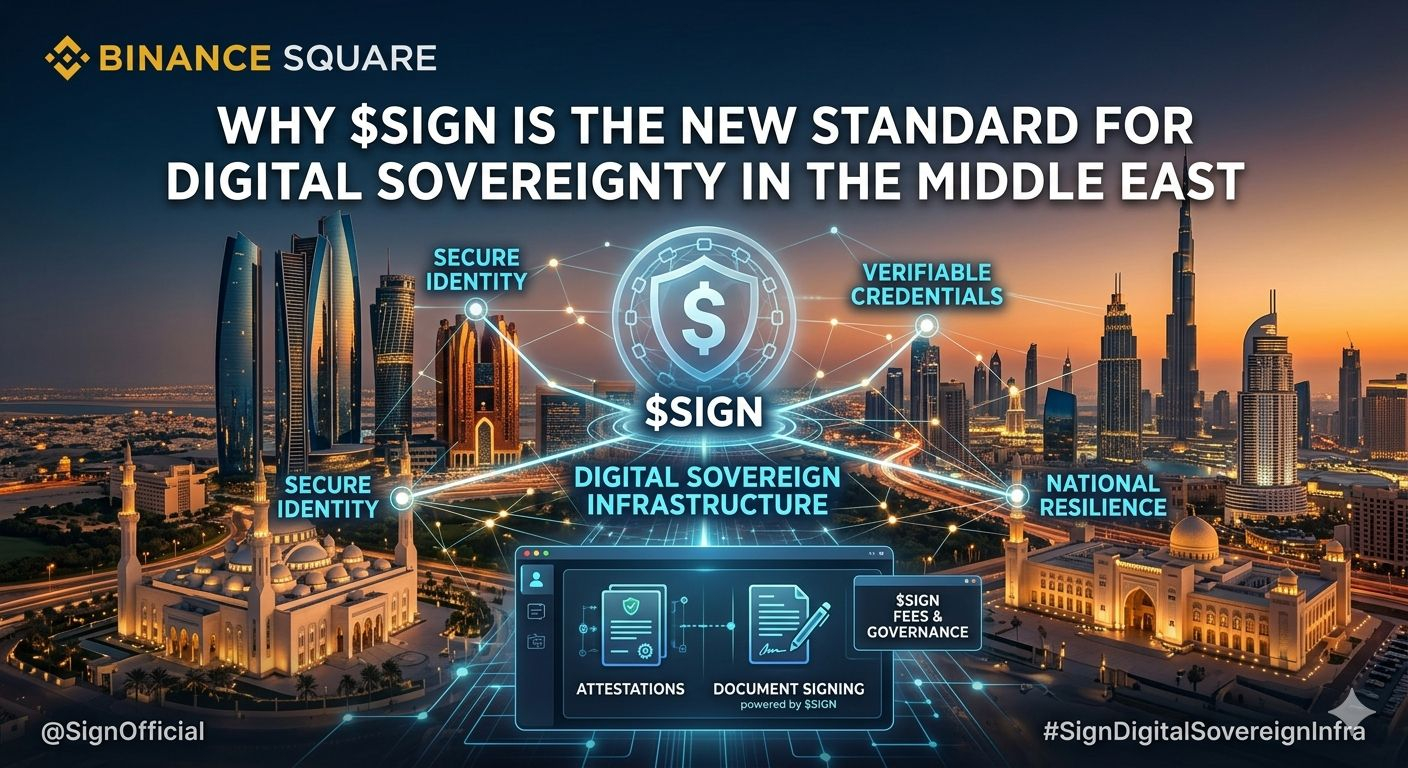
The Middle East is currently undergoing a rapid economic transformation, moving away from traditional oil-based models toward a future defined by digital innovation. As countries like the UAE and Saudi Arabia push for "Vision 2030" goals, the need for a secure, tamper-proof, and decentralized foundation has become paramount. This is where Sign (@SignOfficial) enters the frame as a critical player.
Building the "Digital Lifeboat"
Sign isn't just another blockchain protocol; it is building Digital Sovereign Infrastructure. By providing a "sovereign-grade" rail for money, identity, and capital, Sign ($SIGN) acts as a digital lifeboat for national systems. In a world of increasing geopolitical uncertainty, having a redundant, on-chain infrastructure ensures that essential services—from governance to financial settlements—remain operational even if centralized systems face disruptions.
Real-World Impact and Partnerships
What sets @SignOfficial apart is its real-world traction. The project has already established strategic partnerships with the Abu Dhabi Blockchain Center and the National Bank of the Kyrgyz Republic. These aren't just pilots; they are deployments aimed at modernizing financial systems and providing verifiable credentials at a national scale. By using the Sign Protocol, governments can issue tamper-proof attestations for everything from professional licenses to digital identities.
The Role of $SIGN
The $SIGN token sits at the heart of this ecosystem, powering the fees for attestations and document signing while providing governance for the network. As the Middle East continues to lead in blockchain adoption, the demand for a universal verification layer will only grow. Sign provides the tools to ensure that data remains verifiable and secure, fostering trust and accelerating economic growth across the region.
#SignDigitalSovereignInfra $SIGN