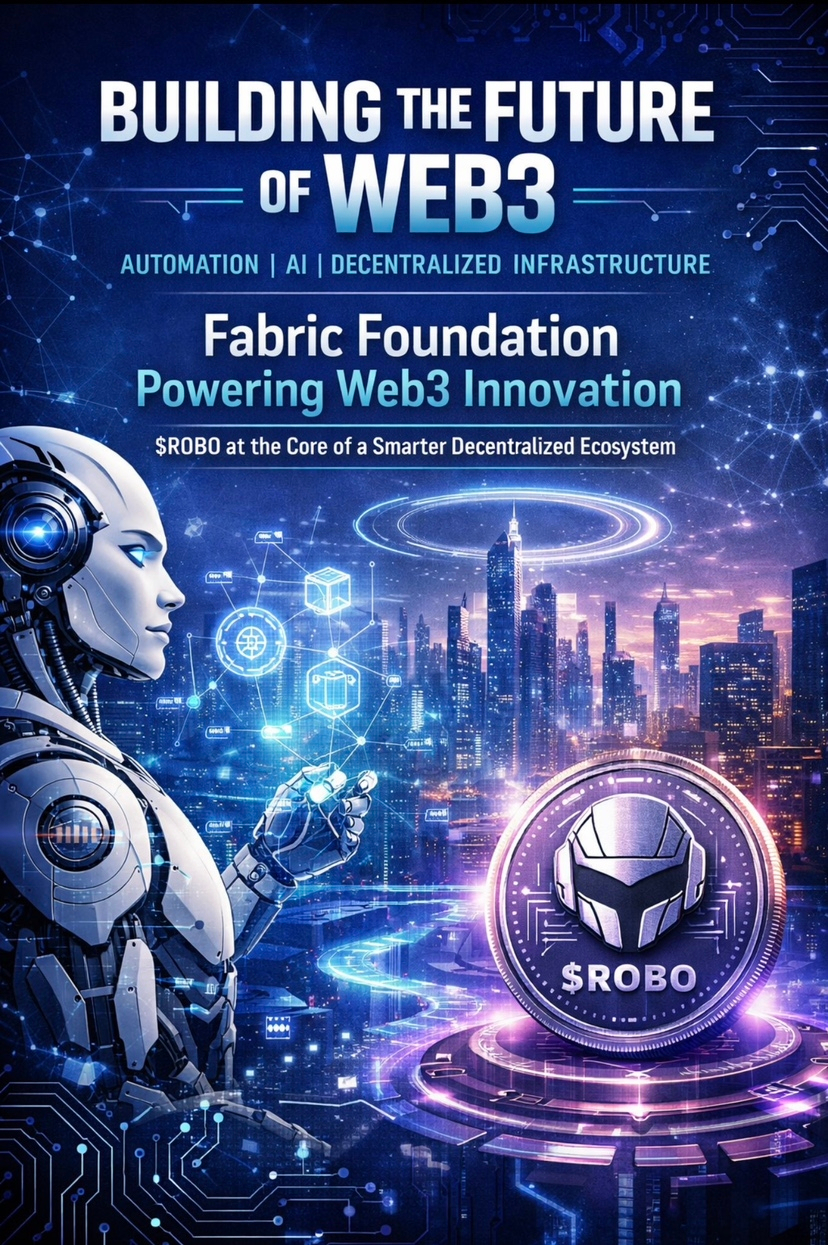
As the Web3 ecosystem matures, the conversation is slowly shifting from hype-driven narratives to something far more important—sustainable infrastructure. While many projects focus on end-user applications or short-term trends, the true long-term value in blockchain lies in the systems that enable everything else to function efficiently. This is exactly where Fabric Foundation is building its vision.
Fabric Foundation is focused on creating a seamless and scalable infrastructure layer designed to support the next generation of decentralized applications. In a fragmented ecosystem where networks often struggle with interoperability, performance, and developer experience, Fabric aims to bridge these gaps by offering a more unified and efficient environment.
One of the biggest challenges in Web3 today is complexity. Developers often face limitations when trying to build across multiple chains, while users encounter friction when interacting with decentralized systems. Fabric Foundation addresses this by simplifying the underlying architecture, allowing smoother interactions between different components of the blockchain ecosystem. This not only improves efficiency but also accelerates innovation by reducing barriers to entry.
From a broader perspective, infrastructure projects like Fabric are essential for the long-term success of Web3. Just as the internet required robust backend systems to scale globally, decentralized technologies need strong foundational layers to support widespread adoption. Without this, even the most promising applications struggle to maintain performance and reliability.
Another important aspect to consider is scalability. As more users enter the space, networks must handle increasing demand without compromising speed or cost efficiency. Fabric Foundation’s approach focuses on optimizing these core elements, ensuring that the ecosystem remains adaptable as it grows. This kind of forward-thinking design is crucial in an industry that evolves as rapidly as blockchain.
The role of the native token within this ecosystem is closely tied to its functionality. It facilitates network operations, incentivizes participation, and supports governance mechanisms that allow the community to contribute to the platform’s evolution. As the ecosystem expands, the token’s utility naturally becomes more integral to its overall success.
What sets Fabric Foundation apart is its focus on building for the long term. Instead of chasing immediate attention, it is developing infrastructure that can quietly support a wide range of applications and use cases. These are the types of projects that often go unnoticed in the early stages but become critical as adoption increases.
In many ways, the future of Web3 depends on projects like Fabric Foundation. As the industry moves toward real-world utility, the need for reliable, scalable, and developer-friendly infrastructure will only grow stronger. This is where true value is created—not just in visible applications, but in the layers that make those applications possible.
For those looking beyond short-term trends, understanding the importance of infrastructure is key. Fabric Foundation represents this shift toward building meaningful, long-lasting solutions in the blockchain space. It’s not just about what is being built today, but about creating a system that can support the innovations of tomorrow.
$ROBO @Fabric Foundation #ROBO #robo