

Across the world, governments are searching for ways to modernize public systems without losing control, transparency, or security. Digital transformation is no longer optional; it has become essential for economic growth, governance efficiency, and citizen trust. Yet many countries face a difficult challenge. Purely centralized systems often suffer from bureaucratic inefficiencies and data silos, while fully decentralized blockchain systems may seem too disruptive for national institutions.
For a country like , which is rapidly expanding its digital infrastructure while managing complex governance challenges, a hybrid approach may offer a practical path forward. Technologies like present an interesting blueprint for how governments could integrate blockchain verification into existing systems without replacing institutional authority. Instead of forcing a choice between centralized governance and decentralized transparency, hybrid frameworks combine both strengths.
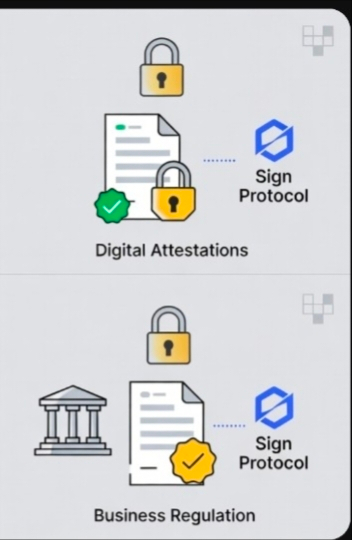
At the heart of Sign Protocol lies a simple but powerful idea: attestations. An attestation is a verifiable statement issued by a trusted authority. Governments already rely heavily on these in everyday life. Birth certificates, identity cards, educational degrees, tax documents, and business licenses are all forms of attestations confirming that a certain fact is true.
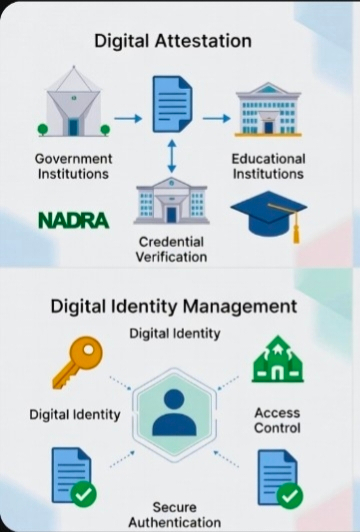
In Pakistan, millions of such records are issued every year by institutions such as , universities, provincial governments, and regulatory agencies. While these systems function effectively, they are often fragmented. Different departments maintain separate databases, and verifying records across institutions can sometimes be slow or complicated.
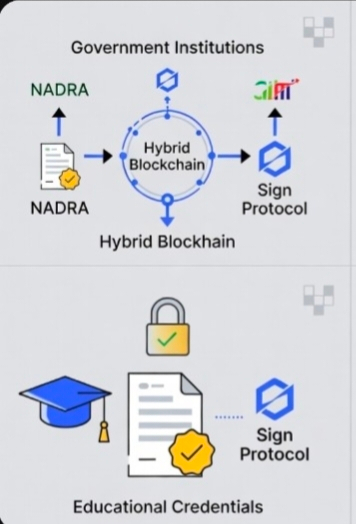
Sign Protocol introduces a way to anchor these attestations to blockchain infrastructure, allowing them to become cryptographically verifiable. In practical terms, this means a government issued document or certification could be confirmed as authentic instantly without requiring repeated manual verification. Institutions would still issue the credentials, but blockchain technology would provide a tamper-resistant verification layer.
This hybrid approach is particularly relevant for Pakistan because the country is already undergoing a digital transformation. Over the past decade, government institutions have invested heavily in digital identity, online services, and e-governance initiatives. The national identity system managed by NADRA is often cited as one of the most advanced in the region, providing biometric identification to millions of citizens.
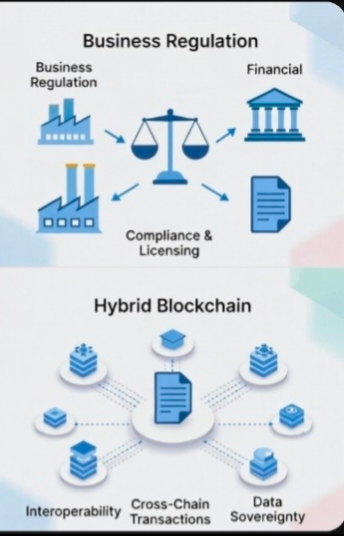
However, the next stage of digital governance requires more than simply digitizing records. It requires interoperability the ability for different systems to communicate and verify information seamlessly. Hybrid blockchain infrastructure could help bridge the gaps between institutions, creating a unified verification layer while allowing each department to maintain control over its own data.
Consider the example of educational credentials. Pakistani students frequently need to verify degrees and certificates for international study or employment. The verification process can involve multiple institutions, document authentication steps, and administrative delays. With a blockchain-backed attestation system, universities could issue verifiable digital credentials anchored to a shared infrastructure. Employers or universities abroad could instantly confirm their authenticity without complex verification procedures.
Another area where hybrid systems could be impactful is business regulation. Entrepreneurs in Pakistan often interact with multiple government departments to register companies, obtain licenses, and comply with tax regulations. Each step involves documentation that must be verified by different authorities.
Through attestation-based infrastructure, regulatory approvals could be issued as digital credentials that remain verifiable across the entire ecosystem. Once a license or certification is granted, other institutions could confirm its validity without requiring repeated submissions. This would significantly reduce bureaucratic friction for businesses and encourage innovation within the national economy.
Digital identity is another powerful use case. Pakistan already possesses a strong identity infrastructure through NADRA, but blockchain backed attestations could extend its capabilities. Instead of sharing full identity documents repeatedly, citizens could present cryptographic proofs confirming specific attributes such as age eligibility, citizenship status, or professional qualifications without revealing unnecessary personal information.
Such systems would strengthen privacy while maintaining reliable verification. In an era where cybersecurity threats are growing globally, reducing the amount of sensitive data circulating across multiple platforms becomes increasingly important.
Hybrid blockchain systems could also enhance transparency in governance. Public trust in institutions often depends on the ability to verify that processes are being conducted fairly and accurately. Traditional databases allow administrators to modify records, which can sometimes create concerns about data integrity.
When attestations are anchored to blockchain infrastructure, any change becomes traceable. This creates a tamper-evident record that strengthens accountability without exposing sensitive data publicly. Oversight bodies, auditors, and even citizens can verify that certain records exist and have not been altered improperly.
For Pakistan, where public-sector modernization is a national priority, these capabilities could contribute to stronger digital governance frameworks. Hybrid systems do not replace existing institutions; they enhance their credibility through transparent verification.
The idea of hybrid governance is gaining global attention because it reflects how governments actually operate. National systems cannot be rebuilt overnight, and policymakers must balance innovation with stability. Blockchain technology becomes most useful when it integrates with existing frameworks rather than attempting to replace them entirely.
Protocols like Sign demonstrate how this integration might work. Instead of treating blockchain as an alternative to government systems, they position it as a verification layer supporting institutional authority. Governments continue to write policies, regulate industries, and manage national data systems, while decentralized verification ensures that records remain trustworthy and tamper-resistant.
For Pakistan’s growing digital economy, this model could open new possibilities. Startups, financial institutions, and public agencies could collaborate around shared verification standards while maintaining their own operational independence. The result would be a more connected digital ecosystem capable of supporting innovation while preserving regulatory oversight.
International cooperation could also benefit from such infrastructure. Pakistani businesses and professionals increasingly operate in global markets where cross border verification of credentials is essential. Blockchain-based attestations provide a universal verification mechanism that can simplify international recognition of certifications and compliance documentation.
Ultimately, the relevance of Sign Protocol’s hybrid blueprint lies in its realism. Rather than imagining a world where governments disappear from digital infrastructure, it acknowledges that institutions remain central to governance. What changes is the way trust is established.
In traditional systems, trust relies heavily on centralized authority and manual verification. In hybrid systems, trust is strengthened by cryptographic proof and transparent infrastructure. Institutions still issue the statements, but technology ensures that those statements can be independently verified.
For Pakistan, which is navigating the complex journey of digital transformation, such models may become increasingly valuable. The challenge is not simply adopting new technology but designing systems that improve efficiency, transparency, and citizen confidence simultaneously.
Hybrid blockchain infrastructure built around verifiable attestations could become one of the tools that help achieve this balance. By combining institutional governance with decentralized verification, Pakistan could create digital public systems that are both modern and trustworthy.
In the long run, the success of any technological framework will depend on how effectively it serves people. Citizens want systems that are secure, transparent, and easy to use. Governments want infrastructure that supports policy implementation without compromising national stability.
Sign Protocol’s vision suggests that the future of governance may not lie in choosing between centralization and decentralization but in intelligently combining both. For countries like Pakistan, that balance could become the foundation of the next generation of digital public infrastructures.
@SignOfficial #SignDigitalSovereignInfra #sign $SIGN