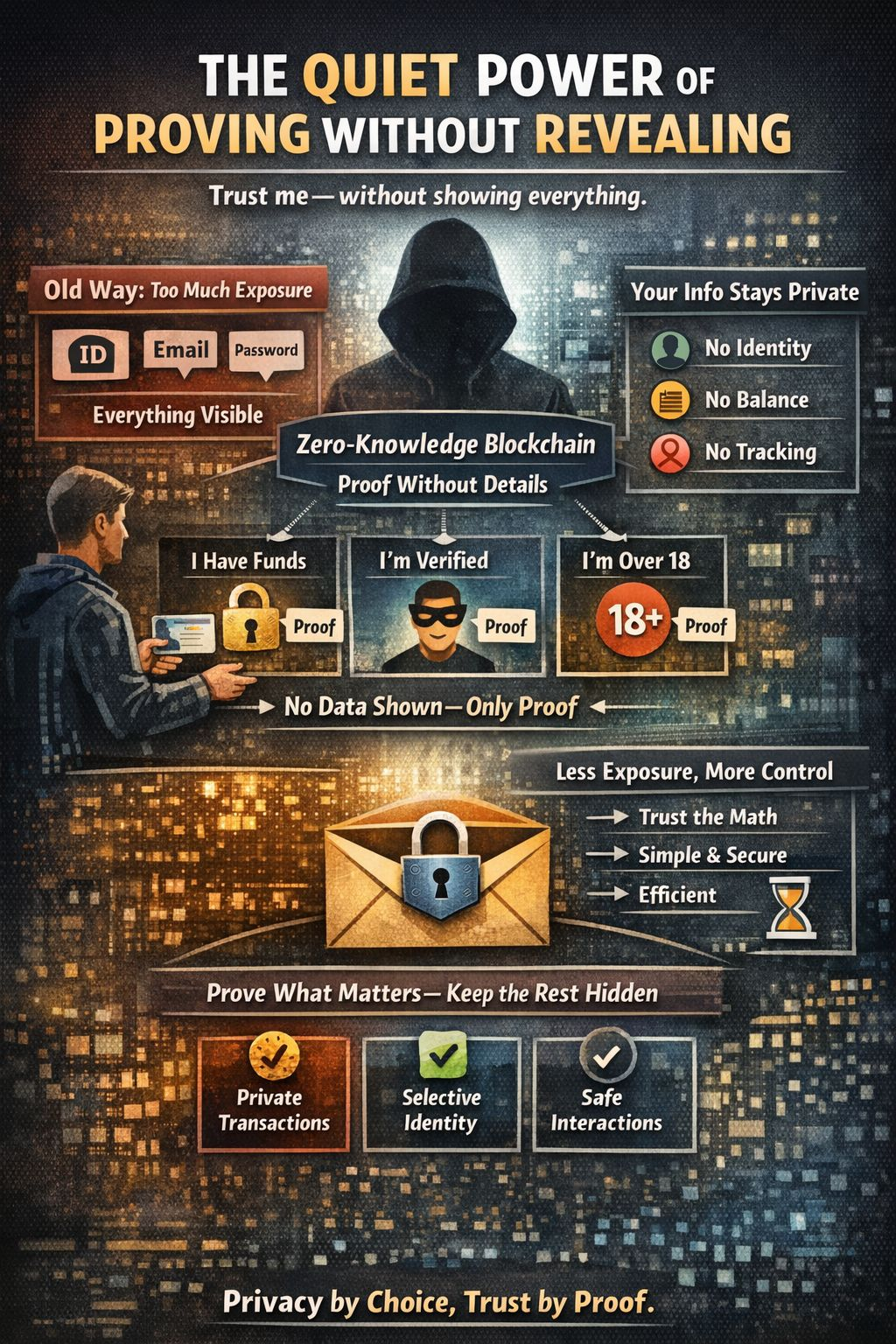
Há um tipo estranho de conforto em poder dizer: “confie em mim” e realmente ser acreditado—sem ter que se explicar. Imagine viver em um mundo onde você não precisa entregar seus dados pessoais apenas para provar algo simples. Sem formulários longos, sem exposição desnecessária, sem sentir que você deu mais do que deveria. Apenas uma prova silenciosa e confiante de que o que você está dizendo é verdadeiro. Essa é a ideia por trás das blockchains de conhecimento zero, e isso parece menos uma peça de tecnologia e mais algo que estamos perdendo há muito tempo.
Se você pensar sobre isso, a maioria de nossas vidas digitais é construída sobre o excesso de compartilhamento. Inscrever-se em um serviço básico geralmente significa fornecer seu e-mail, número de telefone, senhas e às vezes até mesmo documentos de identidade. Tudo isso apenas para confirmar uma pequena coisa. Com o tempo, nos acostumamos a essa troca, mesmo que não pareça totalmente certo. O blockchain deveria mudar isso removendo intermediários e dando às pessoas mais controle, mas introduziu um novo problema—tudo se tornou visível. Transações, padrões e comportamentos estavam todos expostos, e a privacidade ainda parecia fora de alcance.
É aqui que blockchains de zero-knowledge silenciosamente mudam a história. Em seu núcleo, eles permitem que você prove que algo é verdadeiro sem revelar a informação real por trás disso. Você pode provar que tem dinheiro suficiente sem mostrar seu saldo. Você pode provar sua identidade sem compartilhar quem você é. Você pode confirmar que algo é válido sem expor os detalhes. Parece quase impossível no início, mas funciona porque o sistema não precisa dos seus dados—ele só precisa de prova de que os dados atendem a certas condições.
O que torna isso tão diferente é a sensação de controle que ele traz de volta. Suas informações permanecem com você. Não estão armazenadas em outro lugar, não são rastreadas silenciosamente e não estão esperando para serem vazadas ou mal utilizadas. Em vez de confiar em empresas ou plataformas para proteger seus dados, você conta com a estrutura da própria prova. E isso muda completamente o relacionamento. Você não está mais esperando que alguém faça a coisa certa—você está operando em um sistema onde eles não precisam dos seus dados em primeiro lugar.
Há também algo surpreendentemente eficiente em tudo isso. Provas de zero-knowledge não apenas protegem a privacidade; elas simplificam processos. Em vez de verificar milhares de peças separadas de informação, um sistema pode verificar uma prova compacta que representa todas elas. É como confirmar a precisão de um livro inteiro verificando um resumo perfeitamente confiável. Menos esforço, menos dados, e ainda certeza completa.
Uma maneira simples de entender é imaginar ser solicitado a provar que você tem mais de uma certa idade. Normalmente, você mostraria sua identidade, revelando seu nome, endereço e data exata de nascimento. Mas com zero-knowledge, você mostraria apenas uma prova que diz: “sim, essa pessoa atende ao requisito de idade.” Nada mais. Nenhum detalhe extra, nenhuma exposição desnecessária. É uma pequena mudança, mas muda tudo sobre como a interação se sente segura e respeitosa.
Na vida real, essa abordagem tem implicações poderosas. Transações financeiras podem finalmente parecer privadas novamente, sem a sensação de que alguém poderia rastrear todo o seu histórico. A identidade se torna mais leve e menos onerosas, porque você não precisa continuar provando a si mesmo revelando mais informações a cada vez. Os sistemas ainda podem funcionar de forma segura e aplicar regras, mas sem ficar constantemente observando ou gravando tudo sobre você. Isso cria um equilíbrio que se sente muito mais próximo de como a confiança funciona no mundo real.
E essa é a ideia mais profunda por trás da tecnologia de zero-knowledge—ela reflete como os humanos interagem naturalmente. Na vida cotidiana, não revelamos tudo sobre nós mesmos para sermos confiáveis. Compartilhamos o que é necessário e mantemos o resto em privado. Em algum lugar ao longo do caminho, os sistemas digitais esqueceram esse equilíbrio. O zero-knowledge o traz de volta, silenciosamente e de forma reflexiva, sem forçar as pessoas a escolher entre confiança e privacidade.
Claro, ainda não é perfeito. A tecnologia por trás disso é complexa, e ainda leva tempo para desenvolvedores e usuários entenderem e adotarem totalmente. Como a maioria das inovações, parece um pouco distante no início. Mas se a história mostrou algo, é que as tecnologias mais transformadoras muitas vezes começam assim—complicadas, mal compreendidas, e então de repente em toda parte.
O que está por vir não parece alto ou dramático. Parece sutil. Um mundo digital onde você não é constantemente solicitado a dar mais de si mesmo apenas para participar. Onde provar algo não significa expor tudo. Onde a privacidade não é um recurso pelo qual você precisa lutar, mas algo embutido no sistema desde o início.
No final, blockchains de zero-knowledge não são realmente sobre esconder. Eles são sobre escolher. Escolher o que revelar, o que proteger, e como existir em um espaço digital sem perder a si mesmo no processo. E talvez isso é o que os torna tão poderosos—não apenas a tecnologia, mas a sensação de controle que eles silenciosamente devolvem às pessoas que os utilizam.
O futuro não é sobre mostrar tudo para ser confiável. É sobre provar o que importa—e manter o resto para si.
#night @MidnightNetwork $NIGHT