
There is a change happening in the world of intelligence and robotics that people do not always hear about. This change is not about features or big discoveries. It is about how machines talk to each other and work together. At the heart of this change are two ideas: open machine networks that let anyone join and closed AI systems that are controlled by a few companies. The Fabric Foundation is a project that is helping to shape this change.
In terms closed AI systems are what most people are used to. These systems are controlled by a company that owns all the data and makes all the rules. These systems are good at what they do. They are limited. They do not work well with systems. It is like each company has its garden with high walls around it. This way of doing things has been popular because it is easy to make money from it. It is safe.
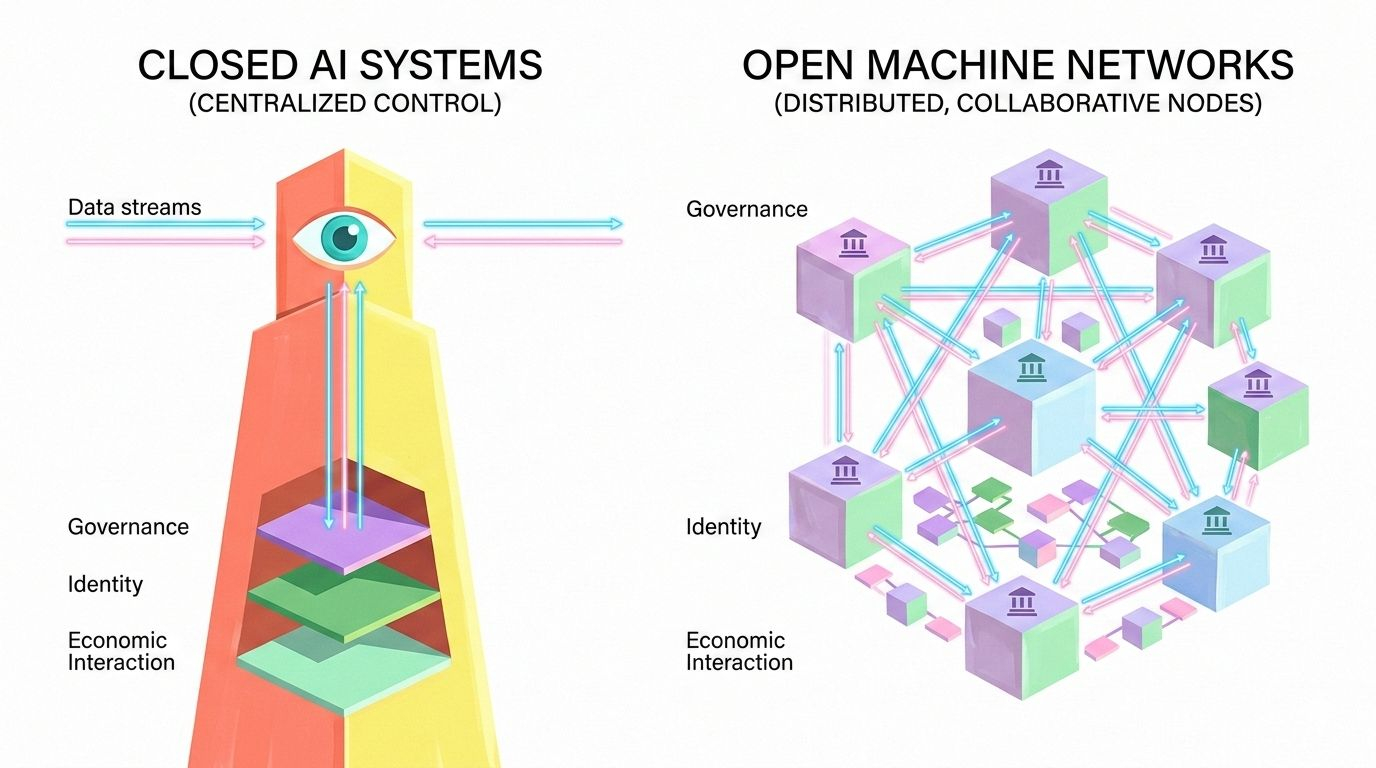
Open machine networks are different. They want to create a system where machines can work together and share information. This system is like a playground where different machines and software can work together without needing permission from one company. This idea is not just for software anymore. With robots and machines becoming more common this system is becoming more important. These machines can move around. Do tasks that have a big impact on the economy and society.. The systems we have now were designed for humans, not machines. Machines do not have identities or bank accounts. They need a system to work together safely and productively.
The @Fabric Foundation is an organization that wants to create a system where humans and machines can work together. They are not building robots or chatbots. They are building the framework that lets machines participate in the economy in a way that's fair and transparent. This includes creating identities for machines ways for them to work together and ways for them to exchange value.
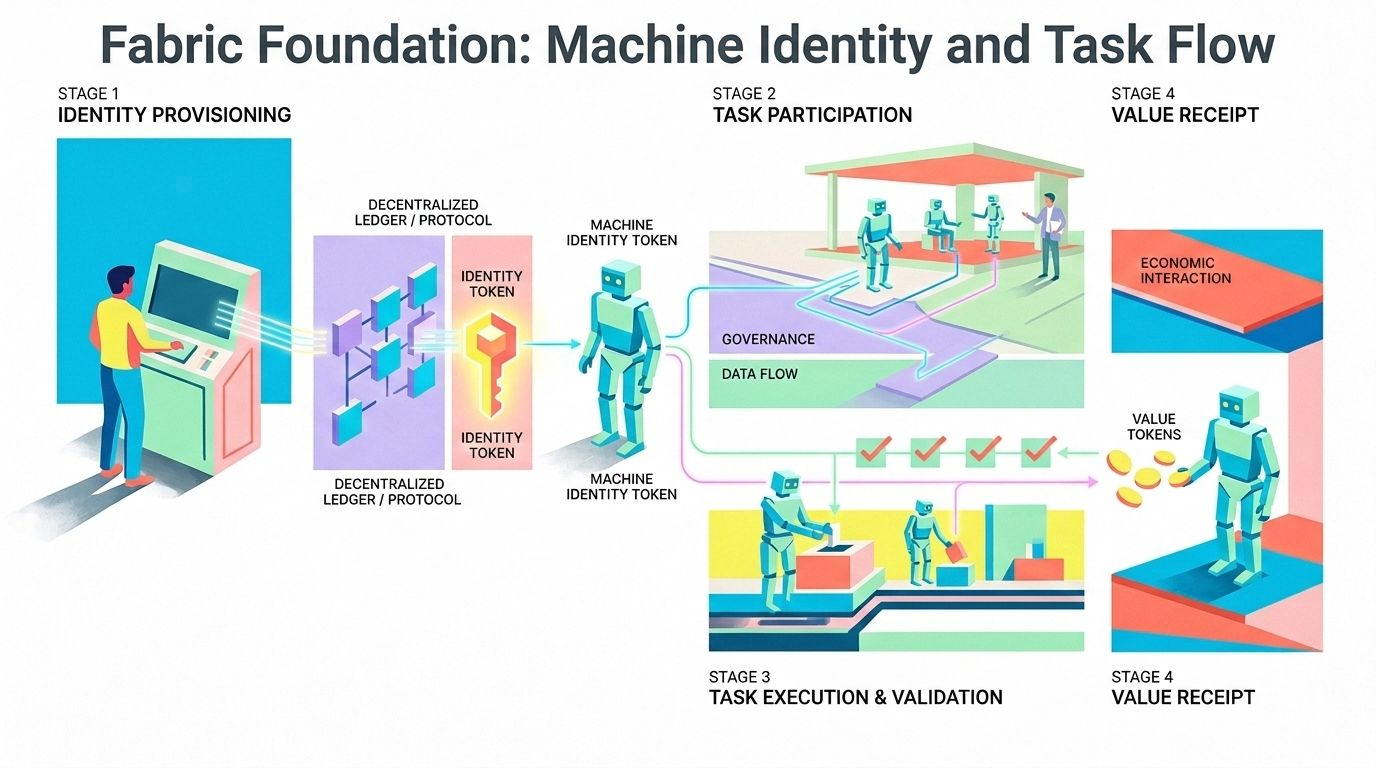
For example a robot could have its identity and receive payment for doing a task. It could work with robots without needing permission from one company. These ideas are still new and experimental. Projects like the Fabric Protocol are already showing how they can work.
The difference between machine networks and closed AI systems is big. Closed systems keep all the power and control in one place. Open machine networks share the power and opportunities. They encourage transparency and fairness. This means that anyone can contribute to the network and help it grow.
However there are risks to open machine networks. When many machines can work together it can be hard to keep track of what they're doing. There needs to be a way to make sure they are working safely and fairly. There is also the risk of actors exploiting the system. Building trust and identity verification is crucial.
Finally making these ideas a reality will take time and effort. Many of the systems that are needed are still being developed. It will take partnerships, hardware integration and real-world use cases to make open machine networks work.
What is clear is that the future of intelligence and robotics will not be shaped by one type of system. Both closed and open approaches will. Learn from each other. Projects like the Fabric Foundation are helping to shape the future of machine networks. The choices we make today about participation, identity and economic coordination will shape how machines integrate into our world tomorrow. In the end it is up, to us to decide whether this next phase of machines will benefit everyone or just a few.
