
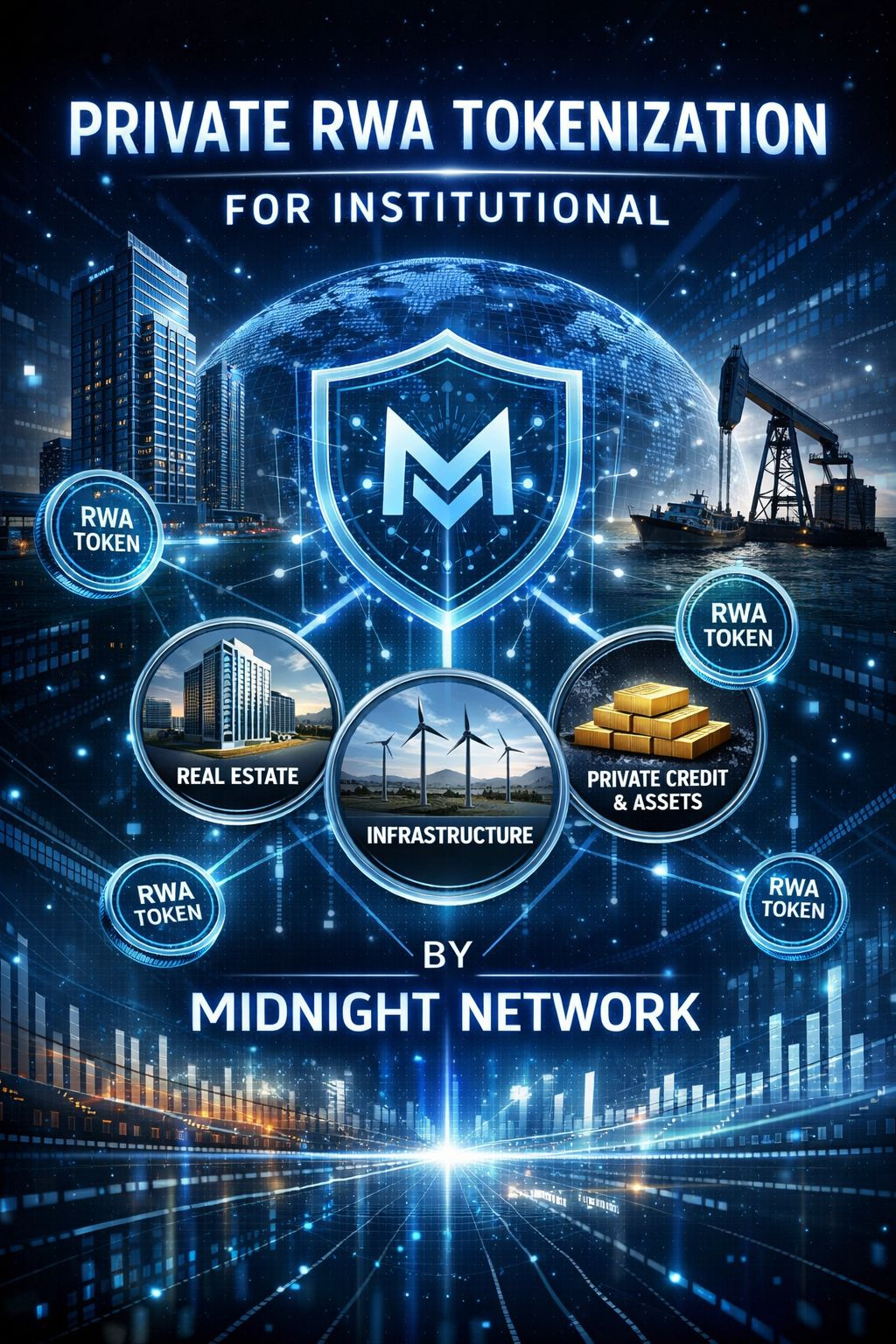
Vejo a tokenização privada de RWA como um dos casos de uso mais práticos do Midnight, especialmente para jogadores institucionais. Não é uma tokenização pública como muitas outras cadeias, mas sim a tokenização de ativos do mundo real, como imóveis, private equity, fundos, resseguro e créditos de carbono, onde a propriedade e os detalhes da transação estão totalmente ocultos e só são revelados seletivamente quando necessário para conformidade ou auditoria.
O Midnight tem trabalhado em estreita colaboração com a Zoniqx desde 2025, implementando o DyCIST, que significa Token de Segurança Dinâmico, Compatível e Interoperável, baseado no padrão ERC 7518. O DyCIST inclui verificações de conformidade integradas, verificação de identidade, interoperabilidade entre cadeias e salvaguardas de privacidade. Isso permite que instituições tokenizem ativos enquanto mantêm informações sensíveis, como avaliação, investidores e termos contratuais, em sigilo.
Por exemplo, um fundo de private equity pode ser tokenizado e transferido de forma confidencial, enquanto a propriedade e os retornos permanecem verificáveis sem expor detalhes sensíveis.
Parcerias adicionais como a Oxbridge Re, que se concentra em tokenizar valores mobiliários de resseguro, demonstram ainda mais que a Midnight é bem adequada para ativos regulados que requerem tanto privacidade quanto conformidade. Ao contrário das cadeias públicas, onde os dados podem ser expostos ou antecipados, a Midnight utiliza divulgação seletiva e provas de conhecimento zero para dar confiança às instituições para embarcar. Isso poderia potencialmente desbloquear trilhões de dólares em RWA, com estimativas sugerindo uma oportunidade de 10 a 20 trilhões de dólares.
Acredito que isso representa um ponto de virada. As instituições não querem total anonimato como o Monero, mas também não podem aceitar total transparência como o Ethereum. A Midnight encontra um equilíbrio oferecendo privacidade racional para a interseção das finanças tradicionais e Web3. Com a mainnet agora ao vivo e a Zoniqx implantando ativamente, este é um momento forte para desenvolvedores e instituições experimentarem com imóveis tokenizados verdadeiramente privados ou crédito privado. O potencial de adoção é enorme.