
I once noticed something odd while moving funds between wallets. One transaction went through smoothly, and the next seemed to linger in a limbo I couldn’t see. I wasn’t overloaded, and fees weren’t the problem. It was just… stuck. Nothing broke, nothing was lost, but it left me staring at the screen longer than usual, wondering why the system didn’t behave as I expected. That moment, small as it was, made me think about the invisible mechanics holding these networks together and how fragile the idea of “sovereignty” can feel in practice.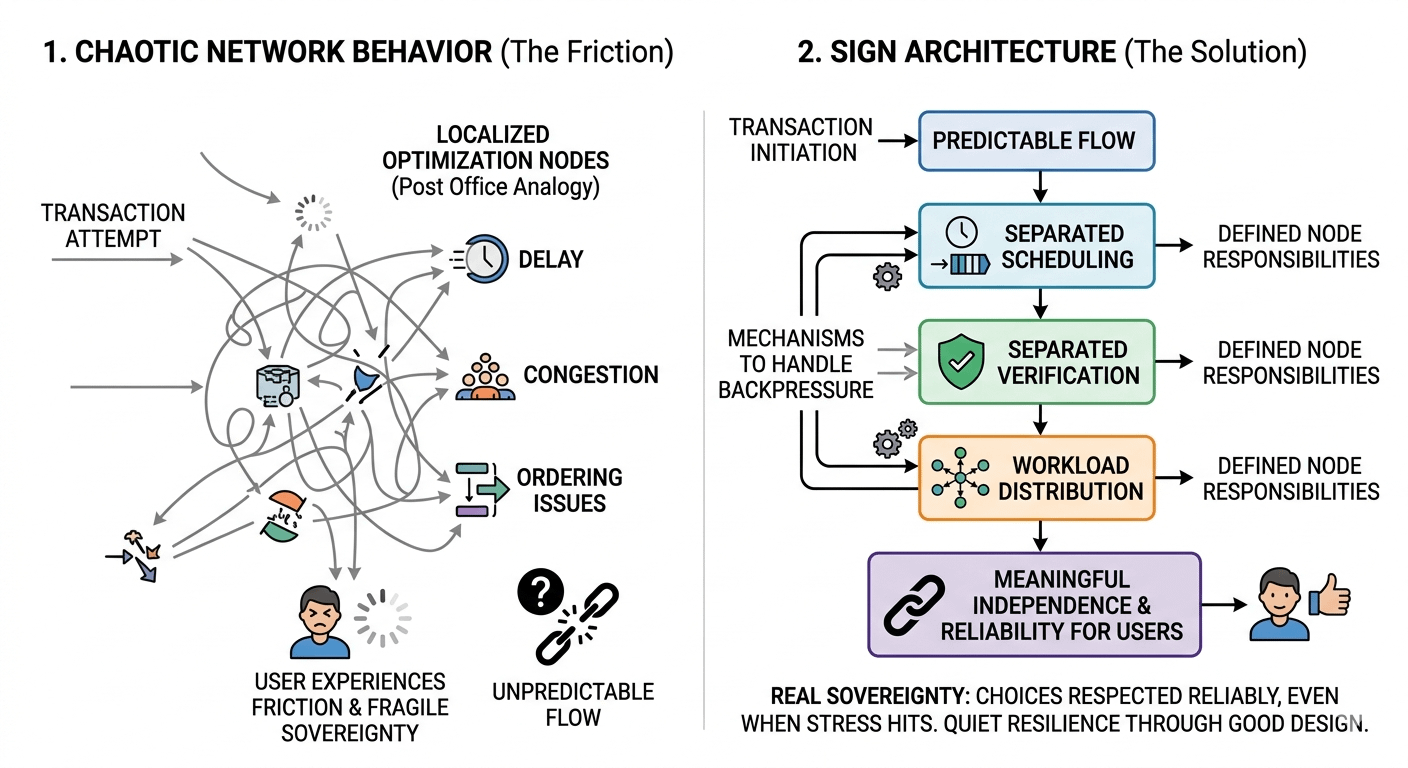
After seeing this happen a few times, I realized it wasn’t just about individual transactions. It’s about how networks coordinate themselves, how verification happens, how congestion is handled, and how work is distributed across nodes. In theory, decentralized networks promise independence and control. In practice, delays, ordering issues, and hidden bottlenecks constantly remind you that autonomy is always interacting with structure and sometimes friction shows up when you least expect it.
It helps me to think about it like a postal system. Imagine sending letters in a city where each post office tries to optimize its own workflow independently. Even if every post office is efficient locally, packages can get delayed if the routing isn’t aligned or if one office gets overwhelmed. A network may seem “autonomous,” but unless all its parts coordinate smoothly, users feel the friction firsthand. That friction is what I noticed in my own interactions where the promise of freedom meets the reality of infrastructure.
When I look at how Sign approaches these challenges, I see an attempt to organize the chaos rather than just promise speed or freedom. The design separates scheduling, verification, and workload distribution in ways that make the flow more predictable. Nodes have defined responsibilities, and there are mechanisms to handle backpressure so one slow part doesn’t stall everything else. From a system perspective, it feels like someone is trying to balance autonomy with reliability but it also makes me wonder how much of that “sovereignty” is really experienced at the user level.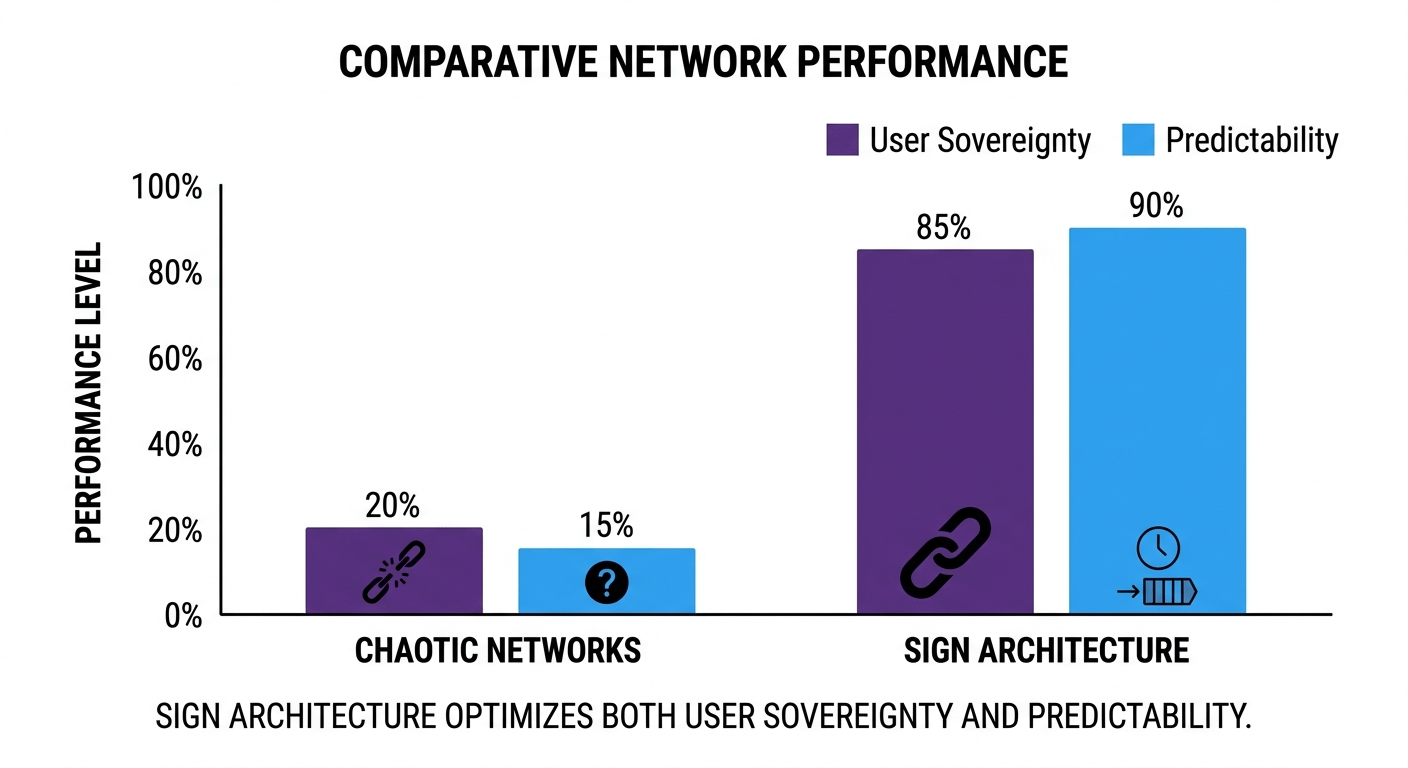
What matters in practice, I think, isn’t just correctness. It’s whether the system preserves meaningful independence for users even when stress hits, even when nodes fall behind, or when workloads spike. In my experience watching networks, the quiet resilience is what counts the infrastructure that keeps working when everything around it feels chaotic. Good design doesn’t shout; it quietly supports the promise of autonomy, even when the ideal and the reality are not perfectly aligned.
Reflecting on Sign, I keep coming back to that tension. Real sovereignty is about more than permissionless access it’s about having your choices respected by the system, reliably, when it matters most. And that is harder to achieve than most headlines suggest.