

I had an opportunity to visit a small technological incubator last month, where several prototype robots were tested. One of them was a delivery bot that will transport small packages throughout a campus and it was an experiment that I had never previously seen. Rather than merely executing a task, the action of this robot was logged on to a network that could reward the robot using digital means.
I tracked it as it picked a package, maneuvered through a busy hall and dropped it at the dorm of a student. The act appeared commonplace but the machinery that was involved was not. The verification of each job was done by a decentralized network and the robot was allocated a small amount of tokens through an automatic system which was called ROBO when the job was completed right.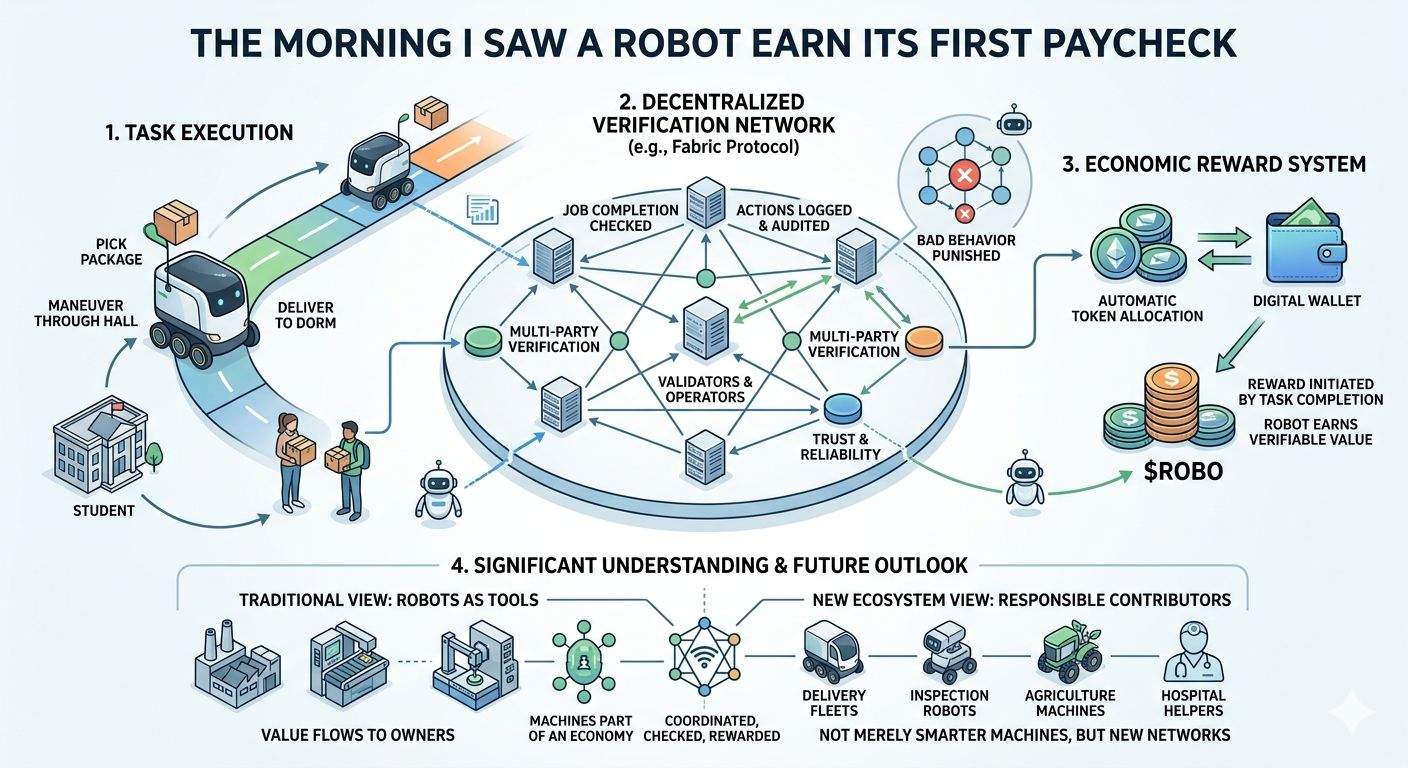
One of the mentors around me told me I shouldn’t give robots money, and I mentioned that I was interested. It has to do with the establishment of a system in which machines can be a part of an economy. All the actions are monitored, checked and rewarded.
This incident helped me to understand something significant. So far, robots have been regarded as tools. They do work, yet every value they create flows directly to the companies which own them. Having a system such as Fabric Protocol, the machines may be present within a network, where the value of their work can be verifiable and economic incentives influence the actions of various actors.
It brought me to mind of human work in miniature. The robot was also earning in a sense that could be verified, audited and recorded without having to involve a single employer just as the people are earning out of doing something. It was not self governing as far as human sense was concerned but its work was acknowledged and compensated openly.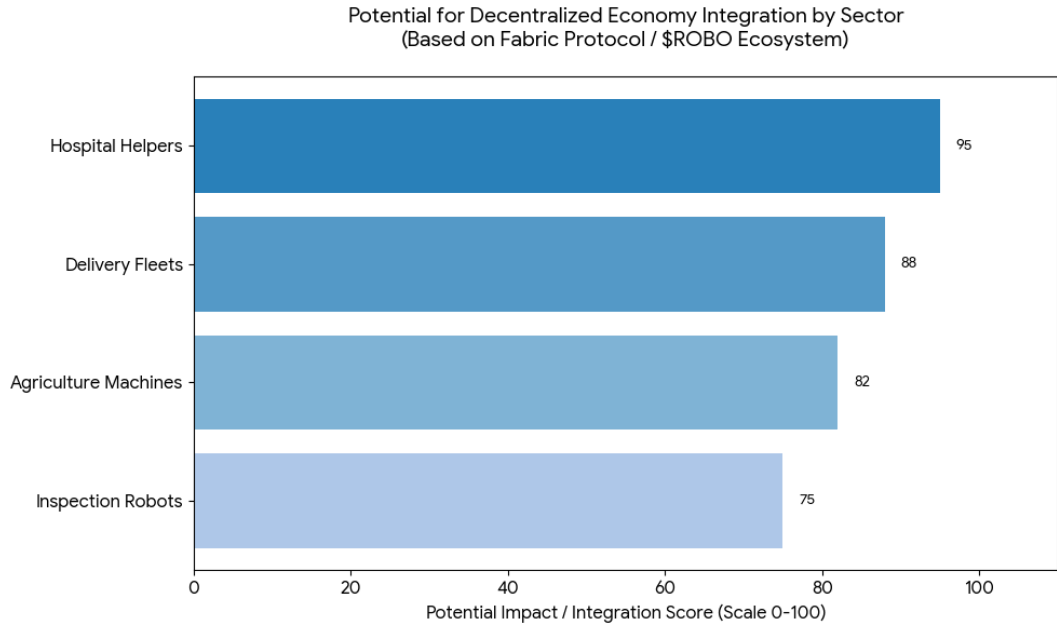
This is enabled by the ROBO token of fabric. The network allows operators, developers, and validators to interact, and this provides a degree of accountability. Rewards are initiated by the completion of tasks by robots. Those participants who do not behave properly are punished. It is an arrangement that promotes reliability, coordination and trust.
As the robot was moving through the hallway, I began to wonder what this would be like in a bigger environment. The delivery fleets, inspection robots, autonomous machines in agriculture, as well as hospital helpers could all work within the same networks. Their work might be organized, checked and rewarded within several environments and without centralized systems.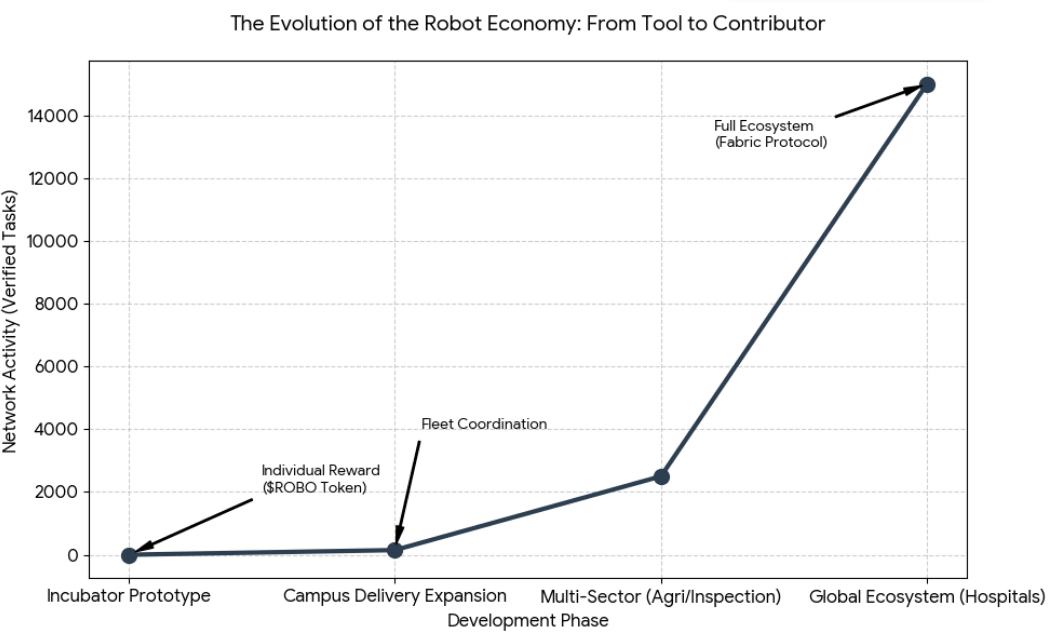
The overall moral struck me as the robot went back to its station. Technology is not merely an issue of smarter machines. It is the creation of ecosystems in which machines can interact, learn together and be responsible contributors to economic systems.
The truth that I learned that morning with the help of a mere delivery is that the future of automation does not lie in the robots per se, but in the networks of which they make sense and meaningful.
@Fabric Foundation #ROBO $ROBO
