

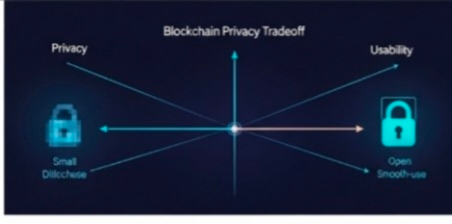
When people first encounter blockchain technology, the discussion usually begins with transparency. Public ledgers allow anyone to verify transactions, which creates a level of trust that traditional financial systems sometimes struggle to achieve. Yet over time many developers and businesses began to notice a challenge hidden inside that transparency. If every transaction, wallet address, and interaction is visible to everyone, how can organizations or individuals protect sensitive information? This is the question that motivated the development of Midnight Network, a project focused on bringing practical privacy to decentralized systems.
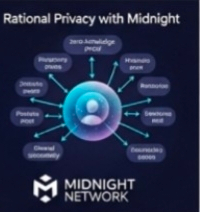
Midnight Network approaches the blockchain privacy problem in a slightly different way compared to earlier privacy-focused cryptocurrencies. Instead of creating a system where everything is permanently hidden, the network focuses on something known as selective disclosure. In simple terms, this means information can remain private by default but can still be shared with specific parties when necessary. For example, a company could prove that it follows regulatory rules without revealing all of its internal transaction details. This balance between verification and confidentiality is sometimes described as “rational privacy,” an idea that tries to combine transparency with practical data protection.
To understand why this matters, it helps to look at how traditional blockchains work. Networks like Bitcoin and Ethereum record transactions on public ledgers where anyone can inspect activity. This design is excellent for open financial systems, but it also means sensitive information may be indirectly exposed. Businesses may hesitate to run operations on a system where competitors could analyze their financial behavior. Midnight Network attempts to solve this issue by allowing transactions and smart contract interactions to remain verifiable while protecting the data behind them.
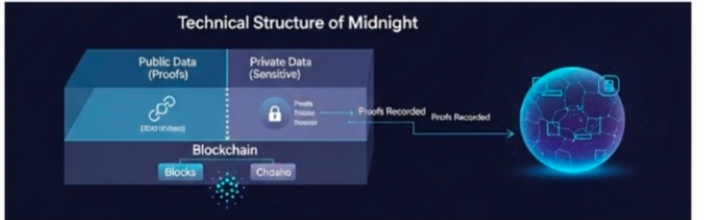
The technology enabling this approach relies heavily on zero-knowledge cryptography. These cryptographic proofs allow one party to demonstrate that something is true without revealing the underlying data. Imagine proving that you meet the age requirement for a service without revealing your exact birthdate. In the context of blockchain, zero-knowledge proofs allow users to confirm that transactions follow network rules while keeping details hidden. This capability opens the door for privacy-preserving decentralized applications, ranging from financial tools to identity systems.
Another interesting element of Midnight Network is its connection to broader blockchain infrastructure. The network has been designed as a specialized environment for confidential smart contracts and secure data sharing, particularly within ecosystems that value research-driven development. The goal is not simply to create another cryptocurrency but to build a privacy layer that developers can use when they need stronger data protection in decentralized applications.
From an industry perspective, the timing of such a project is significant. In recent years discussions about digital privacy have expanded far beyond the crypto community. Governments around the world are introducing stronger data protection laws, while businesses face increasing expectations regarding how they handle customer information. Blockchain technology must adapt to these realities if it hopes to support enterprise applications, healthcare systems, or global financial services. Midnight Network attempts to respond to that need by allowing systems to remain decentralized while respecting privacy requirements.
There is also an important philosophical shift happening here. Early blockchain narratives often promoted the idea that radical transparency was the ultimate solution for digital trust. However, real-world systems rarely function with complete openness. Banking, healthcare, and corporate operations all rely on selective sharing of information. Midnight Network reflects a growing recognition that decentralized technology must incorporate similar principles if it wants to operate at global scale.
Of course, privacy-focused networks face several challenges. Implementing advanced cryptographic techniques can increase computational complexity, which may affect scalability and performance. Developers must constantly optimize these systems so that privacy features do not slow down the network or increase costs too dramatically. Achieving this balance between security, efficiency, and usability remains one of the biggest technical challenges in the blockchain industry.
Regulatory perception is another factor shaping the future of privacy technologies. Some policymakers worry that strong privacy tools could enable financial misuse or reduce transparency in markets. Supporters of projects like Midnight Network argue that selective disclosure actually strengthens accountability because it allows proof of compliance without exposing unnecessary data. If the system works as intended, regulators could verify that rules are being followed while businesses and individuals maintain control over sensitive information.
An additional insight worth noting is that privacy infrastructure often becomes valuable only when ecosystems mature. In the early stages of a technology, experimentation focuses on speed, speculation, or new financial models. As adoption grows and real economic activity begins flowing through networks, concerns about confidentiality naturally increase. Midnight Network appears to be positioning itself for that stage of blockchain evolution, where privacy is no longer optional but essential.
Looking forward, the role of privacy-focused infrastructure in Web3 could become increasingly important. Decentralized systems are gradually expanding beyond digital assets into areas like identity management, governance, and enterprise collaboration. Each of these sectors involves data that cannot simply be published on a public ledger. Networks capable of protecting information while preserving trust may become key building blocks for the next generation of decentralized applications.
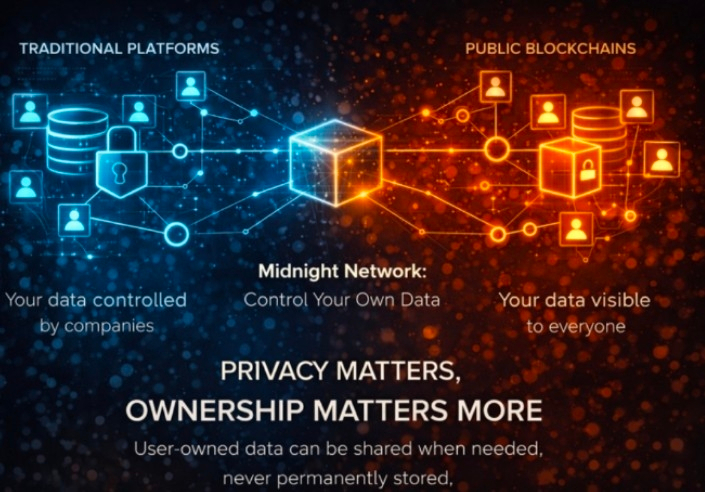
In the end, Midnight Network represents more than just another blockchain experiment. It reflects a deeper conversation about how digital systems should handle information in an age where data is both valuable and vulnerable. By exploring ways to combine transparency with confidentiality, the project highlights one of the most important questions facing the future of Web3: how can decentralized technology remain open while still respecting the privacy of the
people who use it?