

I was scrolling late at night again, half awake, half annoyed, seeing the same recycled ideas dressed up as “the future.” AI this, modular that, “next-gen infrastructure” everywhere. It all starts blending into one long thread of promises nobody fully believes anymore.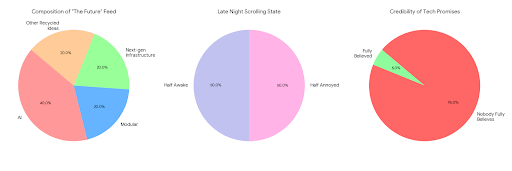
And then I stumbled on Midnight again.
Not in a flashy way. No loud hype, no aggressive marketing. Just sitting there, talking about privacy like it actually still matters.
Which, honestly, feels almost out of place in crypto right now.
Because somewhere along the way, we stopped caring about that. Or maybe we didn’t stop caring—we just got distracted. Charts, airdrops, narratives, fast money. Privacy doesn’t trend the same way a memecoin does.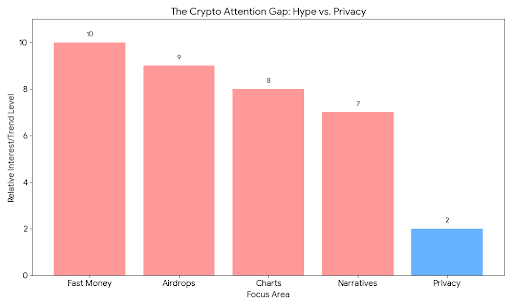
But Midnight is built around this idea that you should be able to use blockchain without exposing everything. Using zero-knowledge proofs to prove things without revealing the actual data.
And yeah, that sounds technical, but the idea is simple: you can show something is true without showing the details behind it.
That’s it.
And weirdly, that feels more “crypto” than most of what’s happening today.
Because if you really think about it, most blockchains right now are basically public diaries. Every transaction, every move, permanently visible. Anyone can track you if they try hard enough.
We’ve just accepted that as normal.
Midnight is trying to challenge that.
But here’s where I get stuck.
Not on the tech. The tech is fine. Zero-knowledge has come a long way. It’s real now, not just theory. Faster, more usable, actually being integrated into systems.
The real question is: will anyone actually use it?
Because I’ve been in this space long enough to see how this goes. Good ideas aren’t enough. Clean architecture isn’t enough. Even solving real problems isn’t always enough.
People use what’s easy. What’s familiar. What makes them money quickly.
And privacy… doesn’t always check those boxes.
Most users don’t wake up thinking, “I need better data protection today.” They wake up thinking, “What’s pumping?” or “Where’s the opportunity?”
That’s just the reality.
So Midnight has to do something really difficult. It has to make privacy feel effortless. Invisible, almost. Like something that’s just there, working in the background without asking the user to think too much.
Because the second it feels complicated, people drop off.
And that’s something I don’t think we talk about enough. We keep saying “better infrastructure will fix everything,” but infrastructure doesn’t fail because it’s bad.
It fails because humans are inconsistent.
Because when real traffic hits—when users actually show up—that’s when things break. Not always technically, but socially. Liquidity spreads thin. Fees spike. People panic. UX gets tested in ways no testnet ever predicts.
So when I look at Midnight, I’m not just thinking about how it works in theory. I’m thinking about what happens if it actually gets popular.
Can it handle real usage?
Can it attract developers?
Can it build enough liquidity to matter?
Because without liquidity, nothing lives in crypto. You can have the most advanced system in the world, but if nobody is trading, building, or interacting, it just sits there.
And liquidity doesn’t come from technology alone. It comes from attention.
That’s the uncomfortable part.
Right now, attention is still going toward louder things. AI narratives, fast-launch chains, anything that can go viral quickly. Privacy is quieter. It’s slower. It doesn’t create instant excitement.
So Midnight is kind of swimming against the current.
And I respect that. But I also know how hard that is.
There’s also this weird middle ground Midnight seems to be aiming for—balancing privacy with usability, maybe even compliance. Not going full anonymous chaos, but not fully transparent either.
That’s tricky.
Because if you lean too far toward control, crypto people push back. If you lean too far toward anonymity, regulators start paying attention. And if you try to sit in the middle, you risk not fully satisfying either side.
It’s like walking a tightrope where both sides are judging you.
Still, I can’t ignore the timing.
People are starting to care more about data again. Not just in crypto, but everywhere. Data leaks, tracking, surveillance—it’s becoming harder to ignore how exposed everything is.
So maybe Midnight isn’t early. Maybe it’s just… arriving at the right moment.
Or maybe it’s still early, and people won’t care until it’s too late. That happens a lot too.
I also keep thinking about developers. Because at the end of the day, users follow apps. And apps come from developers.
So Midnight needs builders.
Not just a few, but enough to create an ecosystem. Enough to make people curious. Enough to give users a reason to show up and stay.
And developers don’t just go where the tech is good. They go where there’s momentum. Where there’s funding. Where there’s a chance their work will actually be used.
So Midnight has to create that gravity somehow.
Which is hard, especially in a market that’s more cautious now. People aren’t throwing money at every new idea like before. There’s more hesitation. More skepticism.
Honestly, that might be a good thing. But it also means projects like this have to prove themselves more.
No shortcuts.
And then there’s the user side again. The part nobody can really control.
People are lazy. Not in a bad way, just in a human way. They don’t want to think too much. They don’t want extra steps. They don’t want complexity.
So if Midnight can hide all the complexity—make privacy just feel like a default instead of a feature—that’s where it has a chance.
If it can’t, it risks becoming another “smart idea” that only a small group of people actually use.
I don’t think Midnight is fake innovation. It doesn’t feel like that. It feels like it’s trying to solve something real.
But I’ve also seen real solutions fail because they didn’t fit how people behave.
And that’s the part that keeps me cautious.
Crypto loves to believe that better tech automatically wins. But most of the time, the thing that wins is the thing people actually show up for.
Even if it’s messy. Even if it’s imperfect.
So yeah, I’m watching Midnight.
Not hyped, not dismissing it either.
Just… paying attention.
Because it’s one of the few projects that feels like it’s asking a different question. Not “how do we go faster?” but “how do we protect what matters while we move?”
And that’s a better question, in my opinion.
But better questions don’t always get better outcomes.
Sometimes they just sit there, waiting for people to care.
Maybe Midnight becomes something important, something quietly integrated into how we use crypto without even thinking about it.
Or maybe it stays in that space of “this makes sense” but never really breaks through.
I’ve seen both outcomes before.
So I’m not making predictions.
I’m just sitting here, late at night again, looking at it and thinking—
this could matter.
Or it could end up like a lot of things in this space.
Technically solid.
Conceptually right.
And still… empty.