
It took me a while to understand why @MidnightNetwork idea of fair economic and community driven distribution kept pulling me back, but once it clicked, it wasn’t the mechanics that stood out, it was the quiet shift in who actually gets to participate early.
Most networks talk about fairness, but what they usually mean is access after insiders have already positioned themselves. When I first looked at Midnight, what struck me wasn’t just the distribution model on paper, it was how it tries to rework the starting line itself. Instead of a heavy pre-mine or a tight allocation to venture funds, the design leans toward broader participation, with estimates suggesting that over 60 percent of initial tokens are intended for community-level distribution rather than concentrated holders. That number matters because in most recent launches, the inverse is true, with insiders often controlling 40 to 70 percent before public markets even open.
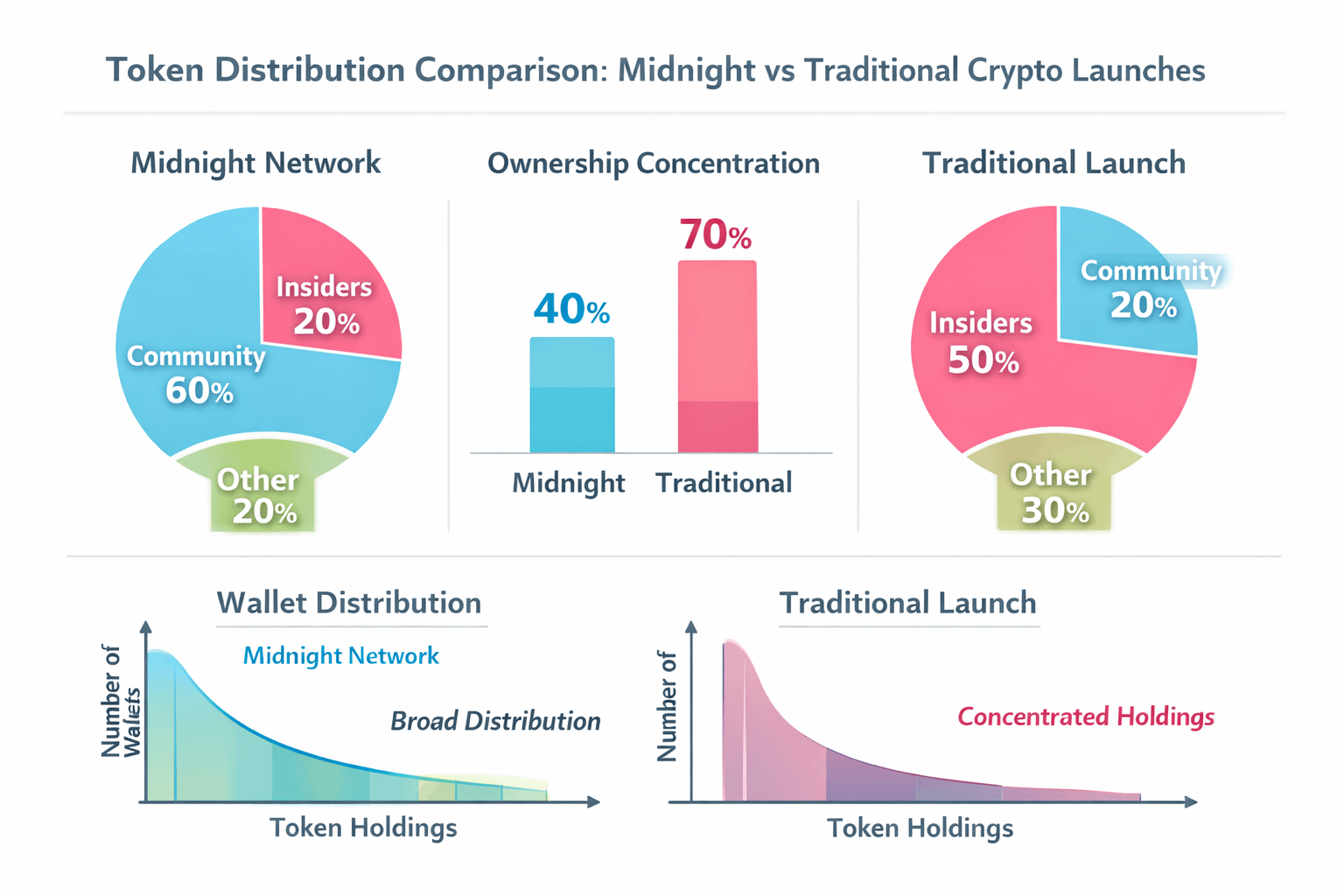
On the surface, it looks simple. More tokens go to more people. But underneath, that changes behavior. When ownership is wide, early price movements tend to be less explosive but also less fragile. You don’t get the same sharp spikes followed by equally sharp collapses driven by a handful of wallets exiting. Instead, liquidity builds slower, and price discovery becomes a steady process rather than a sudden event.
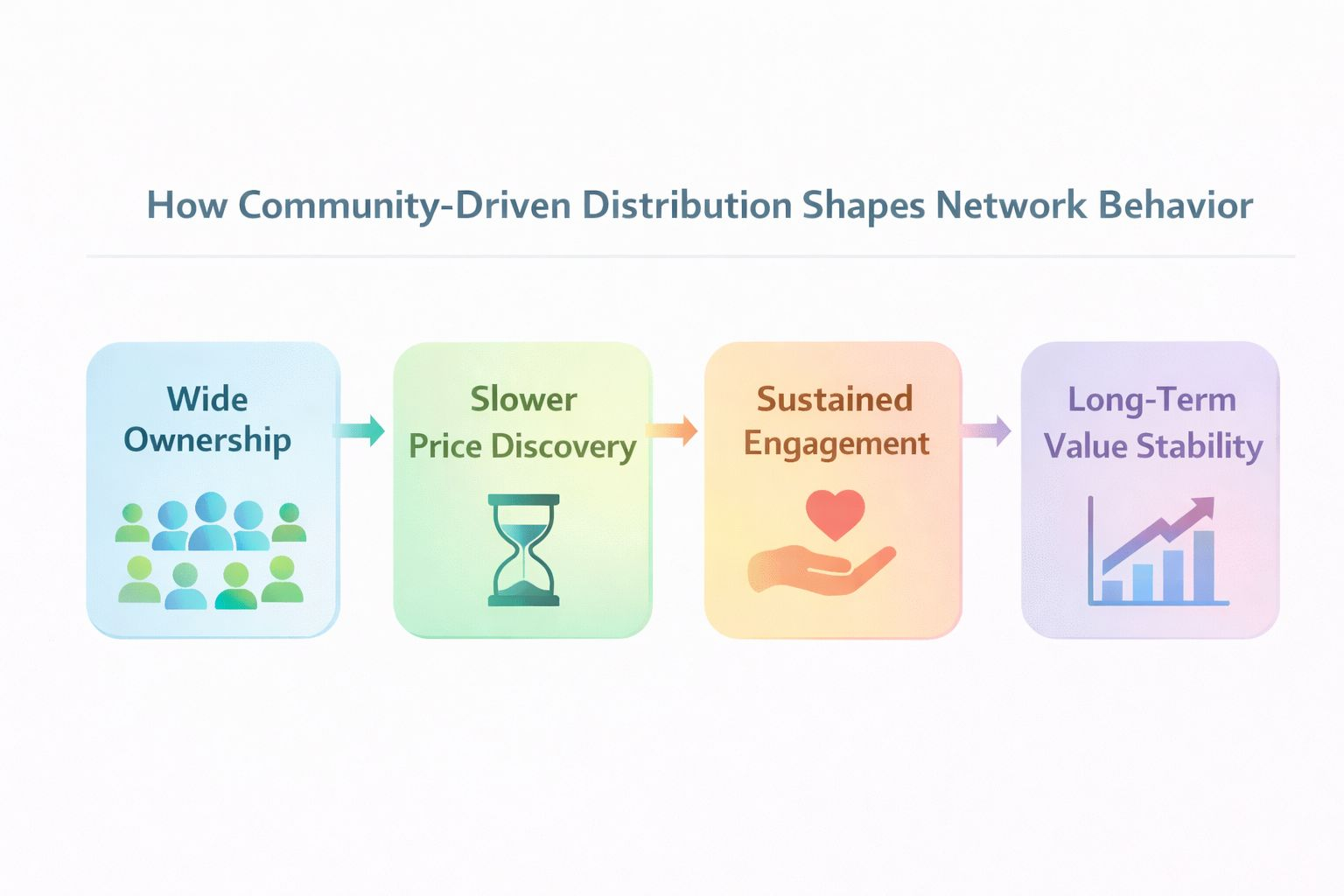
That slower build creates another effect. It forces the network to rely on actual usage rather than hype cycles. If 100,000 participants hold small allocations instead of 100 holding large ones, the only way value sustains is if those smaller holders stay engaged. They need reasons to transact, to stake, to contribute. Otherwise, the distribution becomes noise rather than foundation.
What’s interesting is how this aligns with what we’re seeing in the broader market right now. In early 2026, liquidity is tighter than it was during the 2021 cycle, with on-chain volumes down roughly 15 percent compared to peak periods, depending on the chain you look at. Retail participation is more cautious. That environment rewards networks that don’t rely on fast inflows of speculative capital. Midnight seems to be positioning itself for that reality rather than the last cycle’s conditions.
Of course, fairness in distribution doesn’t automatically mean fairness in outcomes. That’s where the deeper layer comes in. Even if tokens are widely distributed, influence can still concentrate through governance mechanisms, staking power, or coordinated groups. If 10 percent of participants organize effectively, they can still shape decisions more than the remaining 90 percent acting individually. So the question becomes whether Midnight can maintain not just distributed ownership, but distributed influence over time.
There’s also the risk of dilution in engagement. When everyone owns a little, it can mean no one feels responsible for the whole. We’ve seen this before. Airdrops that reach millions often result in immediate selling, not long term alignment. Early signs suggest Midnight is trying to counter that by tying participation to ongoing activity rather than one time distribution, but whether that creates lasting commitment remains to be seen.
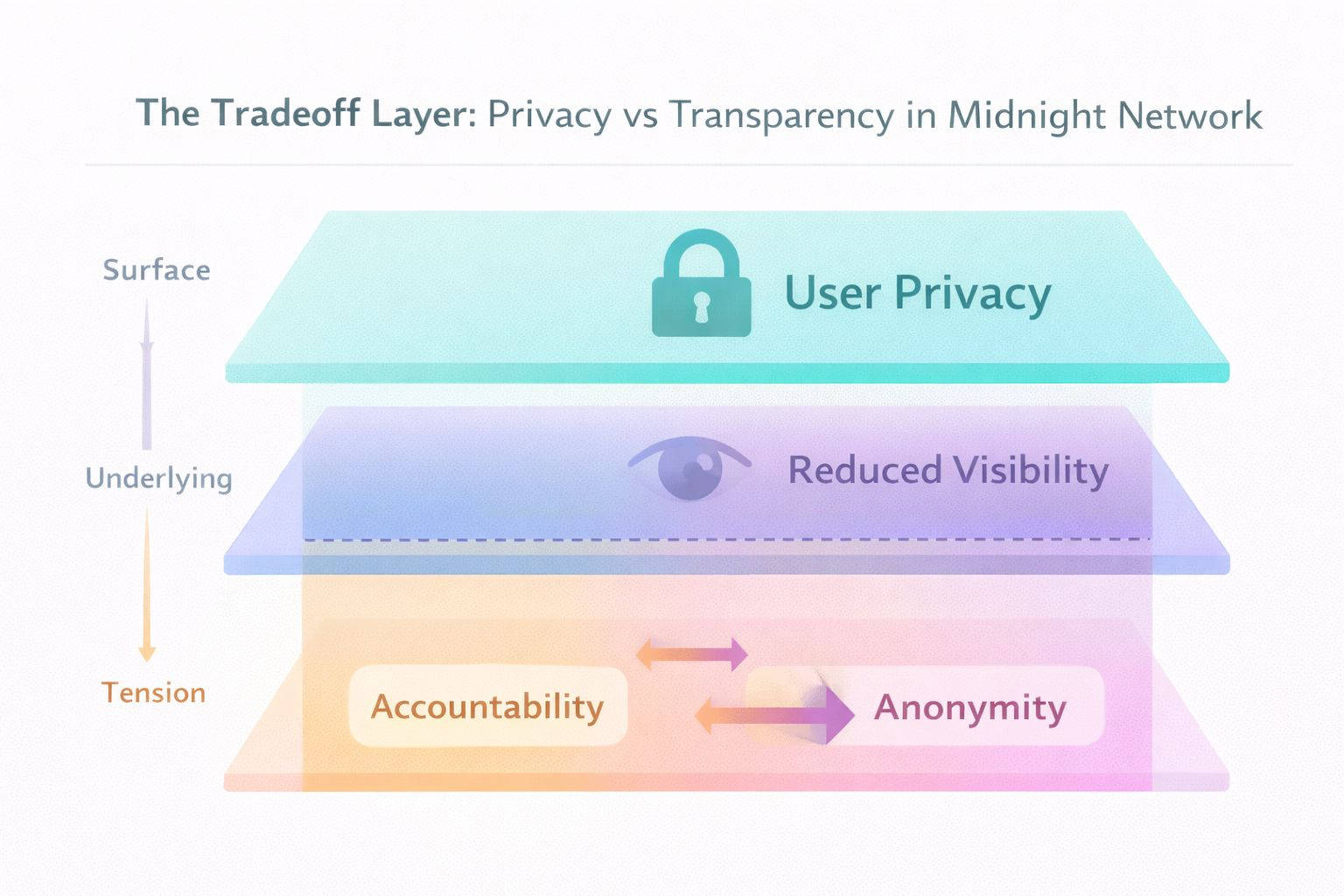
Meanwhile, the privacy layer that Midnight integrates adds another dimension. On the surface, it offers users more control over their data and transactions. Underneath, it complicates transparency. Fair distribution is easier to claim than to verify when parts of the system are intentionally shielded. That tension between privacy and accountability is something the entire space is still working through, and Midnight is stepping directly into that unresolved space.
Understanding that helps explain why this approach feels different right now. It’s not just about giving more people tokens. It’s about testing whether a network can build value from a wider, quieter base rather than a concentrated, fast-moving one. That’s a harder path. It requires patience from participants and discipline from builders.
If this holds, it points to a broader shift. Networks may start optimizing less for early price performance and more for long term distribution health. That would change how projects launch, how communities form, and how value accrues. It would also challenge the assumption that speed and scale at the beginning are the most important metrics.
What stays with me is this. Fair distribution isn’t really about how tokens are handed out. It’s about whether the structure underneath gives those tokens a reason to matter over time.
