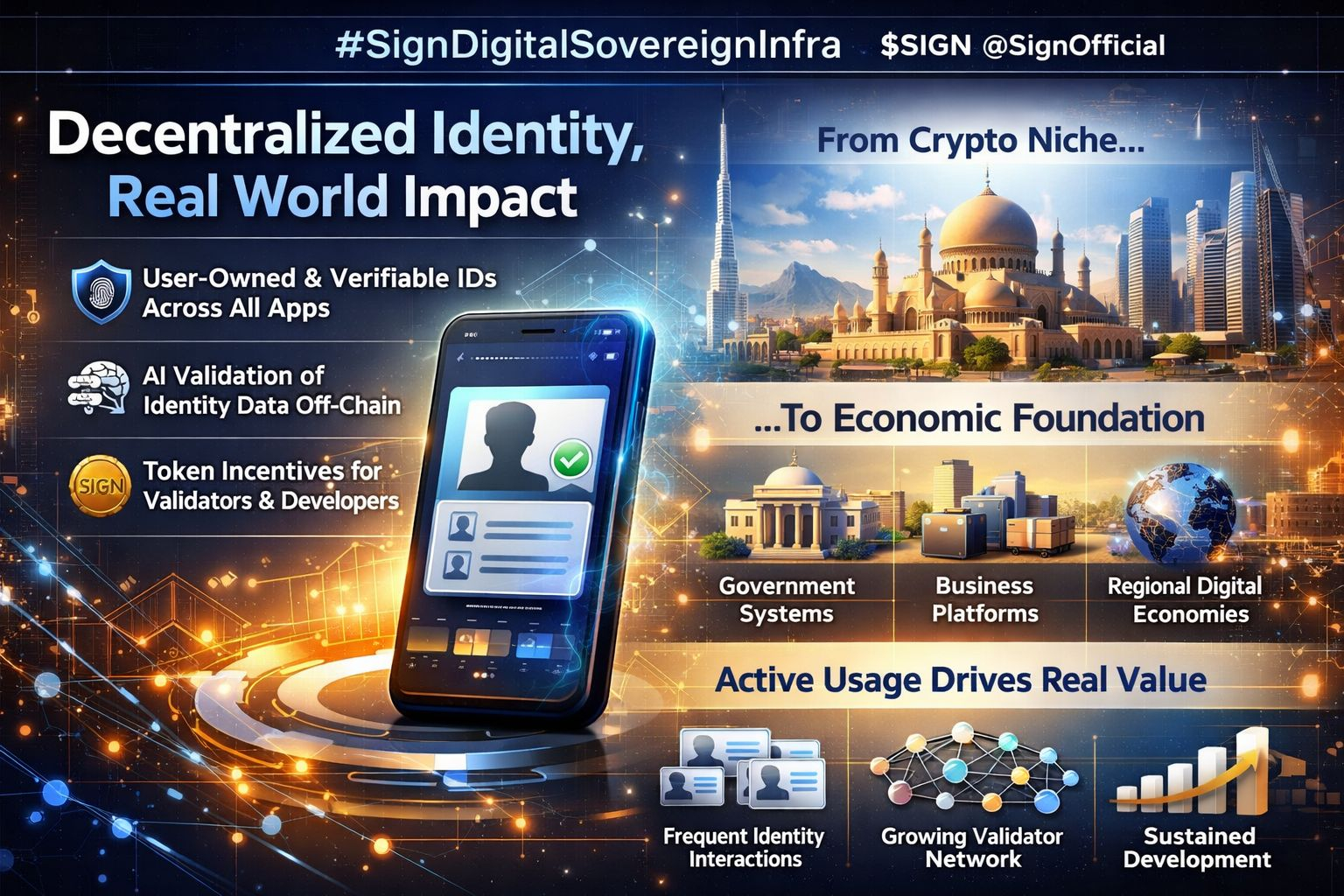
When I first started following crypto identity projects, I assumed adoption would happen almost automatically. The logic seemed simple: if users finally controlled their own identity, usage would naturally follow. But over time, I realized most systems either relied on hidden centralization or were too complex for regular users to engage with. That experience changed the way I evaluate these ideas. Now, I focus less on the concept and more on whether a system can realistically scale without creating friction.
That’s why #SignDigitalSovereignInfra caught my attention. It’s not because digital identity is a new story, but because it addresses a more practical question: can identity infrastructure be user-controlled and verifiable across multiple environments without depending on a central authority? This is where most projects struggle. SIGN approaches this by distributing trust through cryptographic proofs. Users remain in control of their identity, proving only what is required to each platform while keeping the rest private. In practice, this means one identity can be used across multiple applications without handing over full controll integrate with this system to allow AI tools to process and validate identity-related data off-chain, while SIGN ensures that identities remain user-owned, verifiable, and usable across different environments. The token layer aligns incentives for validators and developers. Every identity verification and interaction contributes to network activity, creating a direct link between real usage and value—something many identity projects fail to achieve.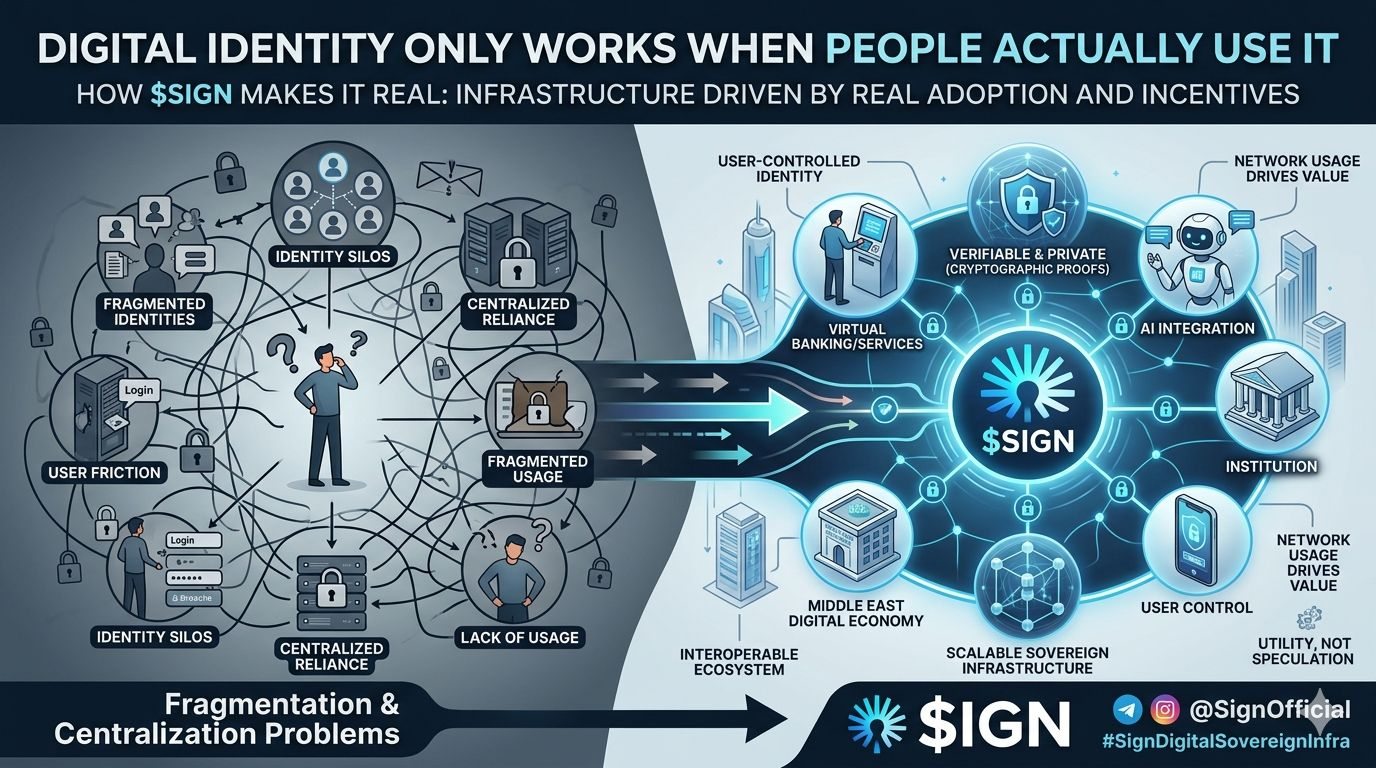
The broader opportunity is even more compelling. SIGN can serve as digital sovereign infrastructure not just for individuals, but as a foundation for regions actively building digital economies. In areas like the Middle East, where governments are investing heavily in digital transformation, a trusted system for secure and verifiable identity could become a backbone for businesses, institutions, and users to interact without relying on fragmented or centralized providers. This transforms SIGN from a niche crypto use case into a tool for real economic coordination.
Right now, the market is still in an early phase, reacting more to narrative than consistent usage. Price and trading volumes often follow cycles of attention rather than sustained adoption. Holder growth may indicate awareness, but it doesn’t confirm active engagement. The real test lies in repeated usage. If developers do not build meaningful applications and users do not regularly use their identities, the system risks remaining infrastructure without traffic. On the other hand, if identity starts powering real workflows and users engage consistently, usage will drive value, and value will attract further development.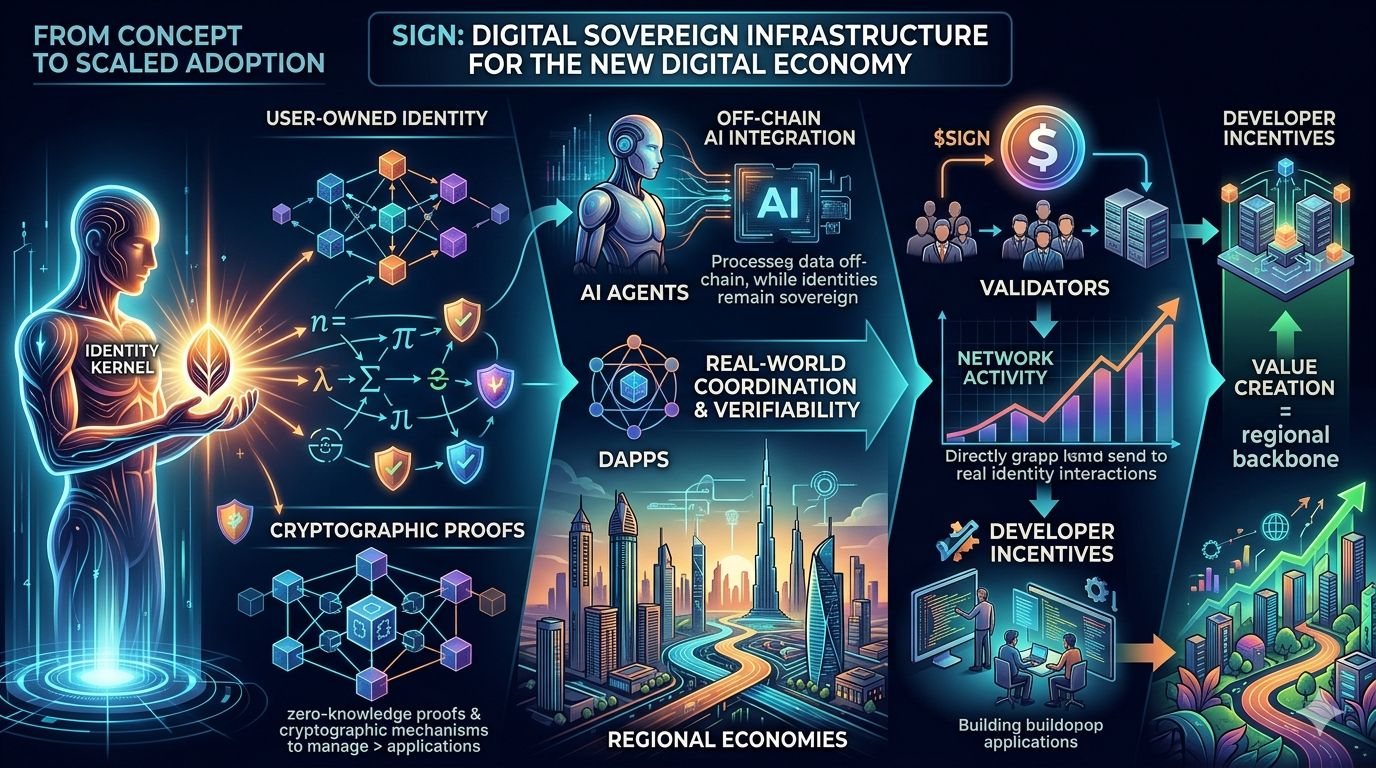
What matters most are adoption signals: products where identity is essential, growing frequency of identity-based interactions, and active validator participation. Activity driven mainly by speculation or initial hype should be approached cautiously. For SIGN, the focus should be on how often identities are actually created and used, rather than short-term token price. That’s the difference between a concept that sounds powerful and infrastructure that truly matters in the real world.
#SignDigitalSovereignInfra $SIGN @SignOfficial