

I thought that being first in crypto was to be early enough to find the loudest narratives. The projects to which everybody was referring, seemed the surest things. It could not be trending without reason, right?
That supposition did not grow old. The more I listened to the actual adoption, particularly in such areas as the Middle East, the more I felt that something painful most of the layers are the most silent ones. And there Sign and SIGN are seated to day.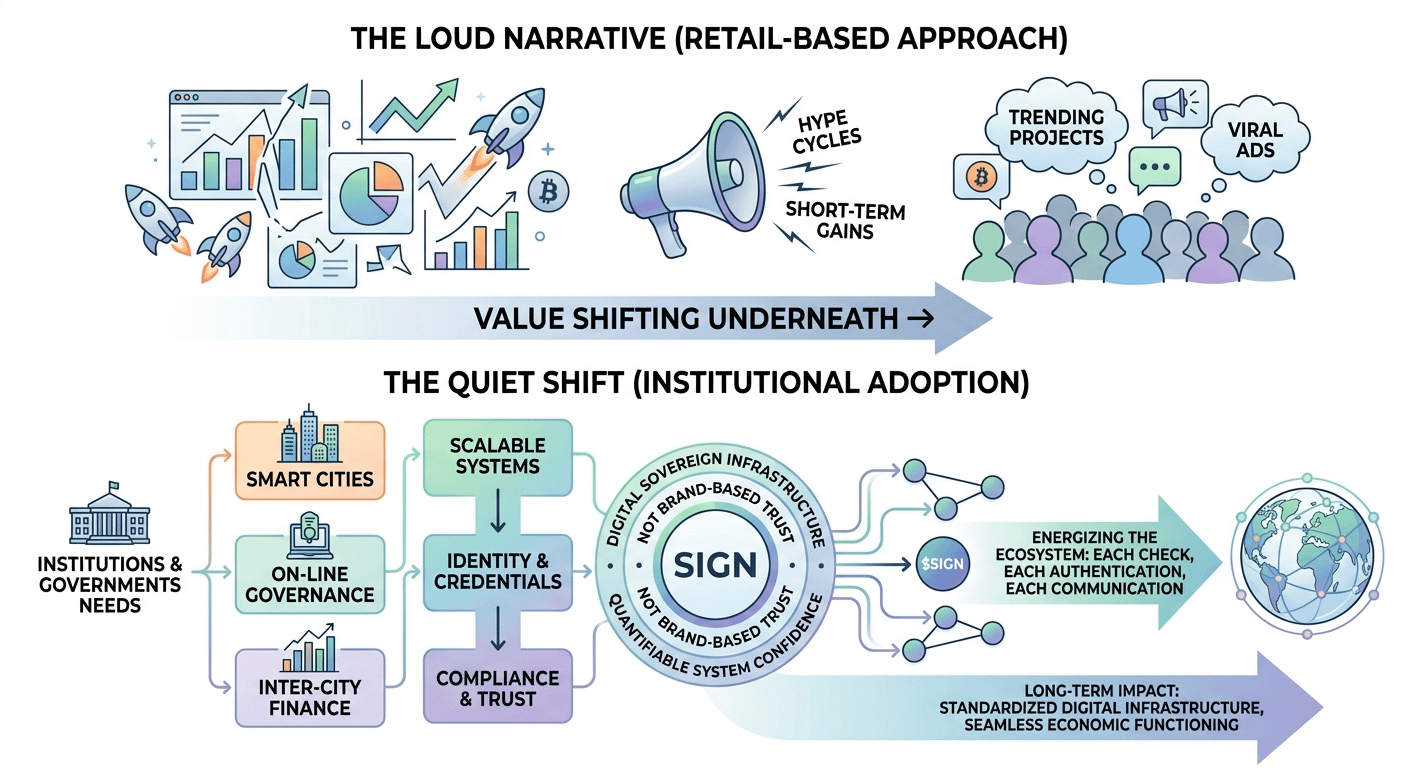
This is the error that most individuals continue to make. Their approach to crypto is retail based. Charts, hype cycles, short term gains. Institutions and governments do not reason that way. They don’t care about trends. They are concerned with scaleable systems. Identity, compliance, and trust are systems that can be handled without breaking. It is quite a different game.
Have a second thought about the Middle East. Nations there are no longer trying it out gradually. They are constructing digital first economies up the ground. Smart cities, online governance, inter city financial system. However, none of this can be done without one critical piece of it, which is solid digital trust infrastructure. In its absence, all this becomes weak.
It is where it begins to fall together. Sign is not out to make a noise as the most outstanding project in the room. It is creating something of a greater significance. A foundation.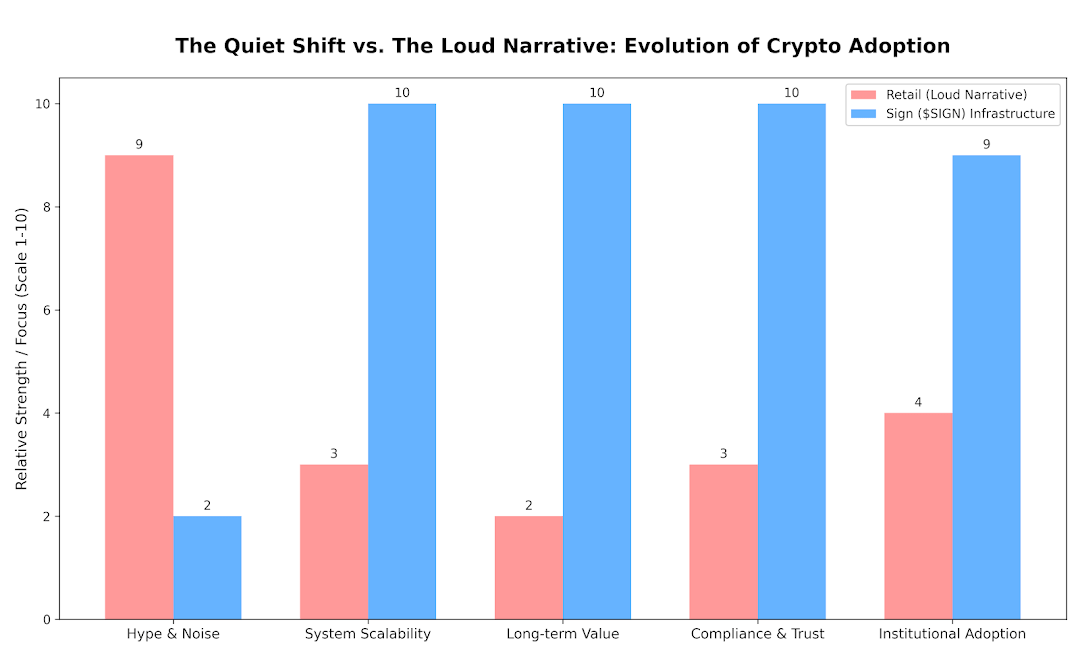
Sign at its core is the question of usability of trust in the digital world. Not theoretical trust. Not brand based trust. Physical, quantifiable, system level confidence. It enables identities, credentials and data to be established safely without the assistance of a central authority. That may seem easy but it is a solution to one of the largest obstacles to actual adoption.
Think of it this way. In the present day, there is a tendency to rely on a platform in order to prove something online. In Sign the trust becomes already the evidence. It is lightweight, safe and is not tied to the person who carries it. It modifies the way people engage with systems but more so, that of institutions, as they are constructed over them.
And it is at this point that SIGN comes in. It is not merely sitting on the sidelines as a spectator asset. It is involved in the energizing of this ecosystem. Each check, each authentication, each communication in this infrastructure is connected to a system which must be reliable and scalable. That is where actual worth begins to develop.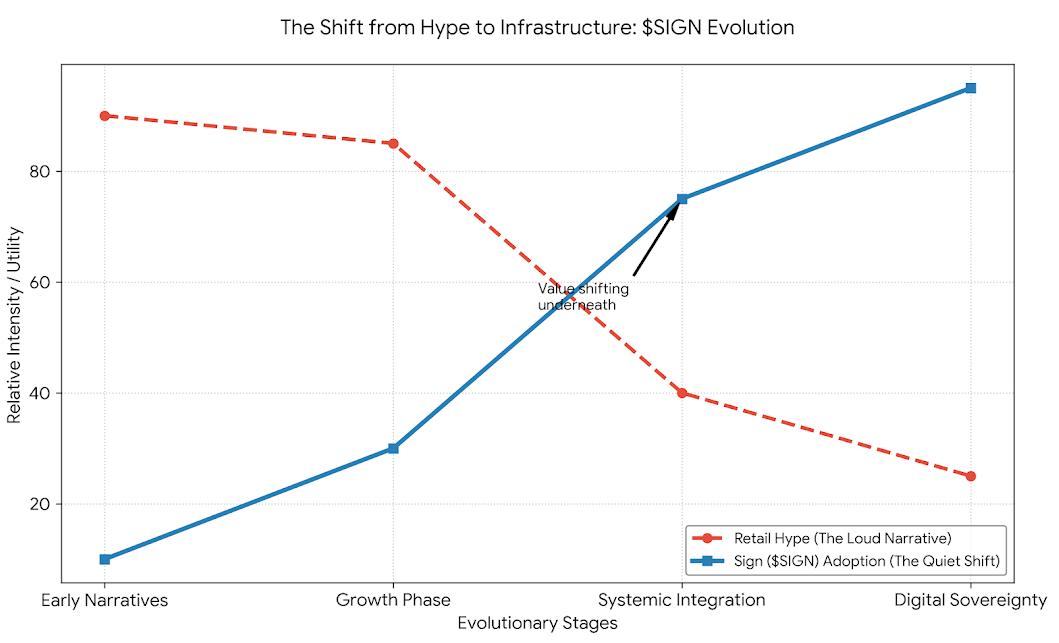
What is interesting is how this has been aligned with what is being experienced in the Middle East at the moment. Governments are aggressively urging to go digital but they require solutions that do not interfere with sovereignty. Not externally regulated systems. Seamless not fragmented tools sewn. They require a national scale infrastructure which can integrate them profoundly. Sign comes into that story very naturalistically.
But still, it is missed by the majority. Because it’s not obvious. It does not have the capability to go viral in a day. It’s designed to work. It is quite another sort of signal.
The influence of this is not confined to crypto markets in the long term. When digital sovereign infrastructure is standardized, then it transforms the functioning of economies. Identity becomes seamless. The process of verification becomes immediate. International systems are made more effective. Whole industries begin operating on substrata that people do not think too much about, yet use on a daily basis.
The actual question is not whether such projects as Sign are going to trend tomorrow. Whether or not they would ever become indispensable with time remains to be seen. There can be no shift on at this moment, since there is the other value is relocating underneath but the attention is still on the surface. And SIGN is already up in that stratum that has not been fully attended to by a great number of people.
@SignOfficial #SignDigitalSovereignInfra $SIGN
