
There’s a thought that’s been bothering me about $NIGHT and the Midnight Network.
What if it’s solving the right problem… at the wrong layer?
Privacy in crypto is clearly an issue. That part isn’t debatable anymore. But where that problem should be solved is still unclear. Application layer? Middleware? Base layer?
Midnight seems to be approaching it from deep in the stack — almost as if privacy needs to be foundational from the start.
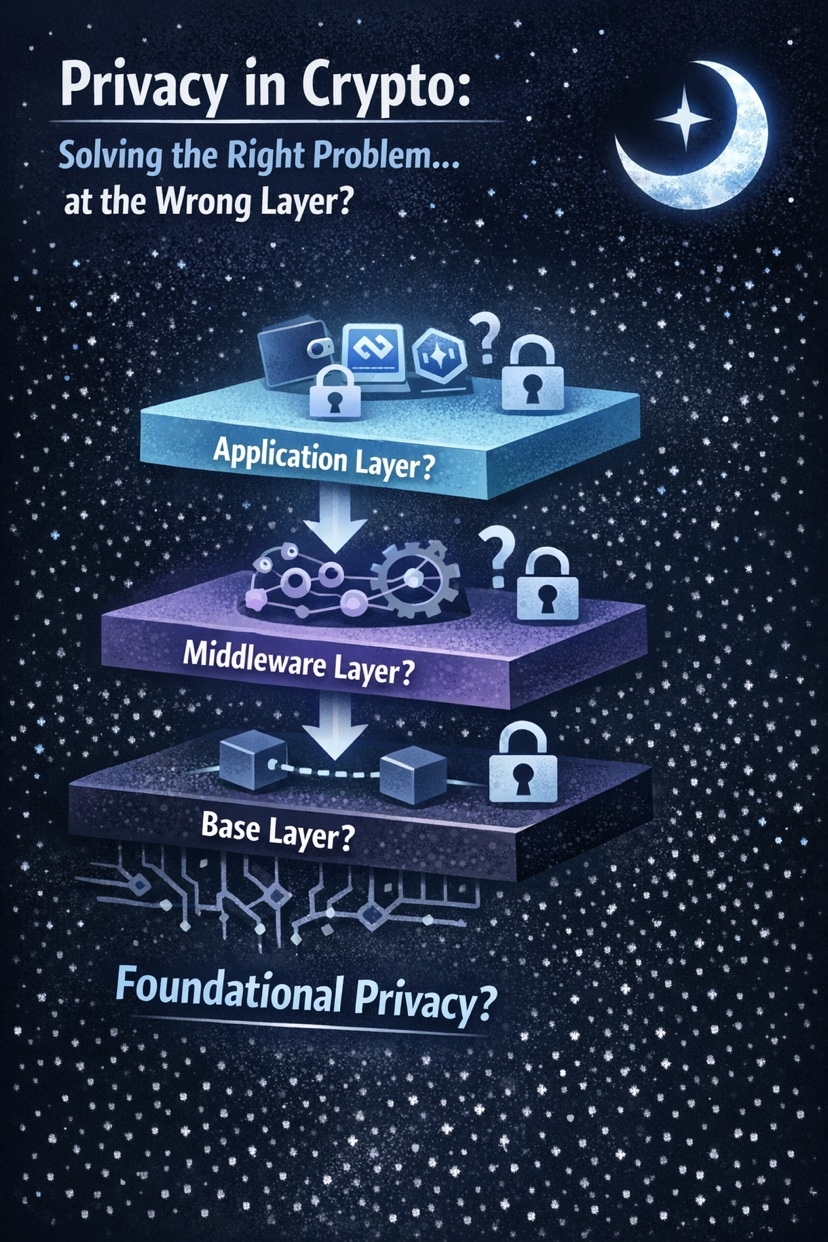
That’s a strong assumption.
And strong assumptions are where things usually get fragile.
Because if developers don’t need privacy at the base layer, they’ll avoid it. Not because it’s bad — but because it introduces complexity. Most builders default to the simplest path that works. If transparency is “good enough,” they’ll stay there.
So the question isn’t whether Midnight’s architecture is correct.
It’s whether that level of abstraction is required right now.
I’m not fully convinced it is.
There’s also something else that feels slightly off.
Midnight’s design implies a future where data sensitivity becomes a primary constraint. Where applications are forced to think carefully about what they reveal and what they don’t. Where compliance and privacy coexist as first-class concerns.
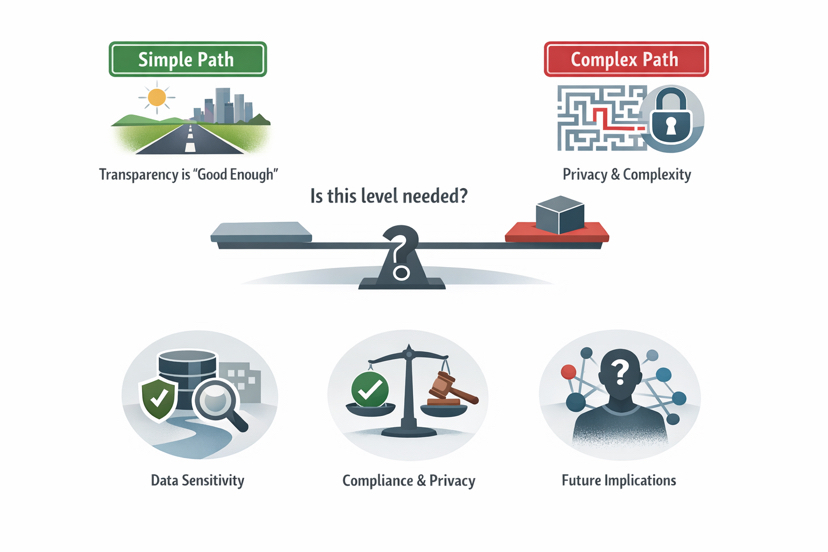
That future probably comes.
But the current ecosystem still behaves like data is cheap and exposure is acceptable. Developers ship quickly. Users don’t question visibility deeply. The trade-offs are known, but tolerated.
That gap matters.
Because infrastructure only matters when it aligns with present behavior — not just future expectations.
Right now, Midnight feels slightly ahead of behavior.
And being ahead is uncomfortable.
Another layer I keep coming back to is adoption friction. Not technical friction necessarily, but conceptual friction. Asking developers to design around selective disclosure isn’t just a tooling change. It’s a design philosophy shift.
Those shifts take time.
And time in crypto isn’t always kind to projects that require patience.
The NIGHT–DUST model adds another dimension. It tries to reshape how network usage is priced and consumed. It’s clean in theory. But systems like this only prove themselves when they’re stressed — when demand spikes, when edge cases appear, when incentives start pulling in different directions.
We’re not seeing that yet.
So everything feels stable, but not tested.
That’s where the unease comes from.
I don’t see Midnight as overhyped. If anything, it’s under-discussed. But under-discussed doesn’t automatically mean undervalued. Sometimes it just means the market hasn’t found a reason to care yet.
And that reason usually comes from necessity.
Midnight might become necessary.
Or it might remain a well-designed answer to a question the ecosystem hasn’t been forced to ask at scale.
Right now, it’s hard to tell which direction it’s leaning.
And I’m not entirely comfortable resolving that uncertainty too early.
#night @MidnightNetwork $NIGHT
