

I don’t follow Sign Protocol with excitement.
It’s closer to habit.
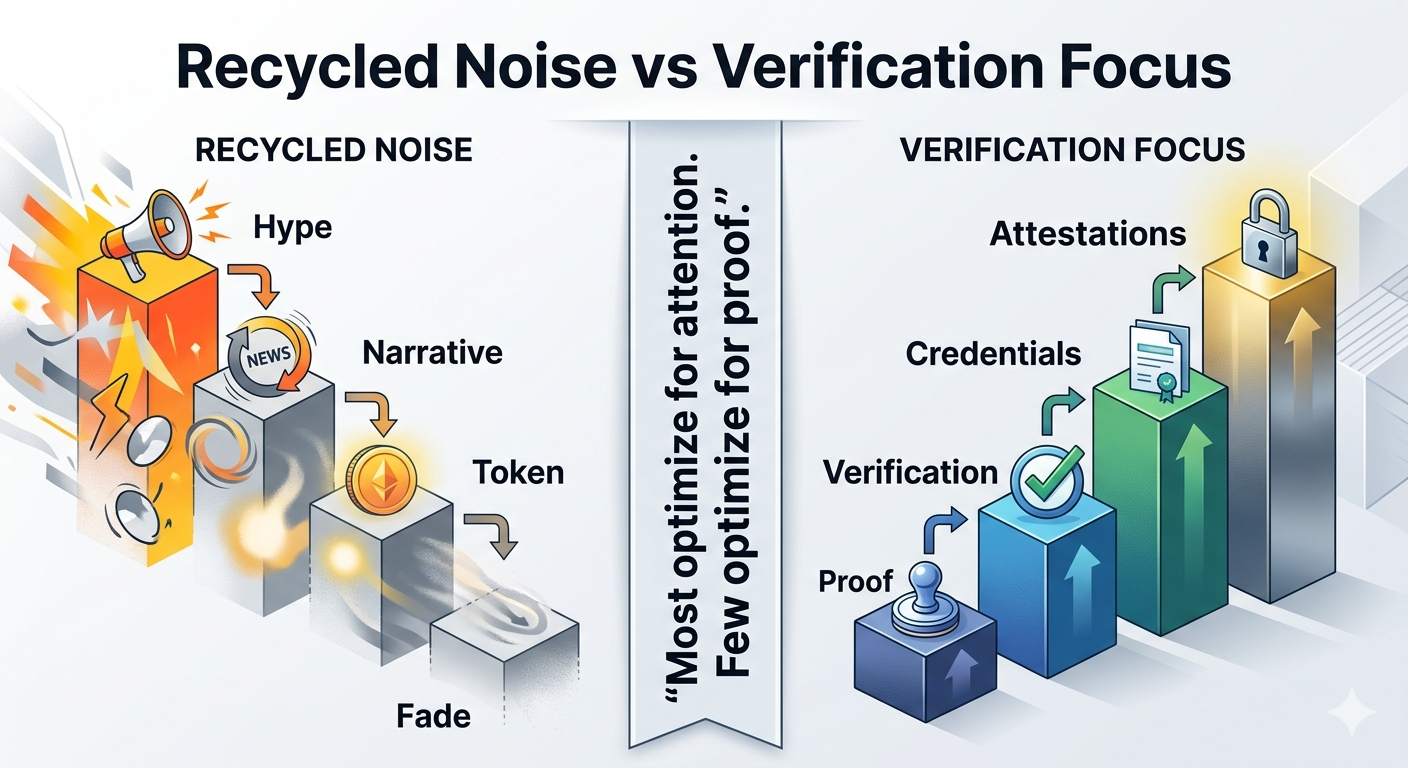
After enough cycles, most projects start to blur. Different branding, same mechanics. A narrative forms, a token moves, attention rotates. You’ve seen it before, even if the names change.
SIGN doesn’t sit cleanly inside that pattern.
It’s not loud enough to dominate timelines. Not simple enough to summarize in one clean sentence. But not forgettable either. It keeps resurfacing in the background, usually when I start thinking about what actually breaks in these systems.
Because things do break.
Not at the surface. Not in the parts people celebrate.
Deeper.
Where decisions are made.
Where approvals happen.
Where money moves based on rules someone defined earlier.
That’s where the problem starts to feel less abstract.
Most systems don’t fail because they can’t execute. They fail because they can’t prove what they executed. The record exists, but the reasoning doesn’t travel with it. The action is visible, but the authority behind it is fragmented.
That gap is where SIGN keeps pointing.
Not trust. Not branding.
Proof.
The idea of attestations sounds simple on the surface. A claim, signed by an issuer, made verifiable later. But when you stretch that across real systems, it stops being a feature and starts becoming infrastructure.
A benefit approved is not just a transaction.
It’s a decision tied to eligibility.
A payment is not just a transfer.
It’s an outcome tied to a ruleset.
A credential is not just identity.
It’s access shaped by verification.
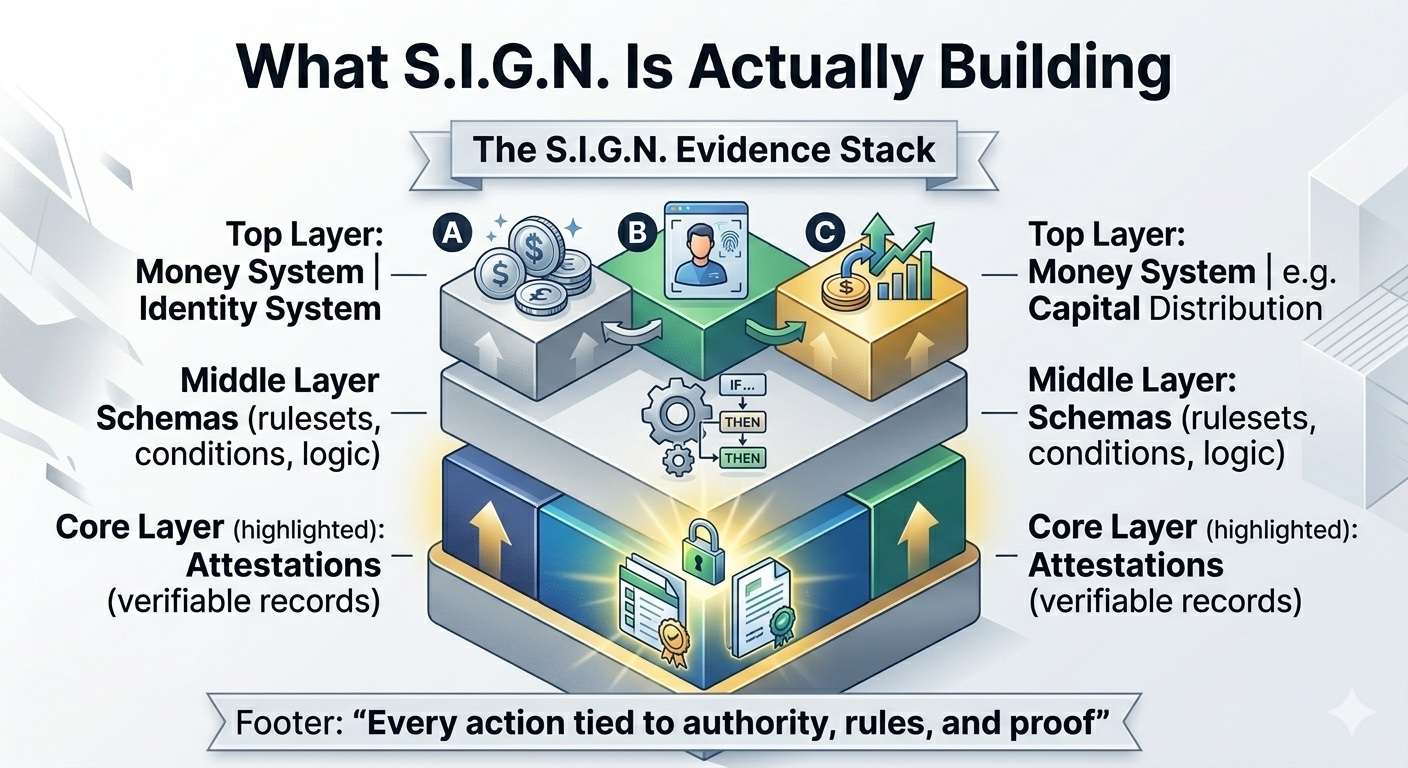
That is where the S.I.G.N. model builds. Money systems, identity layers, capital distribution, all anchored to an evidence layer where attestations act as the connective tissue.
Who approved what.
Under which authority.
According to which rules.
It sounds structured. It is.
But structure alone does not make something necessary.
There’s still a gap here.
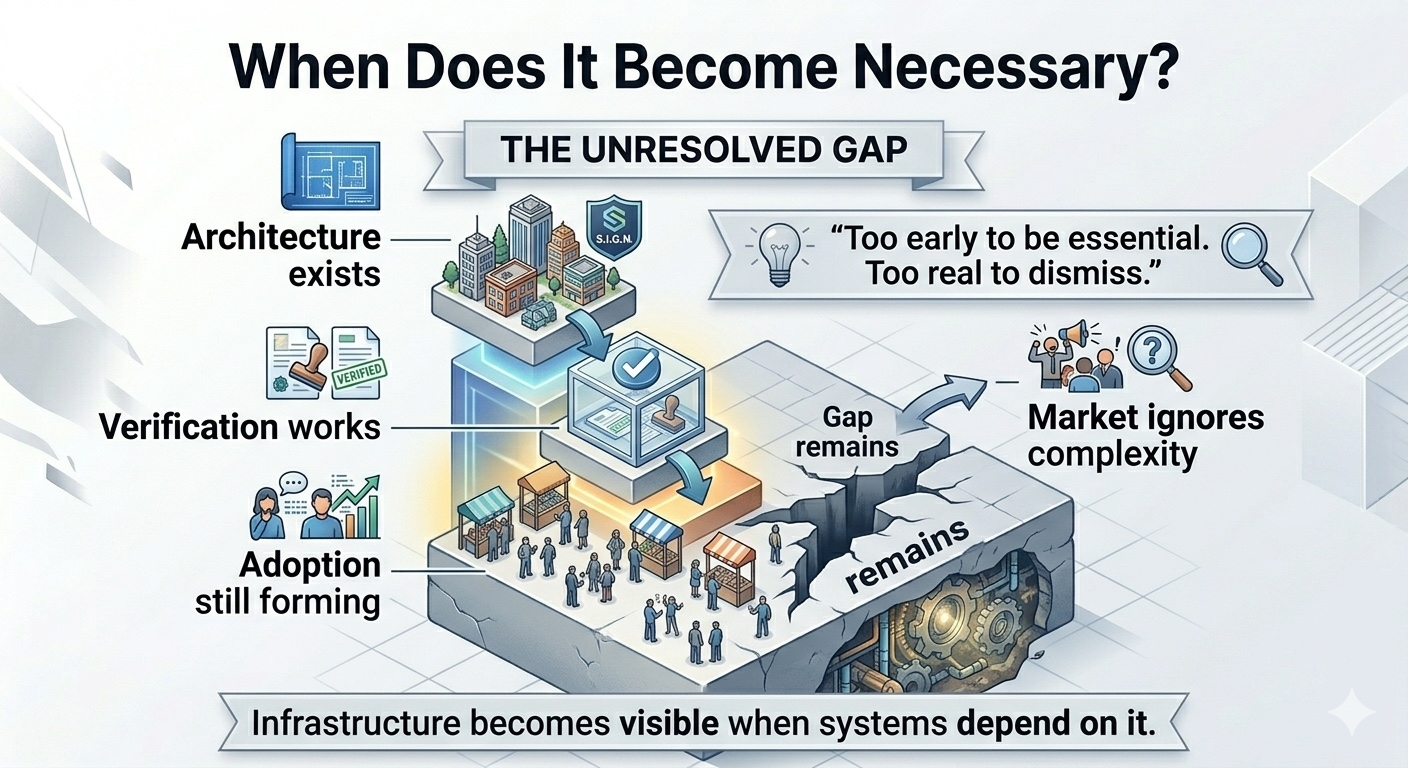
You can see the architecture clearly enough. You can see how schemas define rules, how attestations carry proof, how systems can query that evidence later. It holds together conceptually.
What’s less clear is when it becomes unavoidable.
Infrastructure like this rarely arrives with momentum. It builds under the surface, usually ignored until a failure forces attention back to the parts no one designed properly the first time. That’s the moment when verification stops being optional.
I don’t think SIGN is at that moment yet.
Right now it feels like a system that knows the problem space better than most, but is still waiting for the environment to demand it. That creates an awkward position. Too early to feel essential. Too grounded to dismiss as noise.
I’ve seen that gap before.
Projects build for constraints that haven’t fully materialized. The market looks for simpler stories. The result is something technically serious that struggles to translate into immediate relevance. Not because it’s wrong, but because it’s early in the wrong way.
That tension is still present here.
And strangely, that’s part of what makes it worth watching.
It doesn’t read like something optimized for attention. It reads like something trying to hold up under pressure that hasn’t fully arrived yet. The kind of pressure where records matter, where approvals need to be defensible, where systems get audited not just for outcomes but for process.
That’s not a comfortable narrative. It’s not even a particularly attractive one.
But it’s real.
So I keep coming back to it. Not with conviction, not with dismissal. Just watching how it evolves. Waiting to see if the verification layer actually locks into something that cannot function without it.
Because that’s the shift.
Not when something works.
But when it becomes difficult to replace.
SIGN isn’t there yet.
But it hasn’t faded either.
And in a market full of things that disappear as quickly as they appear, that alone is enough to keep it in view.