


In the past few years the crypto industry has moved through several waves of excitement. First it was decentralized finance, then NFTs, then scaling solutions for large blockchains. Recently another theme has quietly started attracting attention again: privacy. Among the projects appearing in that conversation, has begun to generate what many observers describe as “natural hype.” Unlike sudden speculative spikes that come purely from marketing, the attention around this network seems to be growing from deeper technological and structural discussions.
Midnight Network is closely connected to the broader ecosystem of , which already has an established community and infrastructure. Instead of competing directly with existing chains, the network is designed as a privacy-focused sidechain where sensitive data can be protected while still interacting with public blockchain systems. This concept has attracted developers who want the transparency benefits of blockchain without exposing every piece of data publicly.
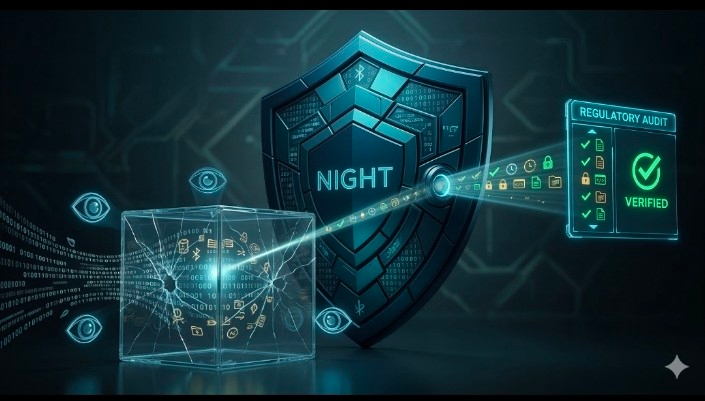
The idea behind the project is relatively simple. Many industries finance, healthcare, supply chains, and even government administration want to use blockchain technology but cannot place confidential data on a fully transparent ledger. Midnight attempts to solve this by allowing programmable privacy. Smart contracts can verify that certain conditions are met without revealing the underlying sensitive information. In technical terms, the system relies on cryptographic techniques that allow verification without disclosure.
This approach has sparked interest among builders because it attempts to bridge two worlds that are often seen as opposites: transparency and confidentiality. Traditional blockchains are built around openness. Anyone can inspect transactions, balances, and contract interactions. While this transparency strengthens trust in public systems, it also creates barriers for organizations that handle private data. Midnight’s architecture tries to offer a middle ground.
The hype surrounding the network has not appeared overnight. Instead, it has developed gradually through developer discussions, research publications, and ecosystem announcements. The team behind Midnight has emphasized long-term infrastructure rather than short-term speculation. This strategy often leads to slower early attention, but it can also create a more stable community of developers and researchers.
One interesting observation is that many of the people discussing Midnight are not just traders but builders. Online forums and developer channels often focus on how privacy-preserving smart contracts might work in practice. Questions appear about identity systems, confidential payments, and enterprise use cases. When a project begins attracting technical discussions rather than only price speculation, it often indicates a deeper level of engagement.
Another factor contributing to the network’s visibility is the growing global conversation about digital privacy. Governments and institutions are increasingly exploring digital identity systems, while businesses continue to move sensitive processes online. As these systems expand, the need for cryptographic privacy tools becomes more urgent. Midnight’s design attempts to respond directly to that challenge by giving developers a framework for building applications that protect user data without sacrificing verifiability.
Of course, the enthusiasm surrounding the project also comes with realistic limitations. Privacy-focused infrastructure is technically complex, and building secure cryptographic systems requires extensive testing. Even well-designed privacy technologies must prove themselves over time before large organizations feel comfortable relying on them. In addition, regulatory discussions about privacy technologies are evolving, which means projects like Midnight will need to navigate changing policy environments.
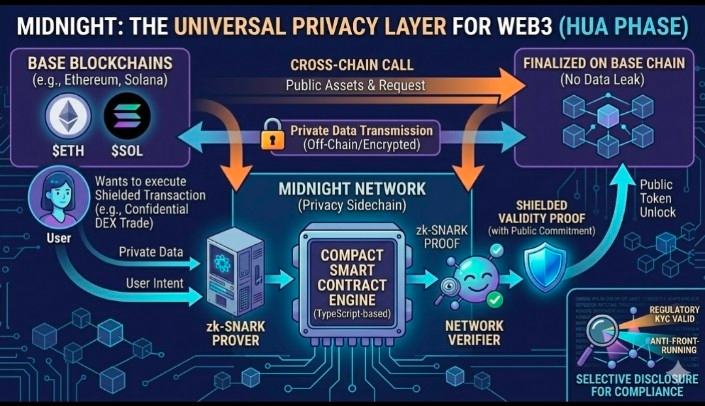
Another challenge is the broader competition within the privacy blockchain sector. Several networks are exploring similar ideas, each using different cryptographic models and architectural approaches. This competition can be beneficial because it encourages innovation, but it also means that no single project automatically dominates the field.
Despite these uncertainties, the organic attention surrounding Midnight Network is noteworthy. The project has gradually entered conversations about the next generation of blockchain infrastructure, particularly where privacy and compliance intersect. Instead of positioning itself purely as a financial platform, the network is exploring how blockchain could support complex real-world systems where confidentiality is essential.
The most interesting part of this story may be that the hype feels relatively measured. Rather than explosive speculation, the excitement appears to come from curiosity about what privacy-enabled blockchain applications might look like in the coming years. If the technology proves reliable and developer adoption continues, Midnight could become part of a broader shift toward hybrid blockchain systems that combine openness with selective privacy.
For now, the conversation around the project continues to grow step by step. Developers are experimenting, researchers are examining the architecture, and communities within the Cardano ecosystem are watching closely. Whether Midnight ultimately becomes a major pillar of privacy infrastructure remains to be seen, but its steady rise in attention suggests that the demand for privacy-focused blockchain solutions is far from temporary.