

@SignOfficial #signdigitalsovereigninfra $SIGN
The introduction of SIGN s CBDC framework brings compliance to the heart of the token itself rather than as an external process. The system is designed so that every token transfer automatically adheres to regulatory requirements a concept that fundamentally alters traditional notions of privacy in digital cash.
Built-In Compliance
SIGN’s whitepaper highlights three integrated functions:
Automated AML/CFT checks
Transfer limit enforcement
Automatic regulatory reporting
These are not optional add-ons but intrinsic to the token s operation. Every transaction on the Hyperledger Fabric X CBDC network is verified in real time eliminating manual review and paperwork. Compliance occurs before a transaction is executed, ensuring that no non-compliant activity ever completes.

Privacy and Compliance: Two Parallel Records
Each transaction generates two types of records:
ZKP-Protected Transaction Record: conceals sender recipient and amount providing privacy at the content level.
On-Chain Compliance Record: documents that a compliance check occurred the timestamp the identity involved and the outcome.
Even without revealing transactional amounts, the compliance record produces behavioral metadata: transaction frequency, timing, success/failure patterns, and flagged activity. Over time, this forms a longitudinal behavioral profile, permanently stored and theoretically accessible only to regulatory authorities.
Transfer Limits as Protocol-Enforced Rules
Each transfer is checked against central bank-defined limits embedded in the token. The whitepaper does not clarify:
Whether citizens are notified of their limits
How limits vary by user category
If individual adjustments can be applied silently
A zeroed limit prevents execution without alerting the user, creating the appearance of system failure. From a compliance standpoint, the system functions exactly as designed. These programmable boundaries allow micro- and macro-level behavioral influence from spending throttles to sector-specific restrictions.
Behavioral Footprints and Analytical Value
ZKP privacy secures transaction details, but behavioral footprints remain observable:
Frequency and timing of transactions
Compliance outcomes (flagged vs cleared)
Temporal patterns over months or years
The accumulation of such data exponentially increases analytical power, even without revealing amounts or recipients.
Automated Regulatory Reporting
SIGN also features automatic reporting to regulators, but key aspects are undefined:
Which authorities receive reports
Reporting triggers and thresholds
Format of reports
Citizen visibility
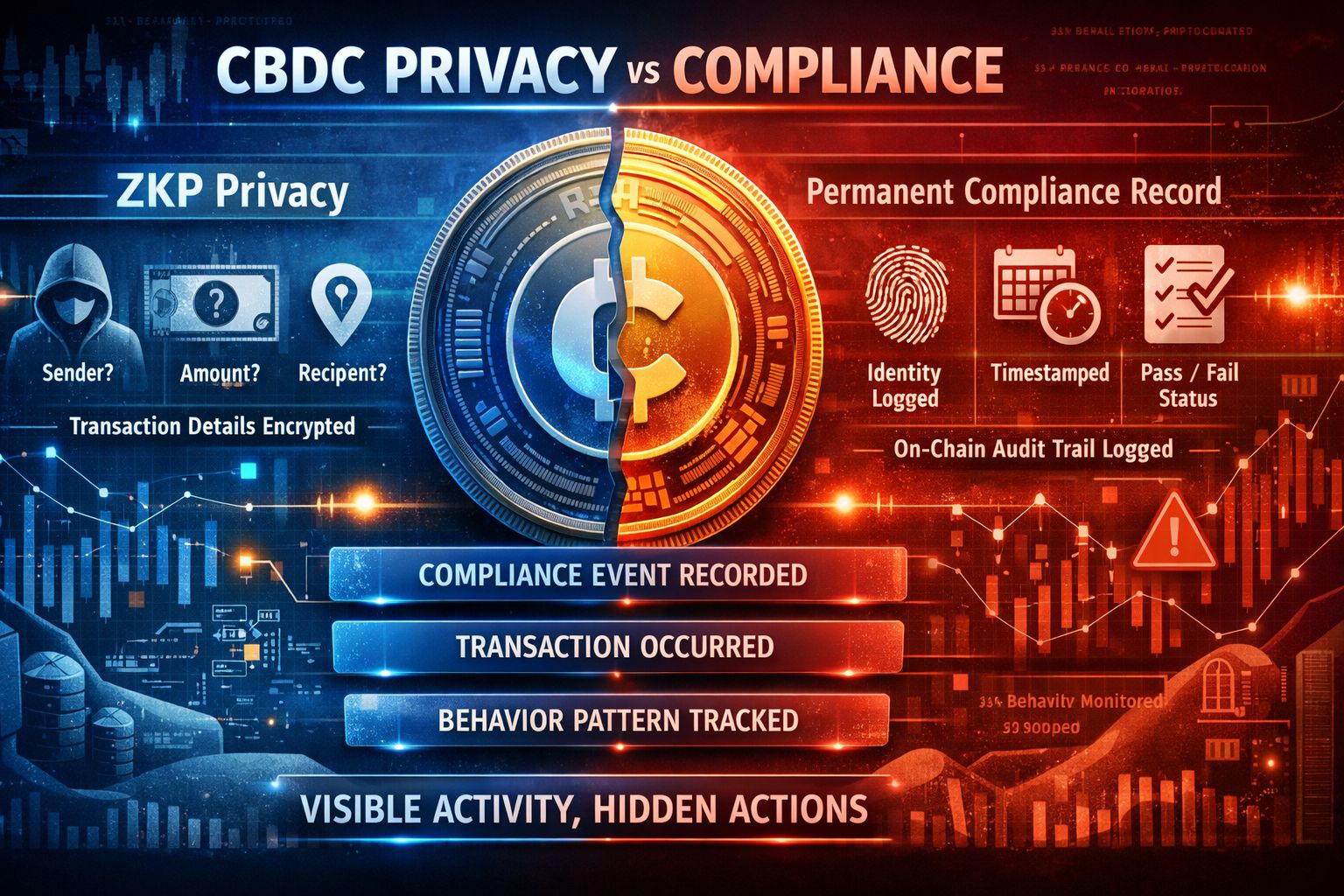
Continuous reporting potentially provides regulators with real-time insight into both macro- and micro-level transaction behavior, heightening surveillance capabilities.
The Privacy-Surveillance Balance
While technically private at the transaction level SIGN s system is inherently surveillance-capable:
Privacy protects content, not metadata
Compliance records permanently document behavior
Transfer limits shape user behavior indirectly
Users operate within an invisible compliance framework, where every action contributes to a behavioral record, whether they are aware or not.
Core Consideration
The essential question is:
Are citizens able to understand what is being recorded, and can they exercise control over it?
Without defined access policies audit rights, or transparency privacy becomes a structural assumption rather than a guarantee. SIGN’s CBDC represents a new paradigm of compliance-embedded digital currency, balancing content privacy with permanent behavioral observability.