

One thing that’s slowly becoming clear in Web3 is that ownership is evolving. At first, it was about owning tokens. Then it became about owning assets. But now, the conversation is moving toward something deeper owning your data.
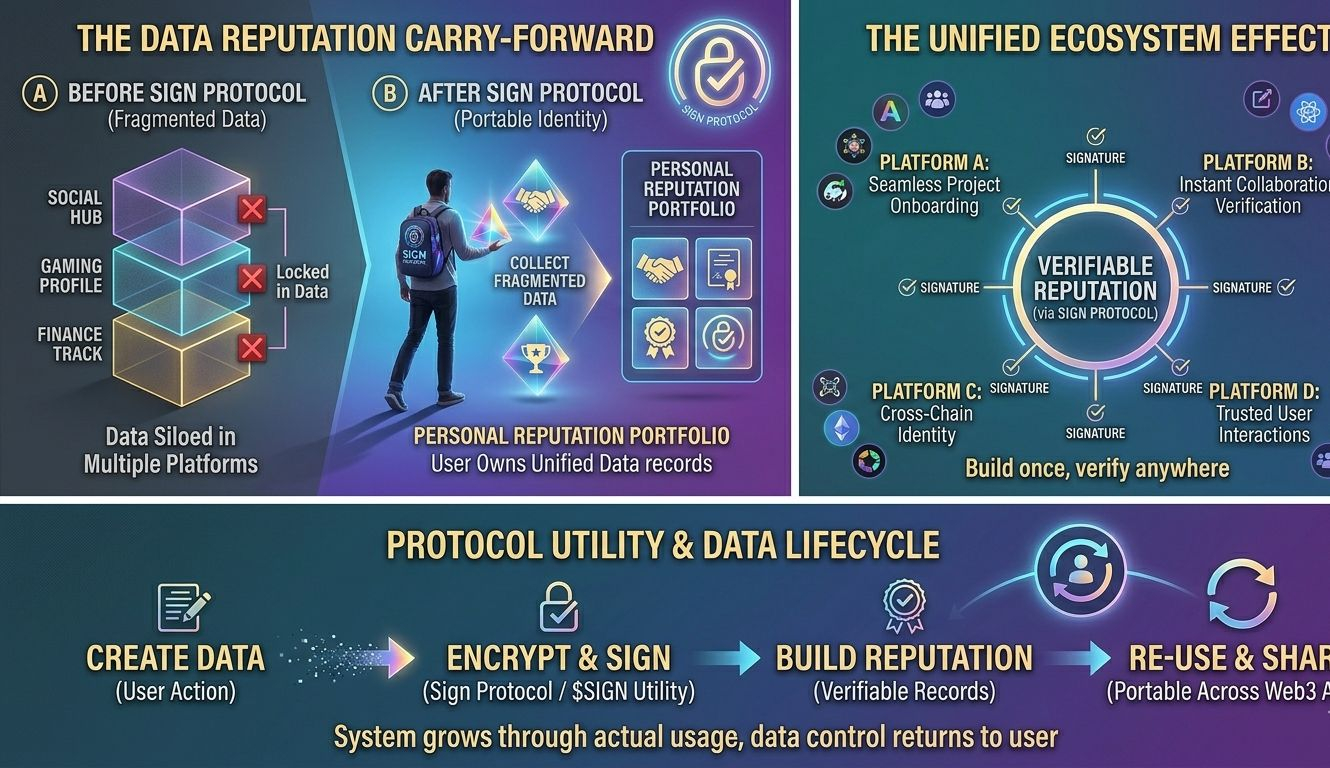
This is where @SignOfficial starts to feel different.
Instead of just focusing on transactions or identity, it touches a bigger idea: giving users control over the information they generate on-chain and beyond.
The Problem With Data Today
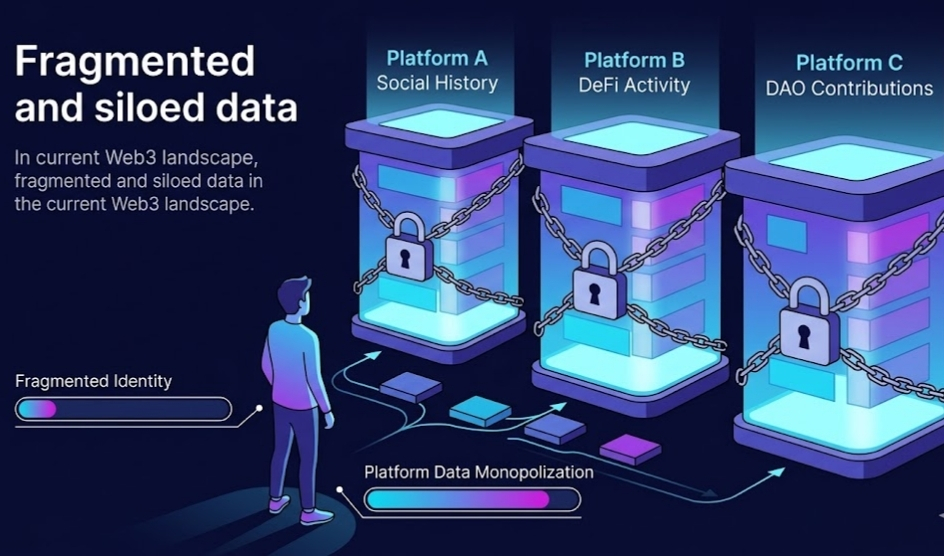
Right now, most of our digital data lives in places we don’t control.
Whether it’s social platforms, applications or even some Web3 tools, the data we create is often stored, managed, and sometimes even monetized by others. Even in crypto, while wallets give us control over funds, they don’t fully solve the problem of data ownership.
Your activity exists, but it’s fragmented. Your contributions matter, but they’re not always portable. Your history is there, but it’s not structured in a way that truly belongs to you.
That’s the gap $SIGN Protocol is trying to address.
Turning Data Into Something You Own
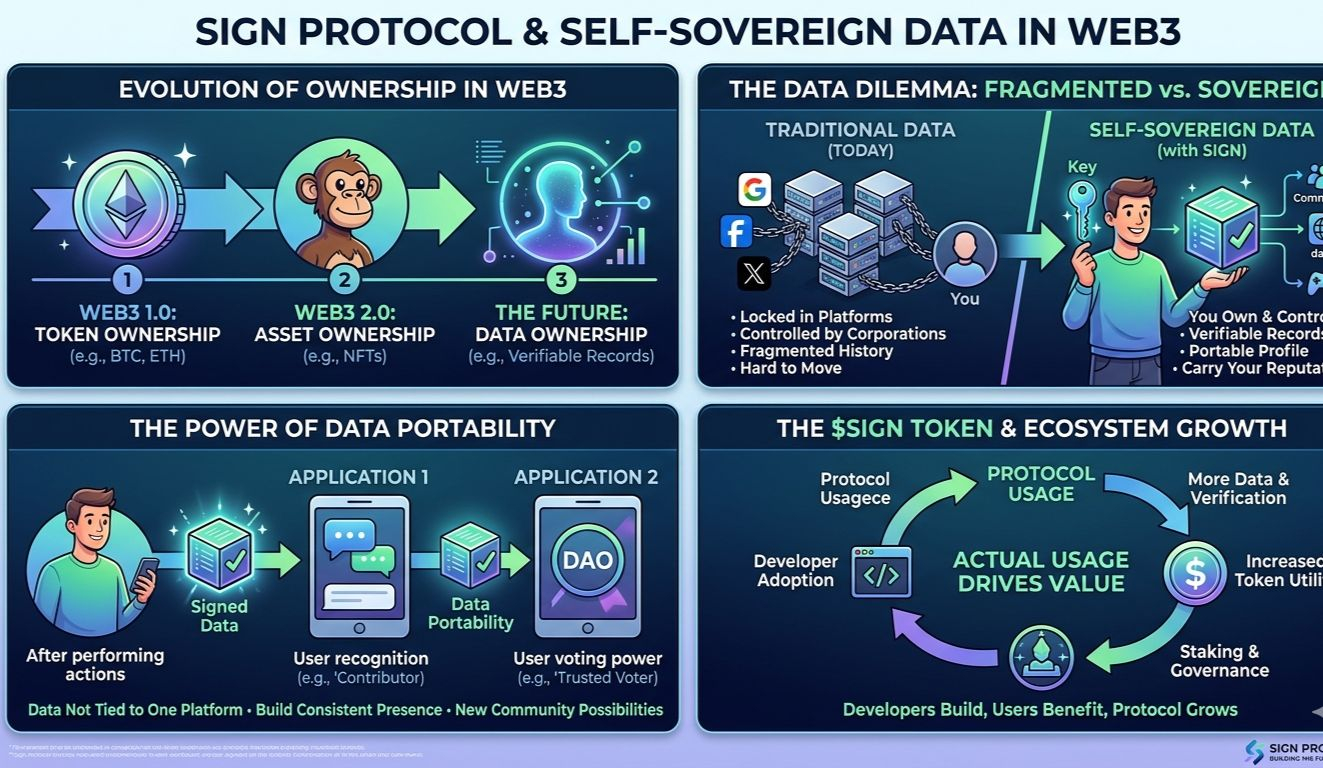
Sign Protocol introduces a different approach.
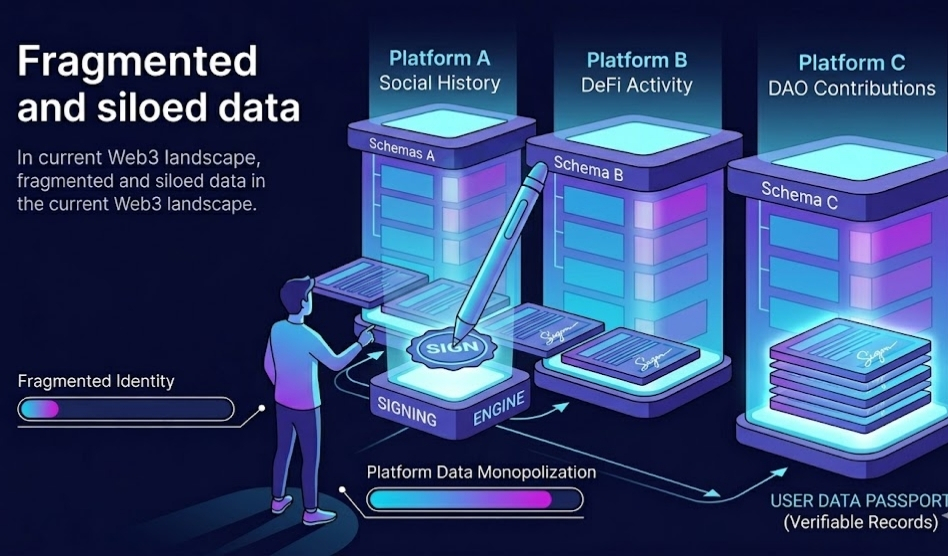
Instead of data being locked inside platforms, it allows information to be turned into verifiable records that can exist independently. These records aren’t just stored — they are signed, structured, and can be reused across different ecosystems.
What this means is simple but powerful.
Your actions don’t stay stuck in one place. They become part of a system where you can carry them forward.
Imagine participating in a project, earning recognition, and actually being able to prove it anywhere else without relying on that project’s permission. That’s a completely different model from what we’re used to.
Why Portability Changes Everything
The real strength of this idea is portability.
In Web2, your reputation is platform-based. If you leave a platform, you often start from zero. In Web3, the goal is different — your history should move with you.
Sign Protocol supports this by creating a structure where data isn’t tied to a single application. It becomes something you can use across multiple platforms.
This opens up new possibilities.
Communities can recognize users based on real contributions, not just usernames. Projects can collaborate more effectively because data can be shared and verified easily. Users can build a consistent presence across the ecosystem without starting over every time.
A Quiet Move Toward True Ownership
What makes this approach interesting is that it doesn’t feel loud or flashy.
There’s no instant hype around “data ownership” because it’s not something people immediately notice. But over time, it becomes one of the most important parts of a decentralized system.
Because real ownership isn’t just about holding tokens.
It’s about controlling your identity, your history, and your interactions.
Sign Protocol is slowly building toward that direction — a system where users don’t just participate, but actually own the value they create.
The Role of $SIGN in This Vision
The $SIGN token fits into this ecosystem as part of the network’s growth.
As more data is created, verified, and used across applications, the protocol becomes more active. And as activity increases, the importance of the underlying system grows with it.
This creates a different kind of value dynamic.
#SignDigitalSovereignInfra Instead of being driven purely by market cycles, the system has the potential to grow through actual usage. The more people rely on it, the stronger it becomes.
What Needs to Happen Next
For this vision to fully work, adoption is key.
Developers need to build systems that use these verifiable records. Users need to see real benefits from owning their data. And the experience needs to stay simple enough that people don’t feel overwhelmed.
This is where many projects struggle.
#SignDigitalSovereignInfra The idea is strong, but execution decides everything.
If Sign Protocol can keep things practical while expanding its use cases, it has a real chance to become part of Web3’s core infrastructure.
Sign Protocol isn’t just solving a technical problem it’s addressing a deeper shift in how we think about ownership.
#SignDigitalSovereignInfra The move from asset ownership to data ownership might not happen overnight, but it’s already starting. And projects that position themselves early in this space often end up playing a bigger role later.
For now, Sign Protocol is still building.
But if it succeeds, it won’t just change how data is stored it could change who actually controls it.
And in a decentralized world, that might be one of the most important changes of all.