
In the current Q1 2026 market landscape, "narrative" has become the primary driver of volatility. However, beneath the noise, a structural pivot is occurring: the transition from experimental dApps to Digital Sovereign Infrastructure. As we analyze the underlying data, @SignOfficial is emerging not just as a participant, but as the foundational layer for nation-state digital adoption.
The Architecture of Sovereign-Grade Infrastructure
What distinguishes SIGN from generic L1/L2 plays is its hybrid architectural approach. By decoupling high-frequency, sensitive data from the public ledger, Sign Protocol solves the "Mainnet Burden" that has historically hindered institutional adoption.
Omni-chain Attestation: Sign utilizes a dual-layer architecture—a high-throughput private layer for sensitive government/institutional operations (handling up to 20,000 TPS) and a public layer for verifiable proof-of-work.
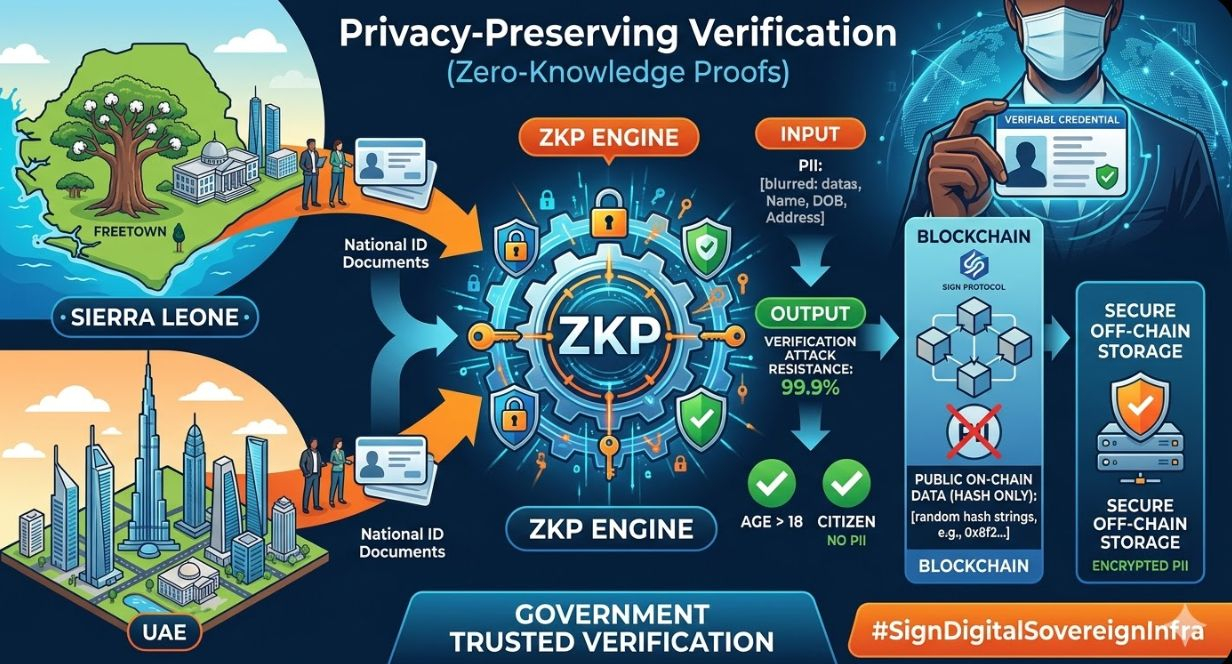
Privacy-Preserving Verification: Through advanced ZKP (Zero-Knowledge Proof) integration, the protocol allows governments—such as recent deployments in Sierra Leone and the UAE—to verify national identity and credentials without ever exposing sensitive PII (Personally Identifiable Information) on-chain.
Sustainable Revenue Moat: Unlike projects reliant on inflationary token emissions, Sign reported ~$15M in annual protocol revenue driven by TokenTable and attestation services. This creates a buy-pressure mechanism that is fundamentally tied to usage, not just speculation.
March 2026: Institutional Validation & Roadmap Execution
The recent inclusion of Sign in the Binance CreatorPad (as of March 19, 2026) is more than a promotional boost; it acts as a liquidity bridge for the next wave of ecosystem developers. With over $41M raised from institutional heavyweights like YZi Labs, Sequoia Capital, and Circle, the protocol has the capital runway to execute long-cycle government procurement processes that typical "retail-first" projects cannot sustain.
Current Metrics to Monitor:
Attestation Volume: Growing beyond 6M+ unique schemas, proving sticky usage by national entities.
Pipeline: 20+ countries currently in active deployment phases for CBDC pilots and digital ID systems.
Institutional Alignment: Strong indicators of interoperability with regulated RWA (Real World Asset) frameworks, which our analysis suggests will be the primary catalyst for the 2026–2027 market cycle.

The Verdict
For developers and technical investors, SIGN represents a "boring but critical" infrastructure play. In a market cycle that is increasingly punishing speculative protocols, those building the pipes for global trade, identity, and sovereign data will likely capture the highest long-term value.
Follow the development path: @SignOfficial
Track the standard: #SignDigitalSovereignInfra
