
The move from Web2 to Web3 isn’t just swapping servers for blockchains—it’s about who actually owns your life online. For too long, we’ve handed our identities, signatures, and financial futures over to centralized gatekeepers. One hacked account, one policy change, and poof—your data, your access, your control vanishes. I still remember the frustration back in 2021 when a simple freelance contract got stuck in DocuSign limbo because of a server glitch. Hours wasted chasing confirmations, no real proof it was mine. That moment stuck with me: why should a third party hold the keys to something as personal as my word?
That’s exactly why projects like **@SignOfficial** and its $SIGN token feel like a breath of fresh air. They’re not chasing hype or meme coins. They’re building **Sovereign Infrastructure for Global Nations (S.I.G.N.)**—a decentralized backbone that puts real ownership back in users’ and nations’ hands. With transparent, verifiable tools for credentials, signatures, and token flows, Sign is reshaping digital economies from the ground up. It’s not abstract philosophy; it’s working infrastructure that governments are already testing for CBDCs, digital IDs, and fair asset distribution. Let me walk you through why this matters, how the tech actually works, how it stacks up against the competition, and where I see it heading. Buckle up—this shift could touch every corner of your digital life.
The Web2 Trap vs. Web3 Sovereignty: Why Control Matters More Than Ever
Think about your daily grind. Your bank knows everything about your spending but freezes your account on a whim. Social media platforms “own” your content and can shadow-ban you overnight. Even something as basic as a university diploma? It’s trapped in a PDF that requires endless verification emails. Centralized systems sell convenience but steal sovereignty. You don’t truly own your data—you rent it.
Web3 promised to fix this with decentralization, but early versions often recreated the same problems: opaque token launches, rug pulls, and siloed identities. Enter Sign’s vision. It’s not just another protocol; it’s infrastructure designed for scale—national scale. Their whitepaper frames it perfectly: blockchain for nations that keeps governments in the driver’s seat while giving citizens self-sovereign control. Sensitive data stays private off-chain, but tamper-proof proofs live on-chain for instant verification anywhere.
Have you ever wondered what happens when a country’s banking system crashes? Sign’s approach builds resilience right in. Programmable money, verifiable identities, and tokenized assets that survive outages. It’s the difference between hoping your bank app works and knowing your digital life is cryptographically guaranteed. Personally, watching friends in emerging markets struggle with remittance fees and identity theft made me realize: true sovereignty isn’t luxury—it’s necessity for the next billion users.
### Inside Sign’s Toolkit: Products That Actually Deliver Sovereignty
At the heart of @SignOfficial sits three interconnected tools that turn abstract ideas into usable reality.
First, **EthSign**—the decentralized e-signature platform that started it all back in 2019. Forget DocuSign’s locked servers. You sign legally binding agreements with your wallet’s private key, and the proof lands immutably on-chain. It’s already handled millions of signatures, powering everything from freelance gigs to enterprise contracts. The magic? Every signature creates a verifiable record anyone can check without calling customer support.
Then there’s **TokenTable**, the programmable distribution engine. This isn’t your average airdrop tool. It handles vesting schedules, recurring incentives, compliance gates, and large-scale grants with built-in audit trails. Projects and governments use it to distribute tokens or benefits without duplicates, fraud, or manual spreadsheets. Imagine a national welfare program that auto-releases subsidies only to verified citizens—deterministic, transparent, and budget-locked. TokenTable has already powered over $2 billion in distributions across ecosystems. That’s real money moving with zero trust in middlemen.
The crown jewel? **Sign Protocol**, the omni-chain attestation layer. Think of it as a decentralized notary on steroids. You define a “schema” (a template for data like “this diploma belongs to this wallet”), then issue an attestation—a signed, verifiable claim. These live on-chain or hybrid (big data off-chain, proof on-chain), support ZK proofs for privacy, and work across Ethereum, BNB Chain, Base, Solana, TON, Starknet, and more. It even bridges to permissioned networks like Hyperledger Fabric for sovereign deployments.
Credentials here follow W3C Verifiable Credentials and Decentralized Identifiers standards, with selective disclosure (share just your age, not your full history), revocation lists, and offline QR/NFC verification. Governments love this because it plugs into existing IDs while adding blockchain trust. Citizens win because they control presentation—no more faxing birth certificates across borders.
All powered by $SIGN, the native token. It fuels governance in public deployments, covers fees for premium attestations or distributions, and unlocks staking rewards. Total supply sits at 10 billion, with heavy community allocation for long-term alignment. Early traction? Partnerships with real governments are already live.
### Tech Deep Dive: What Makes Sign’s Stack Stand Out
Let’s get specific—no fluff. Sign Protocol’s architecture shines in flexibility. Attestations support three data models: fully on-chain for speed, off-chain payloads anchored by hashes for privacy/scalability, and hybrids. Signatures? ECDSA, EdDSA, RSA—broad compatibility. Querying happens via SignScan’s REST/GraphQL APIs, so developers build apps that pull verified data across chains without headaches.
For national use, they deploy on Hyperledger Fabric X: permissioned chains with Arma BFT consensus hitting 200,000+ transactions per second. Wholesale CBDC settlements stay transparent; retail ones use ZK proofs for privacy (you prove you’re eligible without revealing your balance). ISO-20022 messaging ensures it talks to legacy banking systems. Privacy-preserving offline capabilities? Built-in for rural areas with spotty internet.
TokenTable adds identity-linked targeting—prevent duplicates via attestations—and deterministic reconciliation for audits. EthSign ties it together with on-chain proof of agreement execution.
Compare that to pure public Web3: most protocols force everything on-chain, exposing data or bloating costs. Sign’s hybrid model lets nations start public for transparency, then layer private rails for control. It’s sovereign-grade engineering that feels human-centric: your data, your rules.
### How Sign Stacks Up Against Similar Projects (And Why It Wins)
No project exists in a vacuum. Let’s compare honestly.
**Ethereum Attestation Service (EAS)** is the closest cousin—a public-good attestation tool on EVM chains. Great for badges, POAPs, and simple claims. Coinbase even used it for on-chain KYC verifications. But EAS is EVM-centric, tightly tied to on-chain storage, and lacks native sovereign/private deployments or high-TPS permissioned options. Sign Protocol? Omni-chain from day one, flexible data placement, ZK privacy out-of-the-box, and seamless integration with Hyperledger for governments. EAS is the base layer for hobbyist dApps; Sign is the full-stack infrastructure for nations. When a country needs audit-ready credential verification at scale, EAS alone won’t cut it.
**Polygon ID or other DID solutions** focus on self-sovereign identity for consumers—great for wallets and dApps. They use ZK and W3C standards too. But they’re consumer-first, not nation-ready. No built-in token distribution engine like TokenTable, no e-signature workflows, and limited government-grade compliance tools. Sign integrates those plus CBDC rails and tokenized asset engines. It’s the difference between a personal passport and a national infrastructure backbone.
*Traditional players like DocuSign or centralized credential systems?** Night and day. DocuSign stores your signatures on their servers—vulnerable to breaches, downtime, and policy changes. Sign puts proof on-chain, revocable only by you, verifiable globally. No vendor lock-in. For governments, centralized systems create single points of failure (remember the 2021 Colonial Pipeline hack?). Sign’s attestations survive network outages.
What sets Sign apart in my analysis? Real adoption velocity. While many attestation projects stay in DeFi echo chambers, Sign has MoUs with Sierra Leone (digital ID + stablecoins), the National Bank of Kyrgyz Republic (CBDC Digital SOM), and Blockchain Centre Abu Dhabi (public sector records). CZ himself invested in their token distribution tech. That’s not hype—it’s proof of product-market fit at the highest levels.
### Real-World Wins and the Orange Dynasty Community
Numbers tell stories. Sign has already served millions through Telegram mini-apps, distributed billions in assets, and built the “Orange Dynasty”—a vibrant community of builders, holders, and nation-state advocates. Partnerships aren’t paper; they’re deploying. Sierra Leone tackles 66% financial exclusion with blockchain IDs. Kyrgyz Republic pilots programmable money with oversight. Abu Dhabi transforms records for efficiency and transparency.These aren’t pilot dreams. They’re live, solving tangible problems like agricultural subsidies reaching farmers without middlemen or cross-border aid flowing instantly.
### Forecasting the Future: Market Integrations and Explosive Potential
Here’s where it gets exciting—and where I see Sign powering the next decade.
First, **CBDC and stablecoin explosion**. Over 100 countries are exploring digital currencies. Sign’s dual architecture (public L2 + Hyperledger X with ZK) positions it as the go-to infrastructure layer. Expect integrations with global payment rails via ISO-20022, enabling seamless cross-border trade. Imagine tokenized national assets (minerals, real estate) traded on DeFi markets with verifiable ownership—unlocking trillions in liquidity for emerging economies.
Second, **RWA tokenization boom**. Real-world assets are projected to hit multi-trillions. Sign’s attestations + TokenTable create compliant distribution pipelines: governments tokenize resources, issue verifiable ownership proofs, and distribute yields transparently. Pair that with lending protocols—borrow against attested credentials without credit scores from banks.
Third, **AI and automated economies**. ZK attestations + selective disclosure? Perfect for AI agents verifying eligibility without exposing data. Think AI-driven public services: instant benefit approvals, fraud-proof voting, or border checks via encrypted lists. Sign could become the trust layer for AI-native governments.
Fourth, **mass adoption chains**. Already on Solana and TON for speed, BNB for scaling. Future bridges to Layer-2 ecosystems or even non-EVM sovereign chains. Consumer apps? Digital diplomas verifiable in job apps worldwide. Freelance platforms auto-releasing payments on attested completion. Metaverse identities that travel across virtual worlds.
Market-wise, as more nations follow Bhutan’s SSI migration or Abu Dhabi’s blockchain push, infrastructure plays like Sign capture sticky utility. $SIGN gains from fees, staking, and governance in public deployments. Conservative forecasts from analysts see significant upside as real adoption compounds—especially if 300 million onboarding goal hits by 2028.
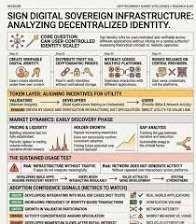
Risks exist: regulatory hurdles, integration complexity, competition. But Sign’s hybrid model and government traction mitigate them better than pure-decentralized alternatives.
### My Take: This Is the Sovereignty We’ve Been Waiting For
I’ve followed Web3 since the early days, and most projects chase users with incentives. Sign builds the rails nations and people actually need. It’s not about replacing governments—it’s about giving them tools that empower citizens without sacrificing control.
Picture waking up in a world where your diploma, license, or subsidy claim is instantly verifiable anywhere—no emails, no bureaucracy. Your tokenized assets earn yield transparently. Your digital identity is yours to share selectively. That future isn’t sci-fi; Sign’s tech makes it executable today.
What about you? Have you felt the sting of centralized control in your own life—lost access, hidden fees, unverified claims? How would true digital sovereignty change your daily decisions? Would you sign more contracts on-chain? Invest in tokenized real assets? Demand your government explore these tools?
The shift from Web2 limits to Web3 ownership is happening now. @SignOfficial and Sign aren’t just another token—they’re the transparent, independent infrastructure rewriting the rules. Sovereign digital economies aren’t coming; they’re being built, one attestation at a time.
If you’re building, investing, or just curious about owning your digital future, dive into sign.global, check the docs, and join the Orange Dynasty conversation. The control you’ve been missing? It’s finally within reach.