
There was a time when I used to evaluate crypto projects based on how compelling their ideas sounded. If something felt structurally important, I assumed adoption would eventually follow. Digital identity was one of those narratives that always seemed inevitable. The logic was simple: if users controlled their own data, systems would naturally reorganize around that shift.
But over time, that assumption started to break.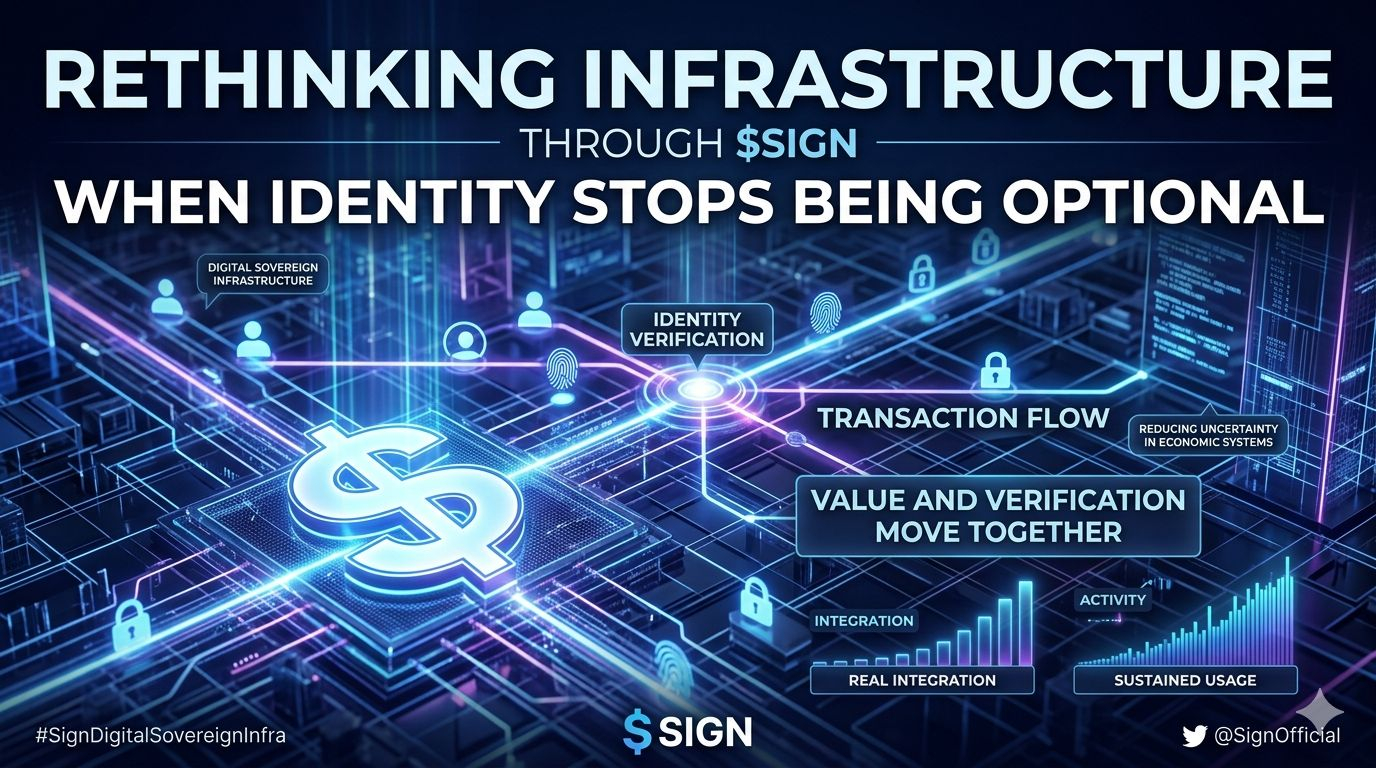
The more I looked into how identity systems were actually being implemented, the more I noticed a pattern. Either they depended on subtle forms of centralization, or they required users to actively manage complexity that most people simply wouldn’t tolerate. In both cases, the idea remained strong, but the execution created friction.
That realization changed how I approach these projects.
Now, instead of asking whether an idea makes sense, I focus on whether it can operate without demanding attention from the user. Because in most cases, infrastructure that succeeds is the kind people don’t have to think about.
That shift is what makes $SIGN worth paying attention to.
Not because digital identity is new, but because it reframes the role identity plays within a system. Instead of treating identity as an external layer that applications may or may not use, it positions identity as something embedded directly into the flow of economic activity.
The difference may seem subtle, but it changes everything.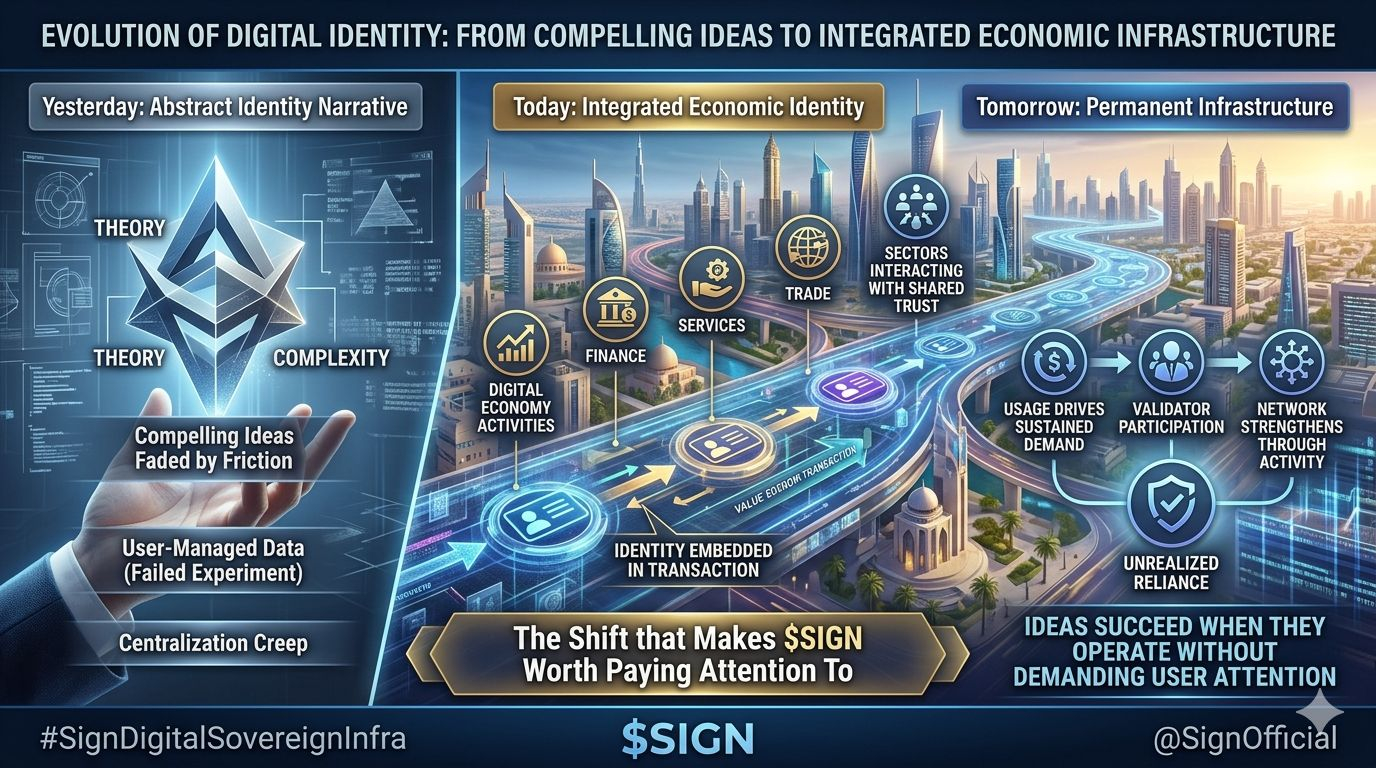
In most systems today, a transaction is just an exchange of value. Trust is handled separately, often through intermediaries or external verification processes. But when identity becomes part of the transaction itself, the system starts to behave differently. Value and verification move together, creating a structure where interactions carry context, not just numbers.
A simple way to think about it is this: instead of asking “who can I trust?” after a transaction, the system answers that question during the transaction.
That distinction becomes more important as digital economies expand.
In regions like the Middle East, where large-scale digital transformation is already underway, infrastructure decisions are not just technical—they are foundational. Systems being built today will define how financial and economic coordination works for years to come.
If identity remains fragmented, systems tend to compensate by becoming either restrictive or inefficient. But if identity is integrated at the base layer, it allows different sectors—finance, trade, services—to interact with a shared sense of trust.
This is where $SIGN’s positioning starts to make more sense.
It’s not just trying to improve identity. It’s attempting to align identity with how economic systems function at scale. That includes enabling ecosystems and assets to operate with verifiable user context, reducing uncertainty in interactions that would otherwise rely on assumptions or external checks.
From a market perspective, however, it’s still early.
Attention around identity-driven infrastructure is growing, but attention alone doesn’t confirm adoption. Metrics like volume or holder count can signal interest, but they don’t necessarily reflect whether the system is being used in a way that creates sustained demand.
This gap between narrative and usage is where most projects get tested.
Because the real challenge is not whether identity can be integrated into a system, but whether it becomes part of repeated behavior. Infrastructure only proves itself when it’s used consistently, not occasionally.
If applications begin to rely on identity in ways that users engage with regularly—without added friction—the system can start reinforcing itself. Usage drives demand, demand attracts development, and over time, the network strengthens through actual activity rather than expectation.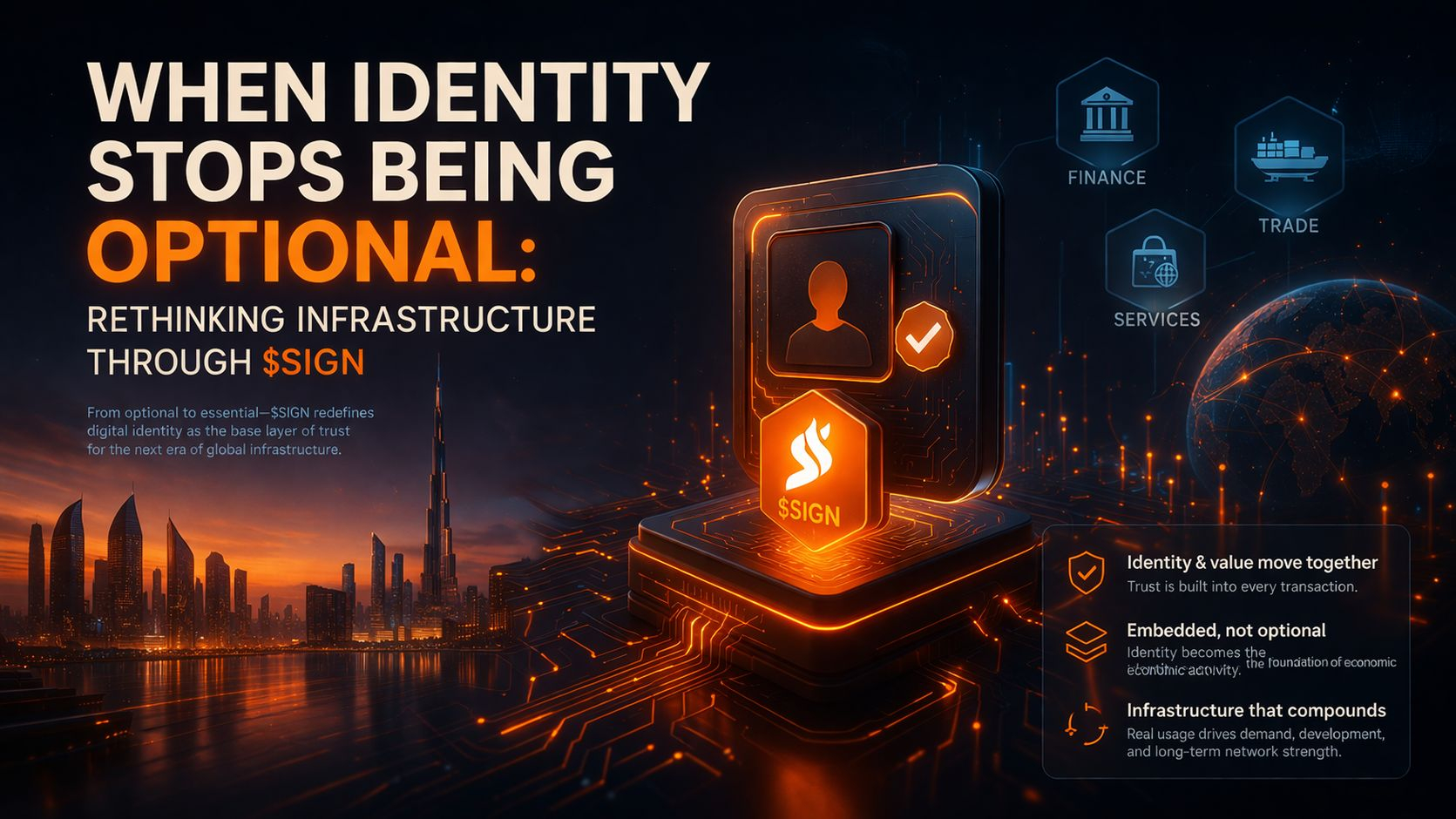
But if identity remains an optional feature, even the strongest architecture can struggle to gain traction.
That’s why, when evaluating $SIGN, it makes more sense to look beyond short-term market movements and focus on signals of real integration. Are developers building systems where identity is required, not just available? Are users interacting with these layers repeatedly? Is there enough activity to sustain validator participation over time?
These are the indicators that separate potential from permanence.
Because in the end, the difference between an idea that sounds necessary and infrastructure that becomes necessary is rarely theoretical.
It shows up in usage.
And the systems that last are the ones people rely on again and again—often without even realizing it.
#SignDigitalSovereignInfra $SIGN @SignOfficial
