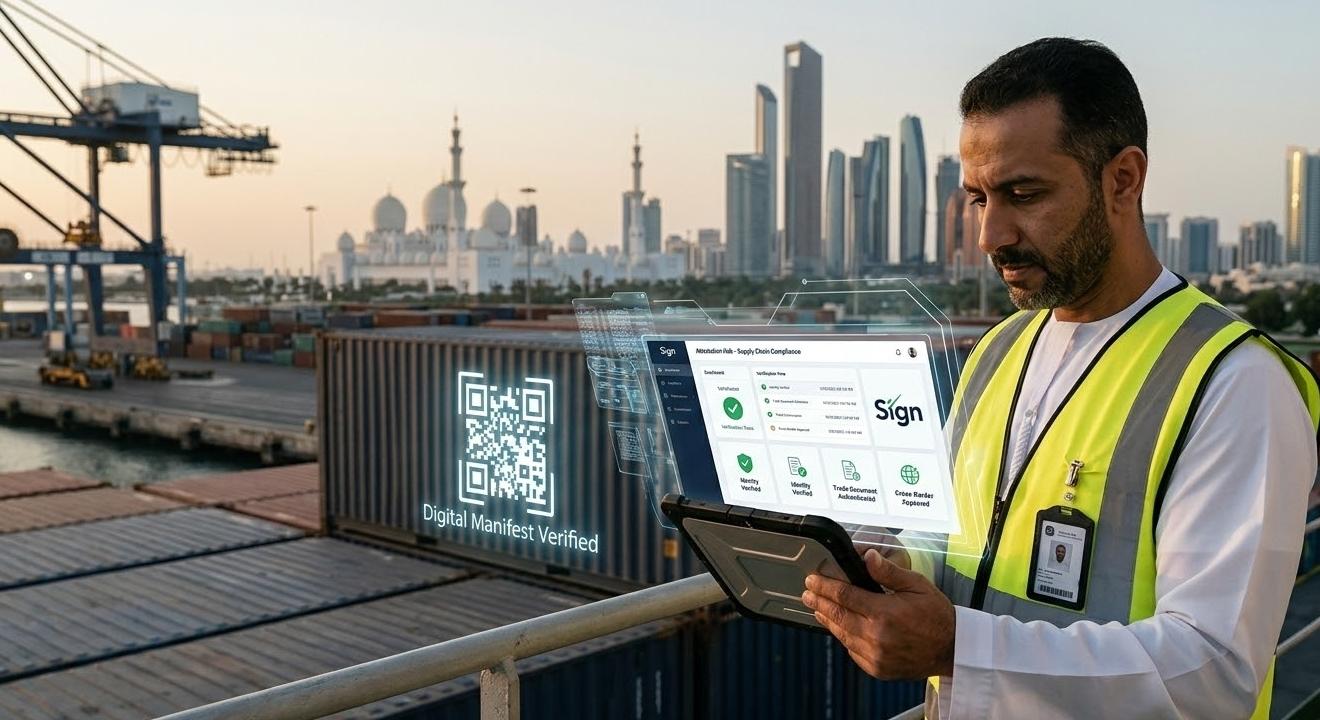
When people first hear about projects like Sign, they usually think about digital identity—verifying who you are online, signing things securely, that sort of stuff. But in the Middle East, the conversation is quietly shifting. It’s no longer just about identity. It’s about infrastructure.
And honestly, that shift matters more than it sounds.
Across the Gulf, countries like the UAE, Saudi Arabia, and Qatar are not just experimenting with blockchain—they’re building real systems around it. We’re talking about logistics, banking, public records, even government payments. These aren’t pilot ideas anymore; they’re becoming part of how economies run.
This is exactly where Sign starts to feel relevant.
At its core, Sign isn’t just about proving identity. It’s about attestations—verifiable pieces of data that can be trusted across systems. That might sound technical, but think of it like this: instead of re-checking documents again and again, systems can instantly trust verified data. In regions where cross-border trade, government approvals, and compliance processes can be slow, that’s a big deal.
A recent move into Abu Dhabi highlights this direction. Sign partnered with a regional blockchain center to help modernize public systems, focusing on secure records and interoperability.
That’s not just a tech upgrade—it’s an economic one. Faster verification means faster business.
What makes the Middle East especially interesting is its approach. Unlike some regions chasing hype, there’s a strong focus on regulation and real-world use. The UAE, for example, has become a leader in crypto adoption by prioritizing clear rules and practical applications over speculation.
So where does Sign fit in all this?
It sits right in the middle layer—the “invisible” infrastructure. Not flashy, but essential. Identity, contracts, credentials, transactions—all connected through verifiable data. If it works as intended, it could reduce friction across everything from trade finance to public services.
Of course, there are still open questions. Adoption depends on governments, enterprises, and developers actually using it. And infrastructure projects don’t scale overnight—they take years of integration and trust-building.
But here’s the honest takeaway:
Sign’s real value isn’t in identity alone. It’s in turning identity into something usable at scale—something economic systems can rely on.
And in a region actively redesigning its digital foundations, that might be exactly what’s needed. @SignOfficial $SIGN #signdigitalsovereigninfra