

A lot of people talk about Sign Protocol as if it’s just neutral infrastructure. Something like electricity or water, dependable and outside politics. But the more I’ve watched its expansion, especially across the Middle East and Southeast Asia, the harder that idea is to accept. Sign isn’t just building tools. It’s stepping into a space where technology and power overlap.
On one hand, it presents itself as a decentralized alternative to systems like SWIFT or centralized identity frameworks. On the other, it’s offering countries that are uneasy about Western financial control a kind of backup plan, a way to reduce their exposure to external pressure. That’s not neutral. That’s strategic.
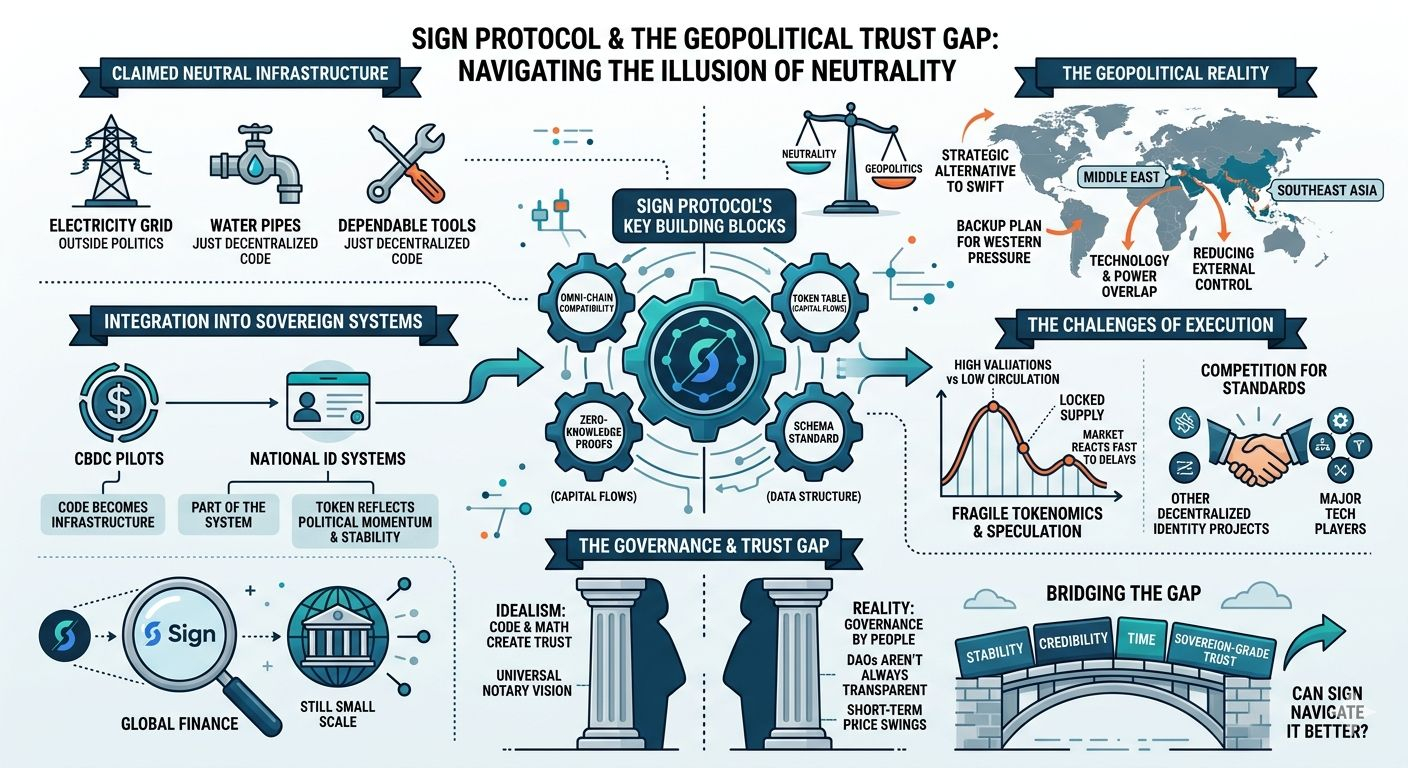
Technically, there’s a lot to like. Omni chain compatibility, zero knowledge proofs for privacy, and systems like Token Table that aim to handle large scale capital flows. These are serious building blocks. But once those tools get embedded into things like CBDC pilots or national ID systems, the role of the protocol changes. It stops being an experiment and starts becoming infrastructure.
And that’s where the real tension begins. Because when a protocol sits underneath a country’s financial or identity systems, it’s no longer just code. It becomes part of the system itself. And its token stops being a simple utility, it starts reflecting confidence, stability, even political momentum.
We’ve seen how fragile that can be, especially with low circulating supply tokens and high valuations. A lot of supply is often locked away while the market trades on expectations. Meanwhile, real adoption, especially at the government level, moves slowly. If timelines slip or a key rollout stalls, the market reacts fast, and usually not kindly.
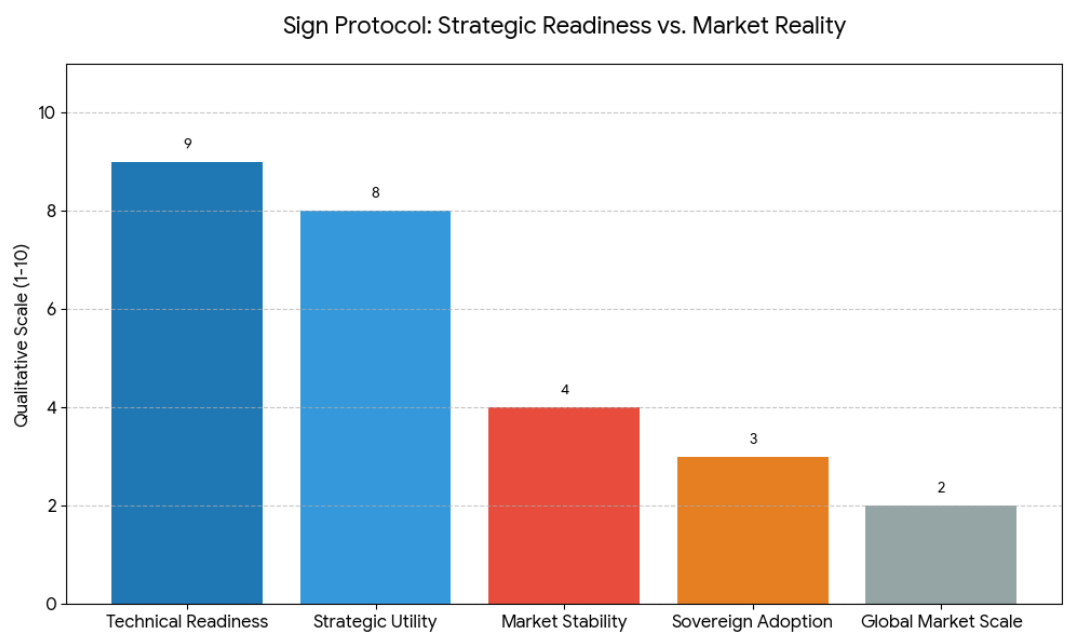
Take Sign’s Schema standard. It’s a smart idea, structuring data so identity and ownership can move across chains smoothly. But standards only matter if they’re widely adopted. Right now, Sign isn’t alone. It’s competing with other decentralized identity projects, as well as major tech players who have no intention of giving up control over the internet’s identity layer. Even with billions processed through its systems, that’s still small compared to the scale of global finance.
There’s also a philosophical gap. Sign leans on the idea that math and code can create trust in a fragmented world. It’s a powerful vision. But code doesn’t exist in a vacuum. It’s written, updated, and governed by people. And governance, even in DAOs, isn’t always as transparent or predictable as it sounds.
At the center of all this is a simple question. Sign wants to become a global trust layer, something like a universal notary for the digital age. But it’s operating in a market driven by speculation, narratives and short term price swings. That’s a tough environment to build long term, sovereign grade trust.
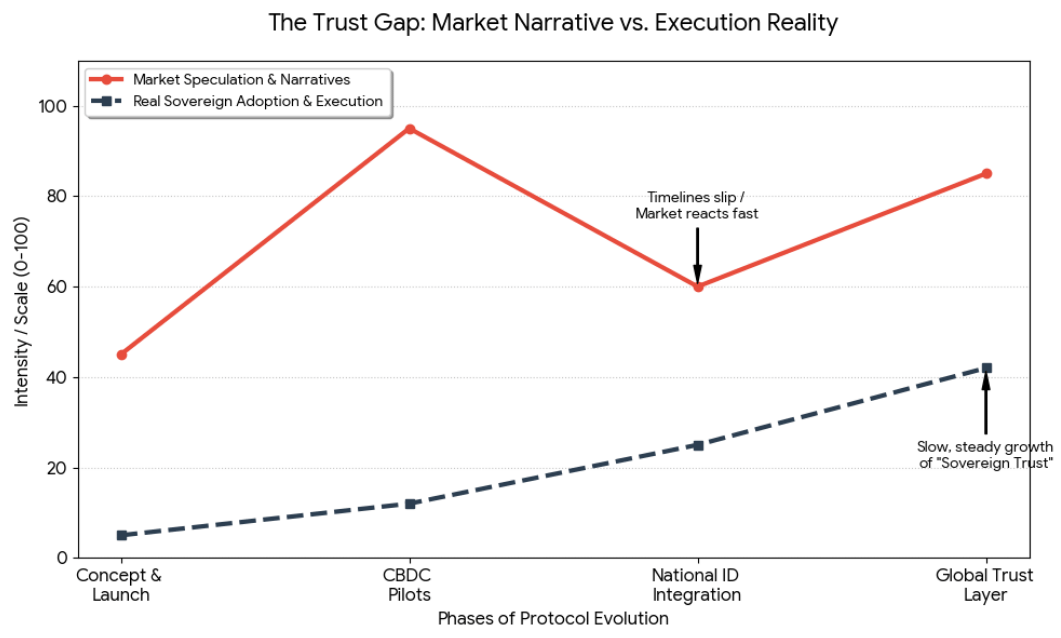
Convincing governments to rely on that kind of foundation isn’t just about technology. It’s about stability, credibility and time. The vision is strong. But the execution has to bridge a difficult gap between idealism and reality. A lot of projects struggle at that point. The question is whether Sign can navigate it better than the rest.
@SignOfficial #SignDigitalSovereignInfra $SIGN
