
There’s a strange gap in crypto that I didn’t notice at first, probably because everything looks complete on the surface. Transactions go through, contracts execute, data is stored permanently. From the outside, it feels like a fully closed system.
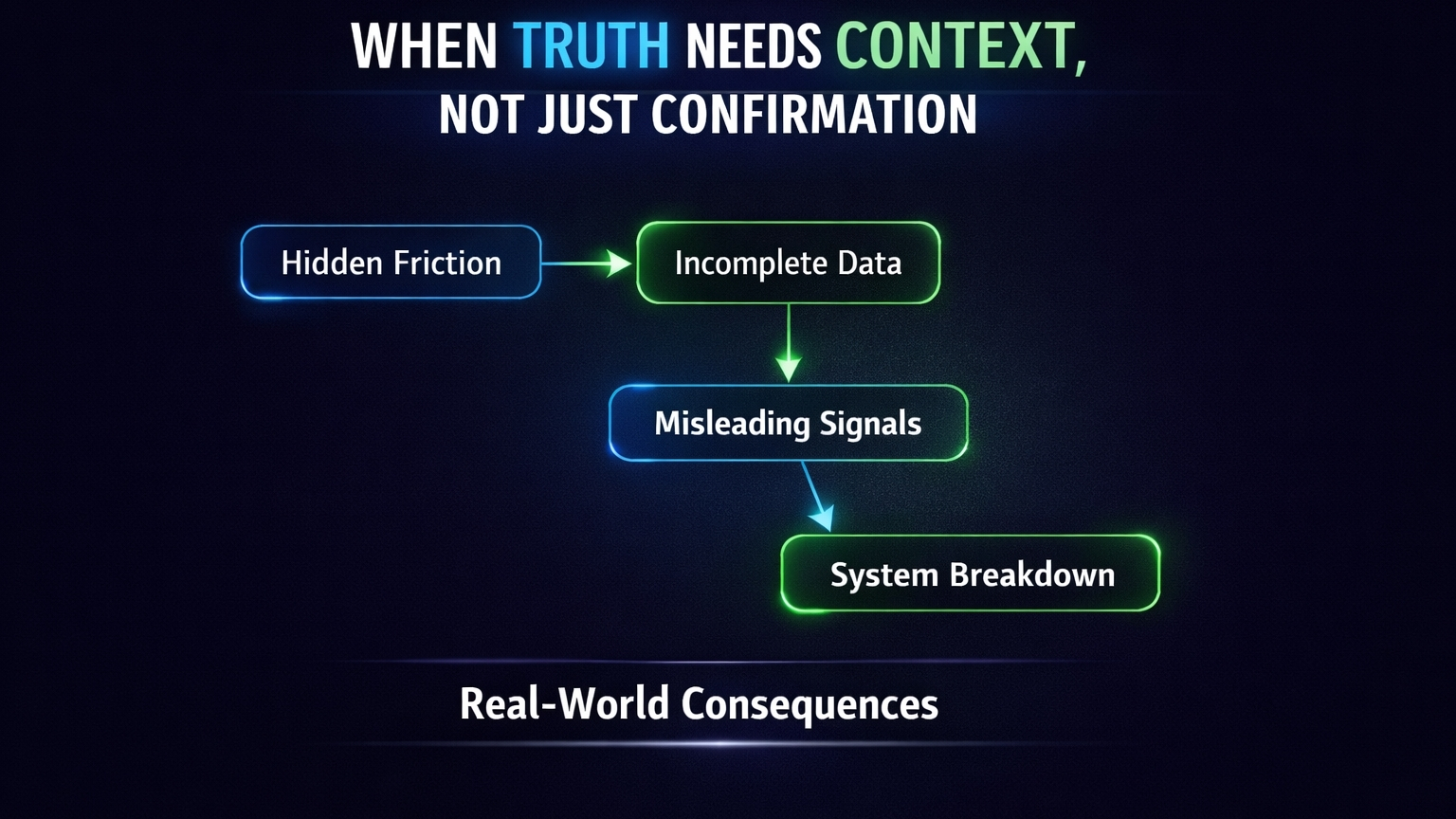
But the more I watched how things actually play out, the more I realized that most of what we call “on-chain truth” is only as reliable as the inputs behind it.
And those inputs are rarely clean.
Agreements happen off-chain. Decisions are made in private chats. Intent exists before execution. And none of that is naturally captured in a way that holds weight later. By the time something reaches the blockchain, it’s already a compressed version of reality — stripped of context, stripped of nuance.
I used to think this didn’t matter.
But now it feels like that missing layer is exactly where most real-world friction comes from.
Not execution.
But interpretation.
Not “did this transaction happen?”
But “what did it actually mean?”
That’s where $SIGN started shifting how I look at things.
It’s not just about verifying a single action. It’s about creating a structured record of intent, acknowledgment, and agreement — something that exists before and beyond execution.
Almost like giving context a permanent form.
And that changes things.
Because once context becomes verifiable, disputes change. Coordination changes. Even accountability starts to look different.