
Most token distribution systems look fine until one wallet should no longer receive funds.
A beneficiary qualifies at launch, then fails a later eligibility check before the next claim. That is where the real mess starts. The operator has to stop the flow, explain why this wallet was valid last week but not now, and prove that the decision came from the rules rather than a late manual override. In a lot of setups, that truth gets scattered across scripts, spreadsheets, internal messages, and whoever still remembers the sequence.
That was the part that caught my attention with SIGN.
What SIGN is doing with TokenTable is not just organizing payouts. It is treating freezes, revocations, and later review as part of the allocation design from the start. The table can already include allocation amounts, claim conditions, vesting parameters, and revocation or clawback rules before anything goes live. Once finalized, that table is versioned and immutable.
That sounds like a small design choice until a real exception shows up.
Imagine that same wallet reaching its next claim window after losing eligibility. In a typical system, the operator pauses distribution with off-chain logic, records the reason somewhere internal, and hopes the review trail still makes sense later. The transfer history may be visible. The decision path behind the stop usually is not.
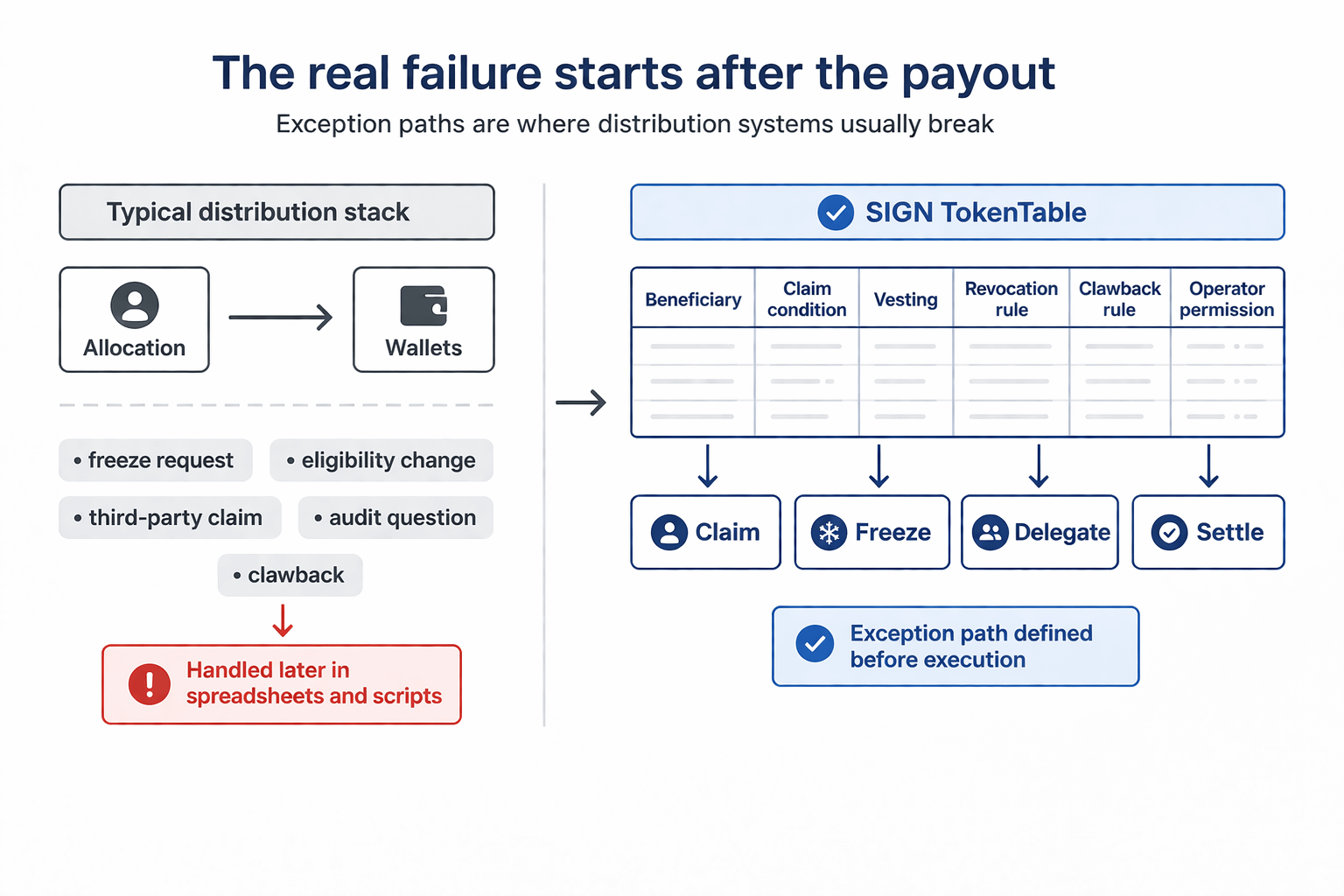
That is why I think the important path here is not the happy path claim. It is the freeze-and-replay path.
Can the operator stop that wallet under a defined rule? Can they show which table version applied at the moment of review? Can they point to the eligibility attestation that changed the wallet's status? Can they show the freeze event and then the settlement record that proves no invalid claim slipped through? That comparison sequence matters more than the payout itself.
This is where SIGN feels useful in a more operational way. TokenTable defines the allocation logic and the freeze condition. Sign Protocol carries the signed evidence for eligibility state. The freeze action and later settlement outcome can then be linked into the same evidence trail. SignScan matters because it lets an operator, builder, or auditor query that sequence later instead of reconstructing it from raw records.
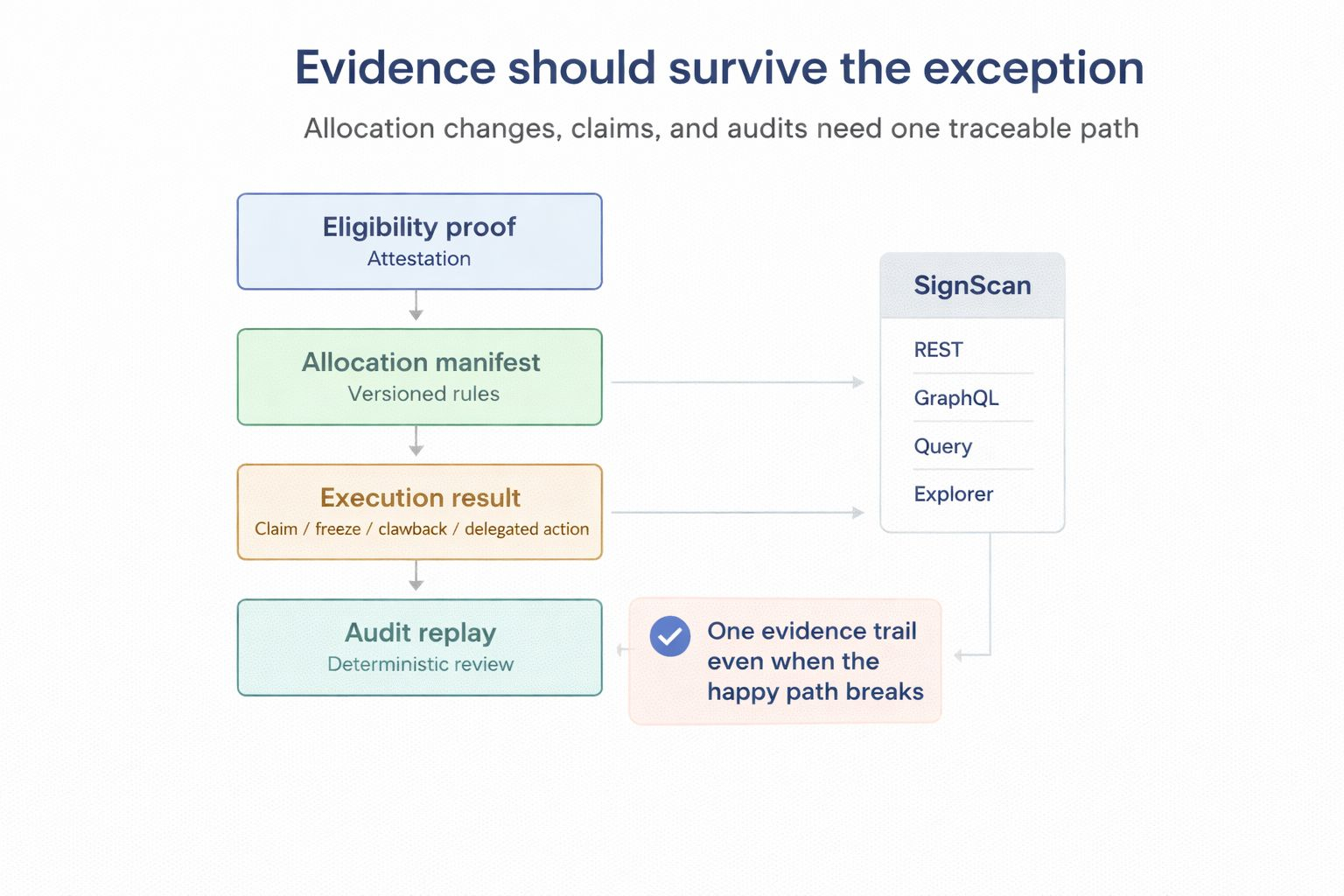
That sequence is the part I keep coming back to: table version, eligibility attestation, freeze event, then settlement record.
When someone asks why a wallet was stopped, the team should not have to rebuild the story from memory. They should be able to compare the active table version against the updated eligibility proof, see the freeze action tied to that change, and confirm through the settlement trail that execution followed the rule. The pressure moves away from post-event explanation and back toward pre-defined discipline.
That is a healthier place to carry operational risk.
The hard question is no longer "can we explain this exception now?" It becomes "did we define the exception correctly before funds moved?" That is a much better standard than relying on off-chain pause logic and fragmented review records after the fact.
A lot of systems look trustworthy because the clean path works. I think the harder standard is whether the ugly path was designed in advance.
That is the question I keep coming back to with SIGN. Not whether it can distribute value once, but whether more programs will start demanding infrastructure where freeze decisions and audit replay are first-class objects instead of operational damage control after something breaks.
If that shift happens, SIGN looks less like a payout tool and more like the missing discipline for digital programs that cannot afford vague exceptions.
#SignDigitalSovereignInfra $SIGN @SignOfficial
