

I've been watching the countdown all week. The block explorers, the Discord channels, the quiet announcements from the Midnight Foundation as they finalized the last pieces before tomorrow. Every few hours, something new appeared. Worldpay joining the node operator alliance. Bullish committing to build proof of reserves. MoneyGram completing their identity oracle integration. eToro becoming an Identity Provider.
Tomorrow, the Midnight mainnet opens. The headlines will write themselves. Fourth-generation blockchain. Programmable privacy. Institutional DeFi. The inevitable comparisons to Cardano, to Ethereum, to every network that came before. All of it true. All of it important. None of it the real story.
Here's what I keep coming back to. Midnight isn't launching into a vacuum. It's launching into a world where $3.7 trillion in annual payments already flow through Worldpay. Where MoneyGram operates across 200 countries, connecting people who often don't have bank accounts. Where eToro's 35 million users have been waiting for a way to take their verified identities into DeFi without starting over. Where Google Cloud and Vodafone are running nodes not as experiments, but as production infrastructure.
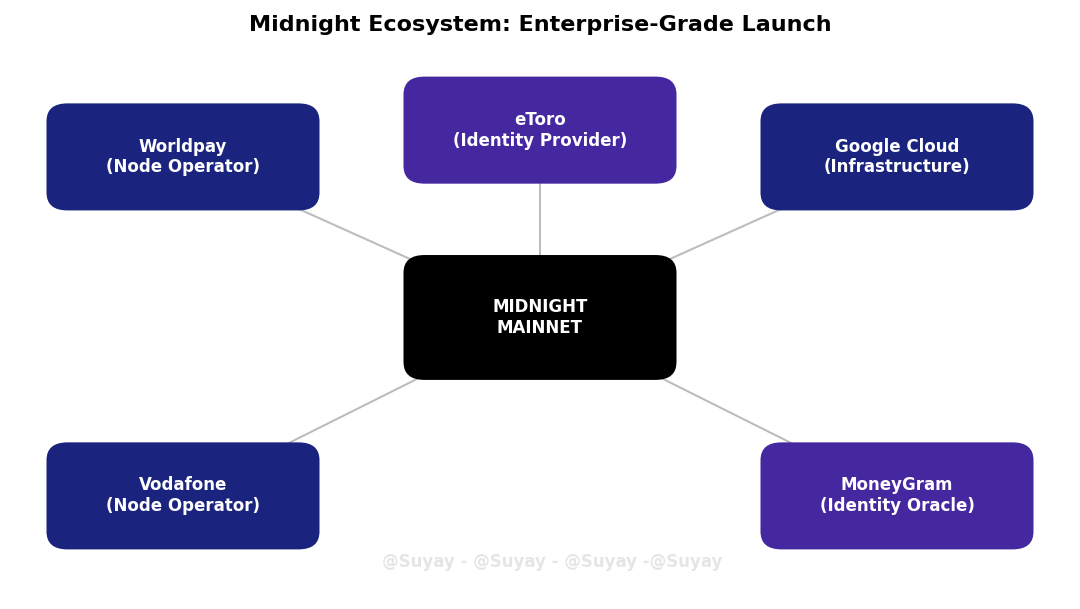
The network is ready. The validators are in place. The credentials are issued. The viewing keys are generated. Tomorrow, the switch flips.
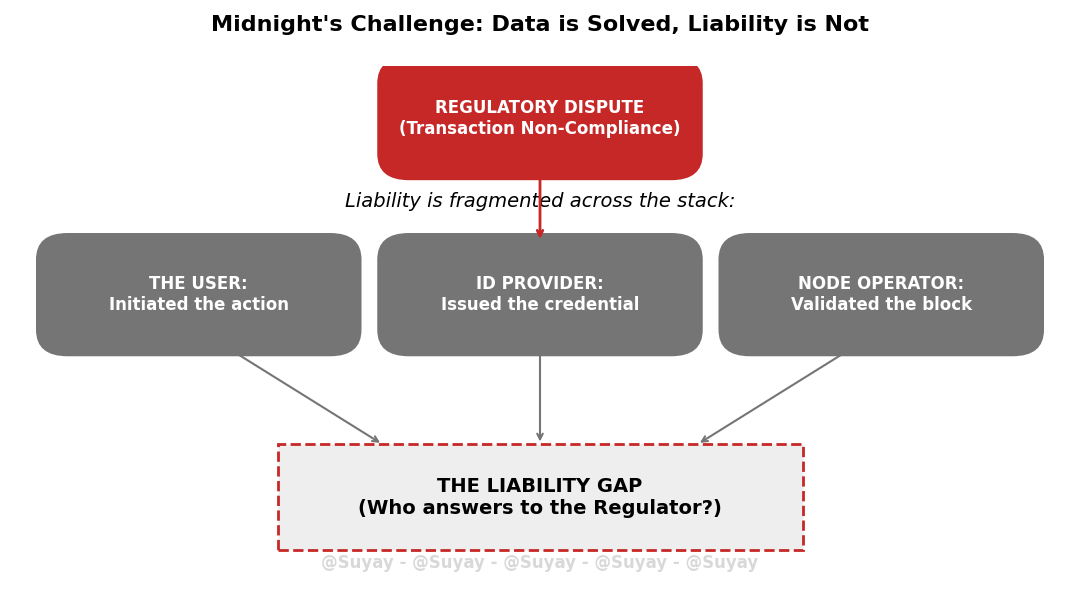
But there's a question that's been sitting with me since the announcements started rolling in last week. When MoneyGram starts moving real remittances through Midnight, and a regulator uses a viewing key to audit a transaction, and something doesn't match — a compliance flag, a disputed amount, a question about source of funds — who explains what happened?
The user who initiated the transaction? The node operator who validated the block? The Identity Provider who issued the credential? The developer who wrote the contract? The Midnight Foundation, which coordinates the network but doesn't control it?
This is not a technical question. The cryptography works. The ZK-SNARKs generate proofs in milliseconds. The selective disclosure is elegant. The viewing keys do exactly what they're designed to do: reveal specific details to authorized parties, hide everything else.
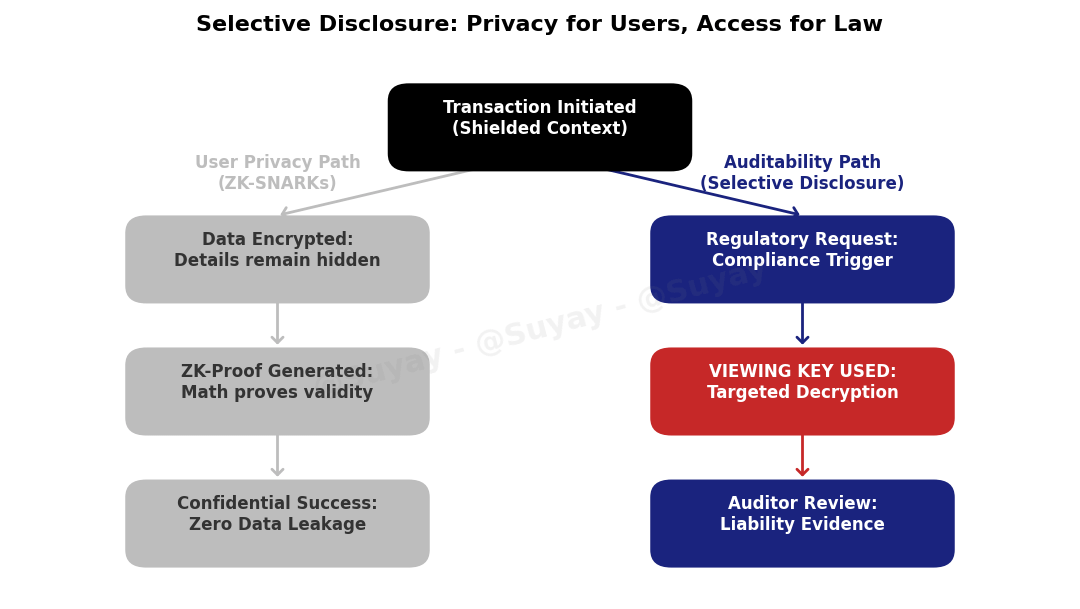
The question is about something messier. It's about accountability in a system where no single party controls the whole stack, but where every party has obligations. Regulated institutions don't get to say "the protocol did it" when an auditor comes calling. Their compliance teams, their legal departments, their reputations are on the line.
Midnight's federated model was designed for stability. Fifteen institutions running nodes at launch, each with reputations to protect, each with compliance teams, each with legal obligations. Google Cloud doesn't operate infrastructure at this scale without layers of review. MoneyGram doesn't integrate with a blockchain before mainnet without answering hard questions internally. eToro doesn't become an Identity Provider without understanding exactly what they're signing up for.
That's the trade-off Midnight made. Instead of waiting years for permissionless validation to mature organically, they launched with enterprise-grade reliability from day one. The validators are known entities. The rules are clear. The infrastructure is battle-tested by organizations that run systems at global scale.
But stability and accountability are not the same thing. A system can run perfectly for years and still fail the moment someone asks a question no one prepared for. The question isn't whether the blocks will produce on time. They will. The question isn't whether the proofs will verify correctly. They will. The question is what happens when the system works exactly as designed, and the outcome still creates a dispute that no one anticipated.
The Liqwid DAO dispute this week over 18.8 million NIGHT tokens was a preview. Governance mechanisms are already being tested. Arguments are already happening about who controls what, who decides what, who gets what. That's healthy. Decentralized systems are supposed to have friction. But it's also a reminder that where there are tokens, there are conflicts. Where there are conflicts, there are questions about who decides. Where there are questions about who decides, there are gaps in the architecture that no amount of cryptography can fill.
Tomorrow, the network goes live. The validators start producing blocks. The Identity Providers start issuing credentials. The first users start transacting. The block explorers that I've been refreshing for weeks will finally show something more than configuration transactions. They'll show real activity. Real value. Real people using a network that was designed to give them exactly what they need and nothing more.
I want to watch what happens in the first week, not the first hour. The technical launch is guaranteed to work. That's what testnets are for. 962,000 transactions on Preprod proved the architecture scales. The 1,617% increase in smart contract deployments proved developers are building. ShieldUSD's MVP deployment on March 17 proved the use cases are real.
The question is what happens when real institutions, real users, and real regulators start interacting with a system designed to give everyone exactly what they need and nothing more. The elegance of selective disclosure is that it separates data from proof. You can prove you're compliant without exposing your transaction history. You can prove you're solvent without revealing your positions. You can prove you're eligible without sharing your identity.
The challenge is that liability doesn't separate so cleanly. When a proof is generated, a credential is issued, a transaction is validated, and a viewing key is used, the pieces are distributed. The accountability is not.
Midnight has solved the data problem. The cryptography is sound. The architecture is tested. The institutions are ready.
Who is solving the liability problem?
Tomorrow, we start finding out.