
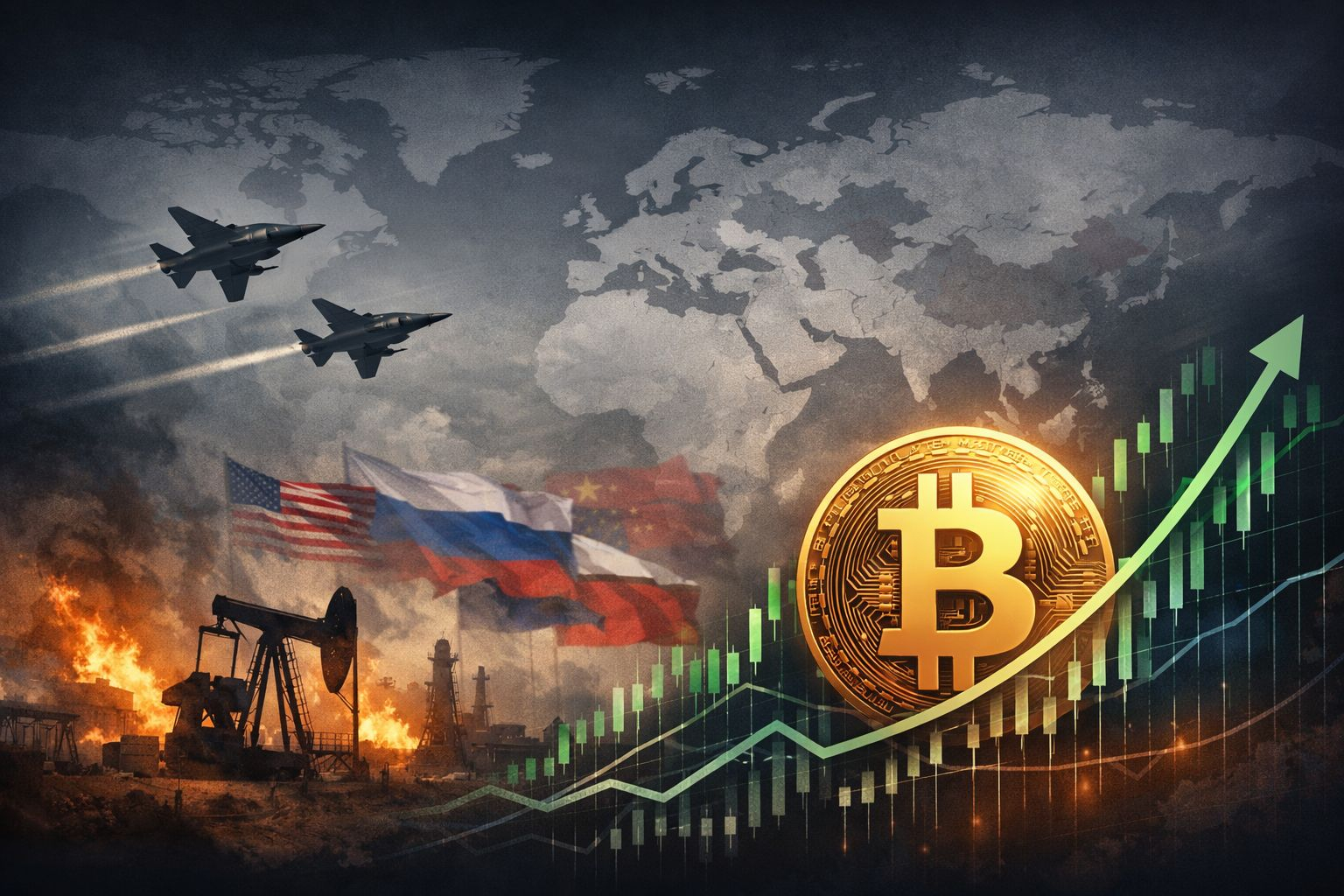
 Understanding Conflict, Energy, and Digital Assets Through a Professional Lens
Introduction
In today’s interconnected global economy, the relationship between geopolitical conflict, energy markets, and digital financial assets is becoming increasingly complex. Traditionally, wars and international tensions have been closely linked to control over natural resources—particularly oil. However, the rise of decentralized digital assets like Bitcoin introduces a new dimension to how markets respond to instability.
This article explores whether modern conflicts influence Bitcoin’s price movements—not as a conspiracy, but as part of broader market dynamics and investor behavior.
Oil and Conflict: The Traditional Framework
Historically, oil has been a central factor in global conflicts:
Strategic regions often overlap with energy reserves
Supply disruptions directly impact global markets
Oil price volatility influences inflation, currencies, and economic stability
During periods of conflict:
Oil prices typically rise due to supply uncertainty
Energy-dependent economies experience pressure
Financial markets react with caution
This relationship remains relevant, but it is no longer the only major factor.
Bitcoin as a Modern Financial Instrument
Bitcoin has evolved from a niche digital experiment into a globally recognized financial asset. It is increasingly viewed as:
A store of value by some investors
A hedging instrument during currency instability
A decentralized alternative to traditional financial systems
Unlike oil, Bitcoin is not tied to physical supply chains or geopolitical territories. Its value is influenced more by market sentiment, liquidity, and adoption trends.
Geopolitical Tension and Market Behavior
During times of global uncertainty, several consistent financial patterns emerge:
1. Shift in Investor Sentiment
Investors tend to move away from high-risk assets and seek perceived stability. Interestingly, Bitcoin sometimes behaves as:
A risk asset (falling with markets), or
A safe-haven alternative (rising amid distrust in traditional systems)
2. Capital Flow Reallocation
Conflict can trigger:
Currency devaluation in affected regions
Capital flight into global or digital assets
Increased trading volume in cryptocurrencies
3. Volatility as Opportunity
Periods of instability often create:
Rapid price swings
Increased speculative trading
Opportunities for institutional and retail investors alike
Is There a Direct Link Between War and Bitcoin Prices?
From a professional and evidence-based standpoint:
There is no verified proof that wars are initiated to influence Bitcoin prices
However, there is observable correlation between geopolitical instability and increased crypto market activity
This distinction is critical.
👉 Correlation does not imply causation
But it does highlight how interconnected modern systems have become.
The Role of Market Psychology
Financial markets are not driven by data alone—they are heavily influenced by perception:
Fear and uncertainty can accelerate adoption of alternative assets
Media coverage amplifies market reactions
Global narratives shape investor decisions
In this context, Bitcoin often benefits from:
Reduced trust in centralized systems
Demand for borderless financial solutions
Increased digital adoption during crises
Strategic Perspective: Risk, Not Conspiracy
Rather than viewing this relationship as a “scam,” a more professional interpretation is:
Geopolitical events act as external shocks
Markets - including Bitcoin - respond dynamically
Investors who understand these patterns can position themselves more effectively
This aligns with established financial principles:
Volatility creates opportunity
Uncertainty drives diversification
Conclusion
The intersection of war, oil, and Bitcoin reflects a broader transformation in global economics. While oil remains a critical strategic resource, digital assets are emerging as influential components of modern financial systems.
Rather than attributing intentional manipulation without evidence, it is more accurate and useful to understand:
How global events influence market behavior
How capital flows adapt to uncertainty
And how Bitcoin fits into this evolving landscape
In a world shaped by both physical and digital forces, the real advantage lies not in speculation but in informed analysis and strategic thinking.