
What looks like openness in crypto often feels a lot closer to exposure. Web3 keeps talking about ownership, decentralization, and independence, but the everyday reality is harsher: the moment you interact onchain, your behavior can become readable to strangers, bots, analysts, competitors, and platforms that treat your activity like free intelligence.
Every transfer leaves a trace. Every swap adds context. Every visible wallet becomes a pattern waiting to be studied. That may help verification, but it also creates a system where participation comes with a hidden cost: you control the assets, yet you do not fully control the information around them.
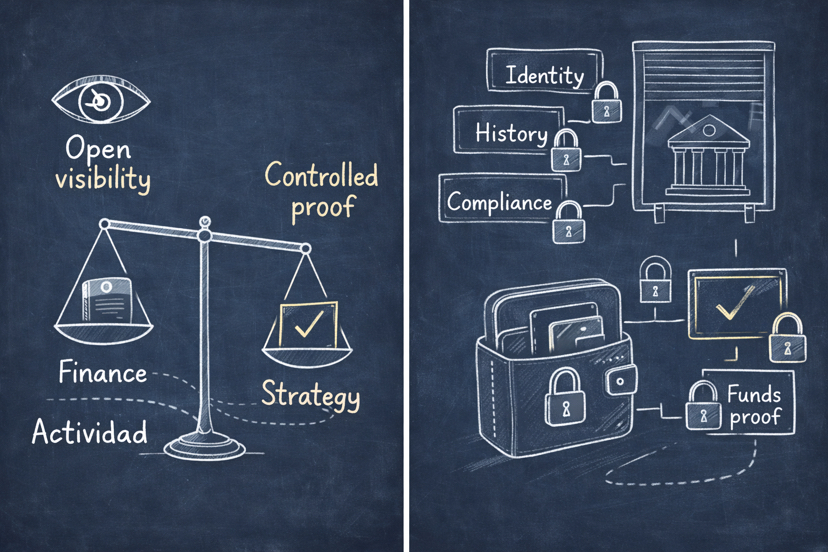
This is where the debate around privacy becomes much bigger than the old “privacy coin” narrative. The real issue is not whether everything should be hidden. The real issue is whether users should have the power to decide what must be shown and what should remain protected.
That distinction changes everything.
A person should be able to prove compliance without exposing their entire history. A business should be able to verify legitimacy without handing competitors a live map of internal operations. A user should be able to demonstrate solvency without turning their wallet into a public biography. Verification should not require full exposure.
That is why this design direction matters so much. It reframes privacy as infrastructure instead of secrecy. Not darkness, not invisibility, not escape from accountability — but selective disclosure. Proof without leakage. Trust without surrender.
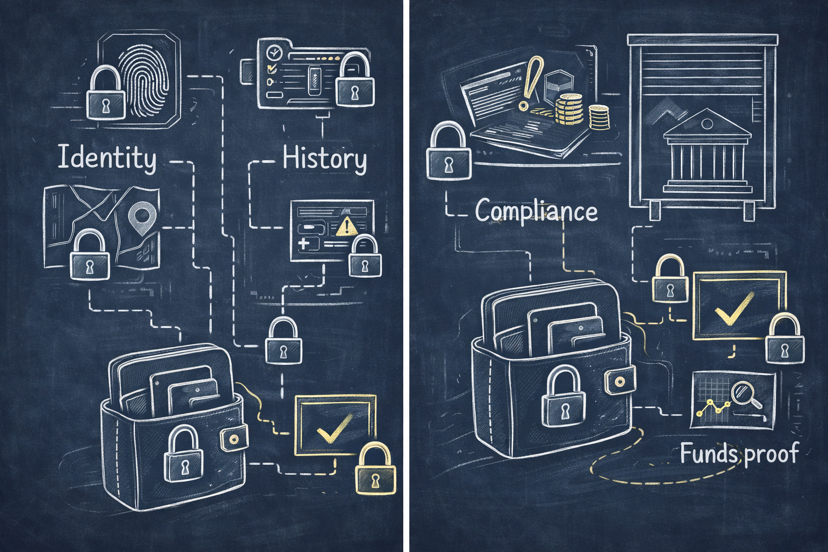
For individuals, that means more dignity and more control. For builders, it means applications that do not depend on permanent data extraction. For institutions, it means they can finally imagine using blockchain rails without sacrificing confidentiality from the first step.
This is also why I think the market still misunderstands where the real value may come from. If blockchain is going to move beyond speculation and become real infrastructure, then it cannot keep forcing users into radical transparency by default. That model may work for some cases, but it breaks down the moment privacy, strategy, security, or competitive information starts to matter.
Web3 does not become mature by making everything visible. It becomes mature when it allows openness and protection to coexist in a functional way. When users can decide what to reveal, to whom, and under what conditions, ownership becomes more real.
And that is the deeper shift.
The future is not about hiding everything.
It is about no longer exposing everything.
@MidnightNetwork $NIGHT #night