

I’ve been closely following the evolution of digital infrastructure, and I have to say, @SignOfficial with $SIGN is redefining what national and cross-border systems can do. Super-sovereign infrastructure isn’t just a buzzword, it’s about building systems that operate beyond a single country’s borders, yet remain fully auditable, compliant, and trustable.
I’ve observed governments and enterprises struggle with siloed systems: identity verification, money transfers, and program distributions are often fragmented, slow, and opaque. Sign combines blockchain, programmable money, and decentralized identity to create an infrastructure layer that scales across nations while respecting privacy and governance.
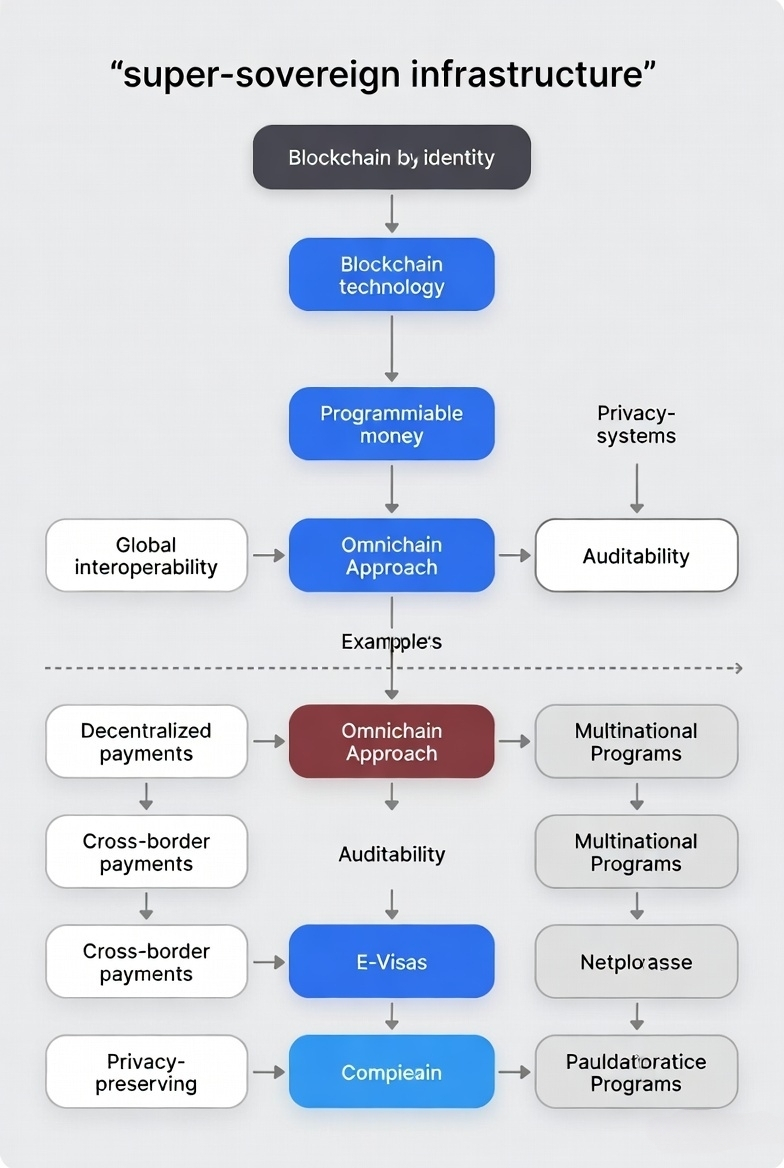
Imagine a scenario: a citizen in one country needs to receive benefits funded by another nation’s program. Traditionally, this is bogged down by bureaucracy and cross-border compliance. With Sign, identity and entitlement are verified onchain, money can flow programmatically, and audit-ready attestations provide full transparency for regulators. The same system can handle e-visas, cross-border grants, or multinational scholarship programs, all on one unified, verifiable layer.
What excites me most is the omnichain approach. Sign doesn’t just rely on one network; it supports sovereign chains, public blockchains, and Arweave fallback storage, all tied together by SignScan. From my perspective, this is the true meaning of super-sovereign, infrastructure that’s interoperable, censorship-resistant, and globally verifiable.
$SIGN isn’t just a utility token here; it’s the backbone of this new architecture. Users stake, transact, and participate in governance, aligning incentives for builders, governments, and citizens alike. Every attestation, every identity proof, every token distribution contributes to a global ledger of trust, permanent, auditable, and privacy-preserving.
I expect this approach to fundamentally change how we think about digital sovereignty. Countries no longer have to reinvent the wheel for every program. Enterprises can leverage verifiable infrastructure without building complex internal systems. And citizens benefit from faster, safer, and privacy-respecting services.
From my experience, projects that aim for super-sovereign infrastructure usually fail in execution, but Sign’s combination of technical rigor, product-market fit, and global adoption sets it apart. It’s not just a theory, it’s already live in UAE, Thailand, Sierra Leone, and expanding into 20+ countries. The proof is in the deployments: real use cases, real citizens, real impact.
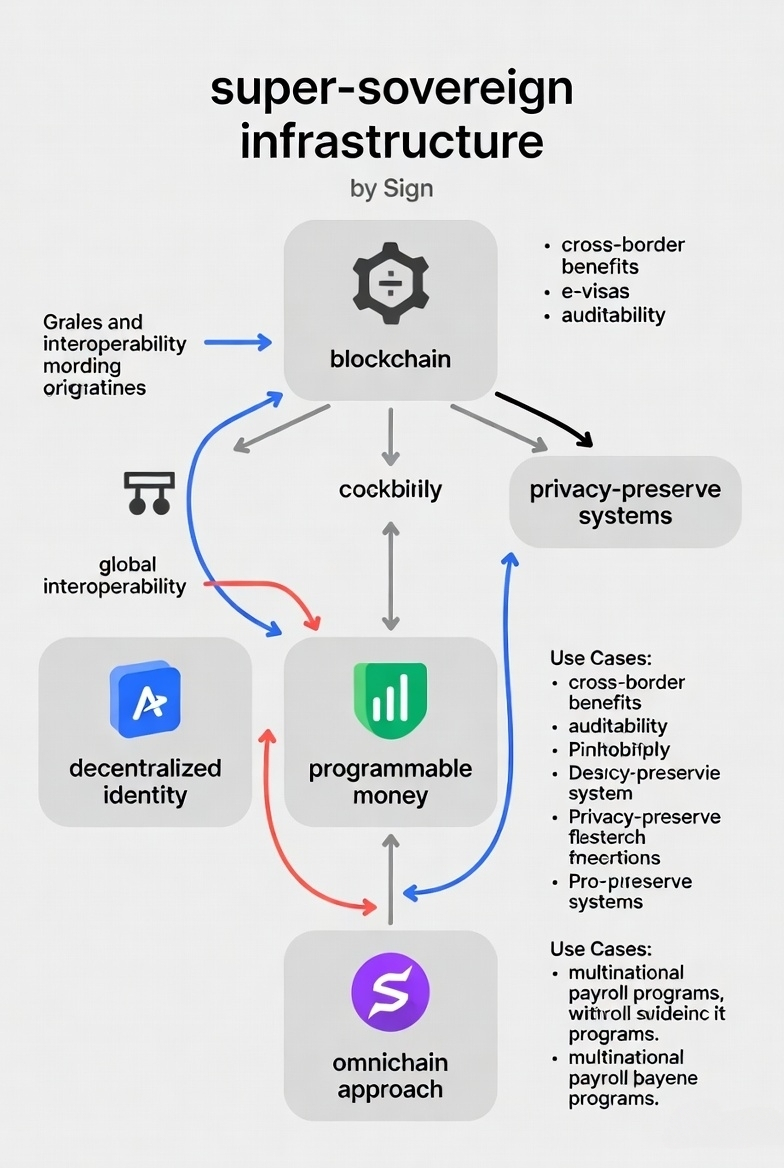
If you ask me, this is where the future of Web3 infrastructure lies: a system that transcends borders, is fully auditable, and integrates identity, money, and governance seamlessly. I’ve seen too many projects promise interoperability, but Sign is delivering it at scale, making the idea of a global, super-sovereign digital economy tangible.
I expect that as more governments and enterprises adopt Sign, we’ll see an entire ecosystem of interoperable, compliant, and privacy-preserving services, all built on a single, verifiable infrastructure layer. It’s not just about blockchain for blockchain’s sake, it’s about real-world economic growth, trust, and operational efficiency.