
i almost skipped past the Arma BFT section the first time i read it and honestly that was a mistake like i did mistakes in trading ETHEREUM and PIPPIN so i spent the last two days correcting 😂
most people look at the 100,000 transactions per second figure and move on. i did the same thing initially. but the number isnt the interesting part. the interesting part is the architectural decision that produces it. and inside that decision there is a question i keep coming back to that the documentation doesnt fully answer.
How the machine actually works:
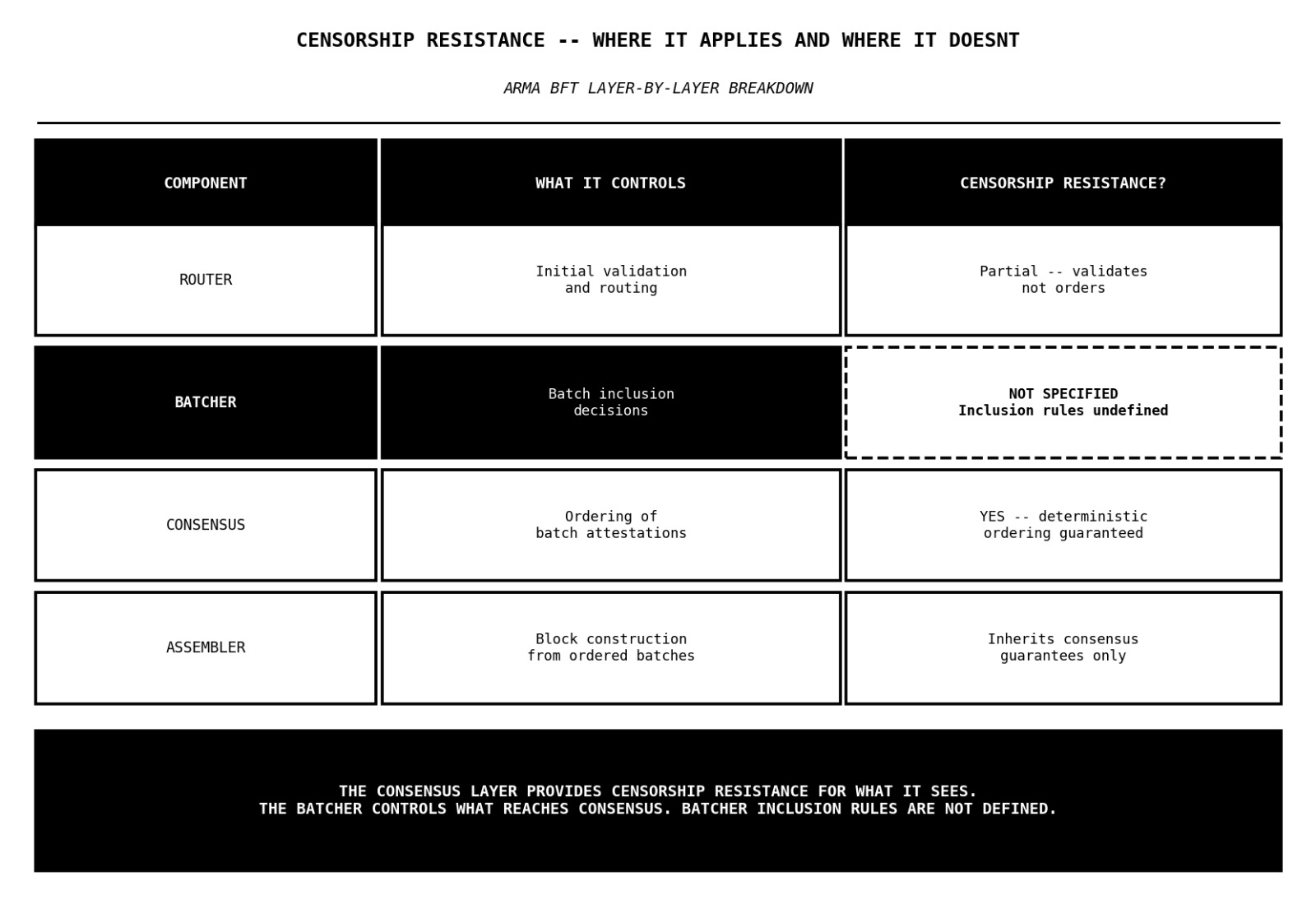
Arma BFT is not a single consensus engine. it is four distinct components operating in sequence, each responsible for a separate function.
the router receives incoming transactions and handles initial validation and routing. the batcher takes those validated transactions and groups them into batches. the consensus layer then operates exclusively on compact batch attestations, not on the full transaction payloads themselves
the assembler takes the ordered batch attestations from consensus and constructs the final blocks.
that separation is the architectural insight that unlocks the performance number. consensus is the slow part of any distributed system because it requires coordination across multiple nodes. by stripping consensus down to operating only on small attestations rather than full transaction data, the bottleneck shrinks dramatically
more throughput per consensus round because each round is doing less work per transaction.
and the central bank controls the consensus nodes directly. that is the governance design. the ordering authority sits with the sovereign operator, not with a distributed validator set.
What genuinely impressed me:
the transaction dependency graph is the part that took me longest to fully appreciate. parallel validation across multiple blocks simultaneously. transactions that dont share inputs get validated at the same time rather than sequentially. the traditional blockchain assumption that you validate block N before you start block N+1 is broken deliberately
for a system targeting national payment volumes this is the right design.
and the separation of transaction validation from consensus ordering has a real benefit beyond performance. validators and the consensus layer have distinct roles with no overlap. the component that checks whether a transaction is valid is not the same component that decides the order transactions are processed in. those are genuinely different functions and keeping them separate is architecturally clean.
Where i kept getting stuck though:
the batcher sits between the router and the consensus layer. its job is to group validated transactions into batches before consensus sees them. consensus then orders those batches. the assembler builds blocks from the ordered results.
here is the part that kept nagging me.
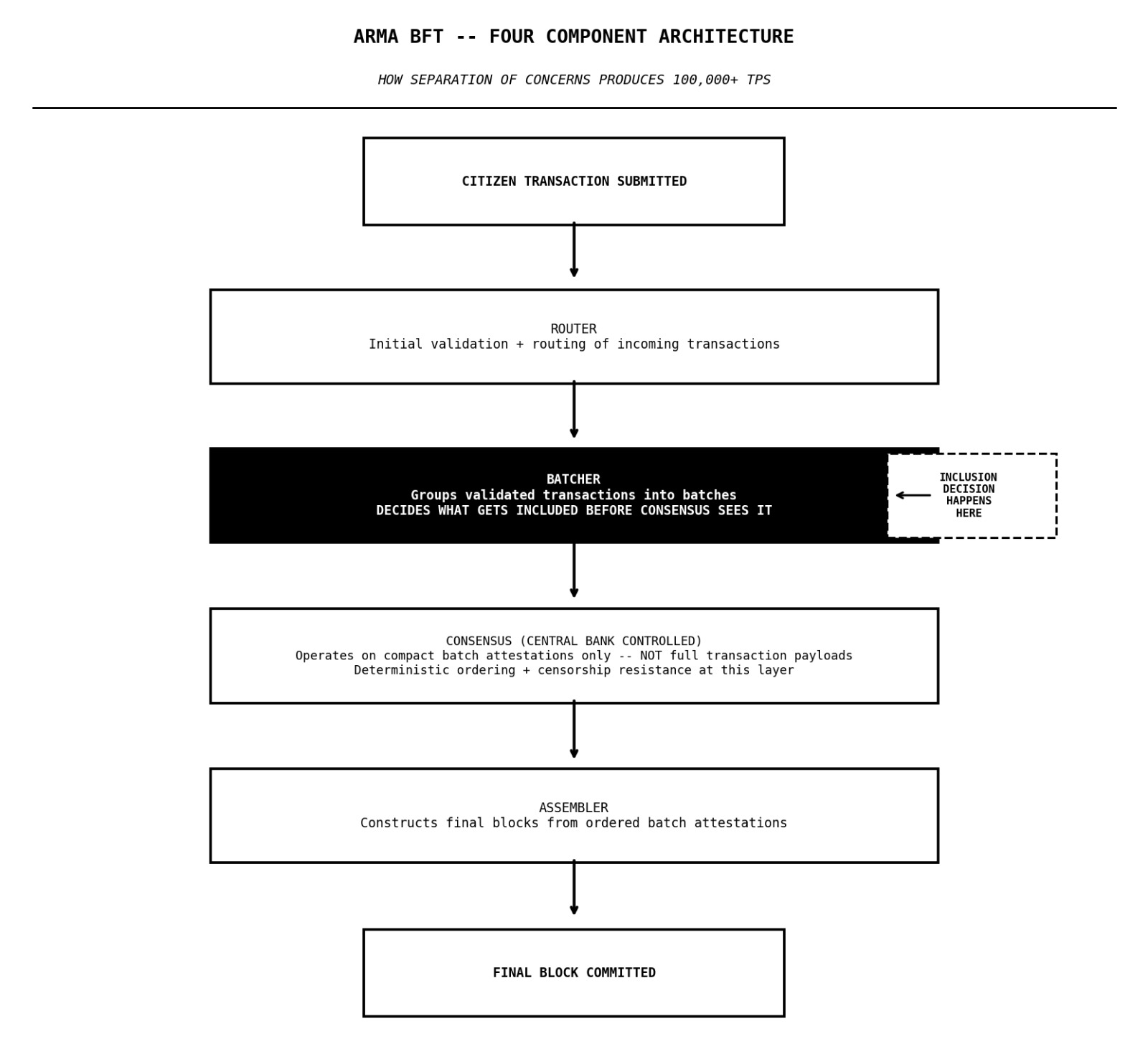
consensus operates on batch attestations. it does not see individual transactions. it sees groups of transactions that the batcher already assembled. which means the decision about which transactions get grouped together, and which transactions get left out of a batch entirely, happens at the batcher before the consensus layer has any visibility.
the whitepaper describes the consensus layer as providing censorship resistance through deterministic ordering. deterministic ordering means that once a batch reaches consensus, the ordering within that batch is guaranteed and tamper-resistant.
but deterministic ordering at the consensus layer says nothing about what happened at the batching layer before the batch was formed. a transaction that never makes it into a batch never reaches consensus
it cannot benefit from the censorship resistance guarantees that consensus provides.
the central bank controls the consensus nodes. the documentation does not specify who controls the batcher nodes, what rules govern batch inclusion decisions, or whether there is any mechanism for a transaction submitter to verify that a submitted transaction was included in a batch rather than silently dropped before consensus ever saw it.
for a private DeFi protocol this would be an acceptable known tradeoff. for sovereign infrastructure processing citizen welfare payments and benefit distributions, the question of what happens to a transaction that the batcher excludes is not a theoretical edge case
it is an operational requirement that the architecture doesnt currently answer.
honestly dont know if the batcher separation is purely a performance optimization with inclusion guarantees that just arent documented at this level or if it creates a censorship surface that sits above the consensus layer where the protocols own resistance guarantees cannot reach?? 🤔
#SignDigitalSovereignInfra @SignOfficial $SIGN
