
The first time I tried to explain crypto privacy to a friend, I realized how strange the whole thing sounds out loud. We call it “private money,” yet anyone can trace your wallet history back years with a few clicks. That tension sits right at the center of where crypto is today, and it’s exactly where something like @MidnightNetwork starts to matter.
Right now, most major chains operate on radical transparency. Ethereum alone processes over a million transactions a day, and every single one leaves a public footprint. That scale tells you something important. Transparency works for verification, but it quietly exposes behavior patterns, balances, and relationships between wallets. For traders, DAOs, even regular users, that creates a kind of soft surveillance layer that wasn’t really intended but is now baked in.
That pressure is pushing privacy back into the conversation, but not in the old way. Early privacy coins focused on hiding everything by default. That approach worked technically but ran into friction. Regulators pushed back, exchanges delisted them, and liquidity dried up. At one point, privacy-focused assets made up less than 1 percent of total crypto market cap, which tells you adoption hit a ceiling.
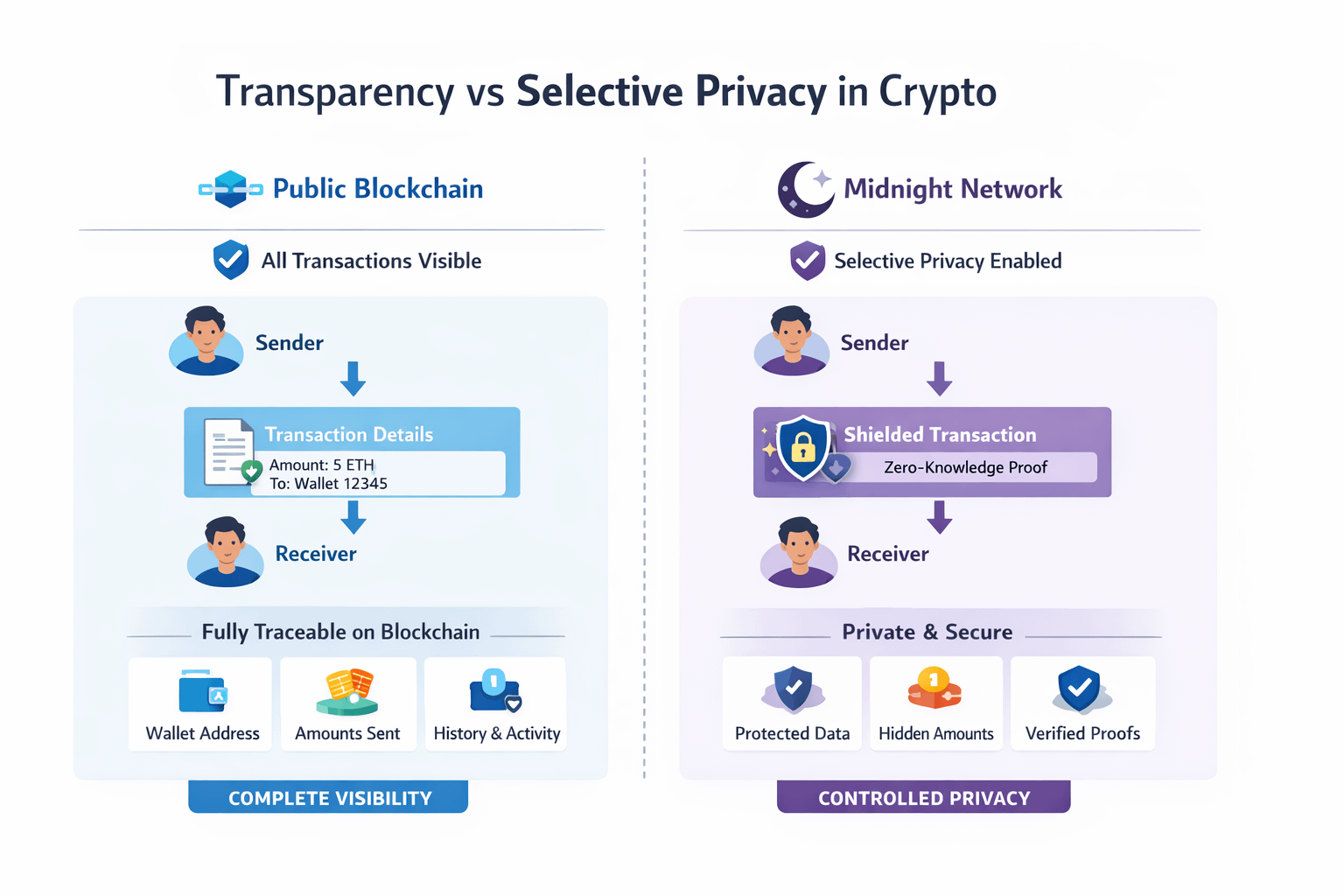
Midnight seems to be taking a different route, and what struck me when I first looked at it is how it treats privacy as something selective rather than absolute. On the surface, it allows transactions or data to be shielded. Underneath, it uses zero-knowledge proofs, which basically let you prove something is true without revealing the underlying data. That might sound abstract, but think of it like showing you passed a background check without handing over your entire history.
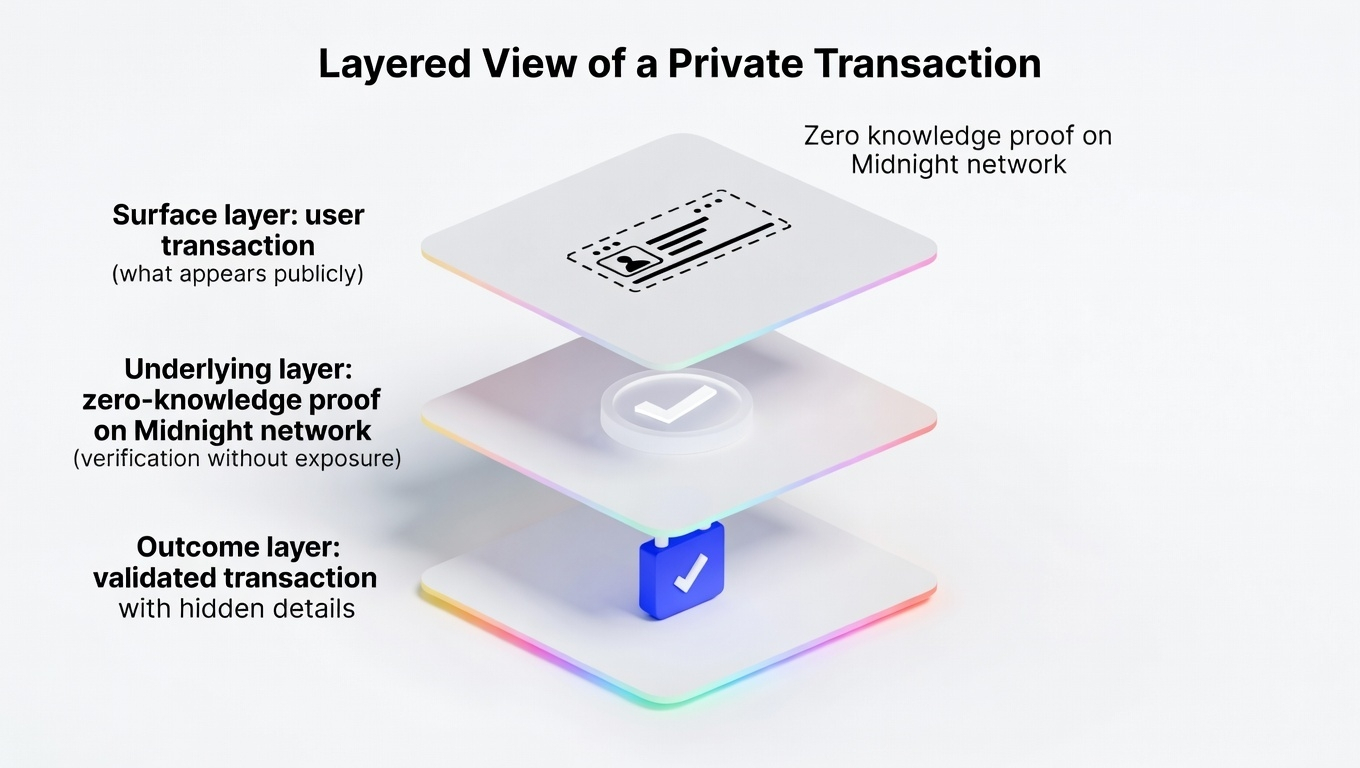
That layering matters. On one level, users get discretion. Underneath, networks still get verifiability. And that combination starts to unlock use cases that weren’t really possible before. Institutions, for example, manage trillions in assets, but they can’t operate if every position and movement is public in real time. Privacy, in that sense, isn’t about hiding wrongdoing. It’s about enabling participation.
Meanwhile, the multi-chain ecosystem is getting more fragmented. There are now over 100 active Layer 1 and Layer 2 networks competing for liquidity and users. Bridges move billions between them each month, but they also introduce risk. We’ve seen over 2 billion dollars lost to bridge exploits in the past couple of years. That number reveals something deeper. Interoperability is necessary, but it’s still fragile.
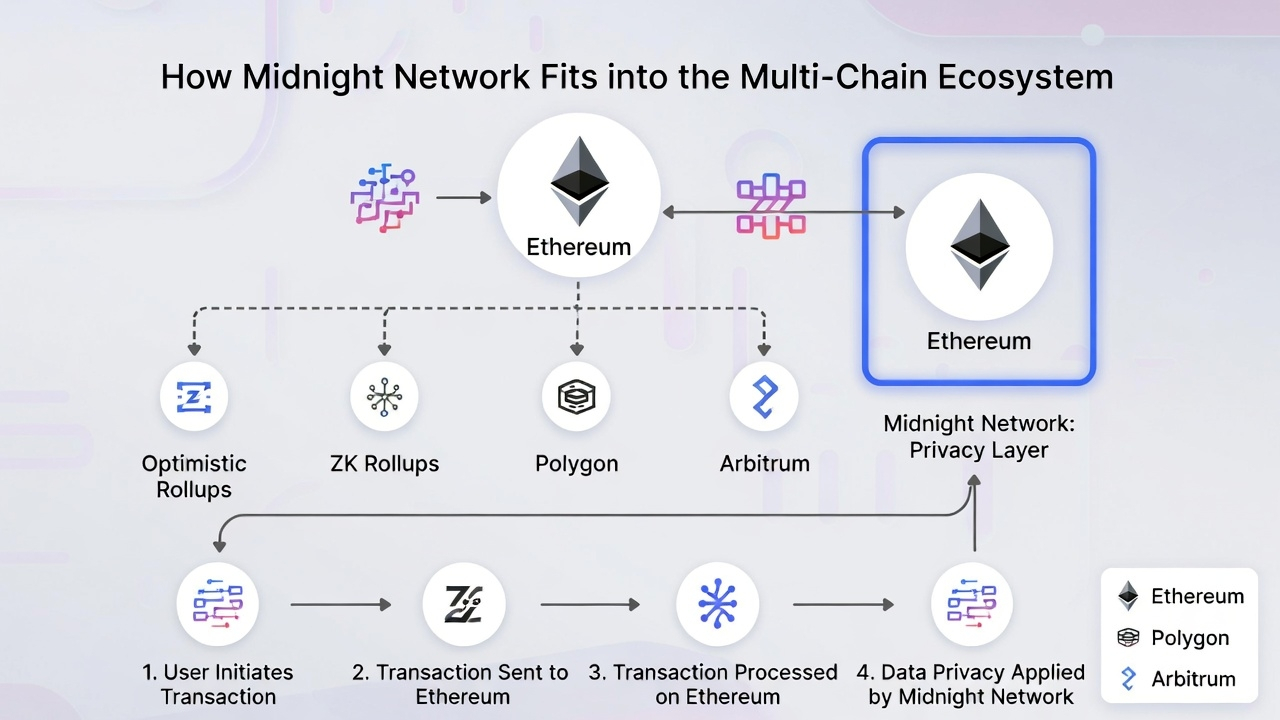
Midnight’s positioning inside this environment is interesting because it’s not trying to replace existing chains. It sits alongside them, offering a privacy layer that can plug into different ecosystems. If this holds, it suggests privacy won’t be isolated to one network but will become a shared service across many.
That momentum creates another effect. As privacy becomes optional and composable, it stops being controversial and starts becoming expected. Developers can choose when to expose data and when to shield it. Users get more control over their digital footprint. And slowly, the narrative shifts from secrecy to permission.
Of course, there are risks. Selective privacy can still be misused. Regulators may struggle to draw clear lines. And technically, zero-knowledge systems are complex, which means bugs or vulnerabilities could have outsized impact. Early signs suggest the tooling is improving, but it remains to be seen how it holds under real-world scale.
Still, when you zoom out, something quieter is happening. Crypto started with transparency as its foundation, almost as a reaction to opaque financial systems. Now it’s layering privacy back in, but in a more measured, intentional way. Not as a default, but as a choice.
And that might be the real shift. Privacy in crypto isn’t disappearing or dominating. It’s becoming contextual, shaped by when you need to be seen and when you don’t.

