
I was standing in line at the local post office, watching the clerk methodically stamp each document before handing it back, when the thought struck: so much of what we do still waits on someone else's approval. It was mundane, almost invisible, yet it left a lingering sense of how permission quietly shapes access. That same subtle discomfort resurfaced hours later as I settled into the CreatorPad task on how the Binance listing had reshaped Midnight network $NIGHT's position in the crypto market.
The moment that truly disturbed me came while I was examining the task's "pre-versus-post listing volume comparison module," a straightforward grid displaying trading spikes alongside rank adjustments across categories. The data lit up with the anticipated surge in activity right after the listing, yet the lines tracking actual engagement with privacy features remained stubbornly unchanged. Staring at that disconnect, it corrected something I had accepted without question: the listing did not elevate Midnight's standing by unleashing its innovative privacy model; it simply reframed the project within the exchange's established framework of visibility and compliance.
This realization challenges one of the most persistent beliefs in crypto—that a Binance listing marks the point where true decentralization takes hold and permissionless innovation finally gets rewarded. We often assume these milestones strip away intermediaries, allowing projects to rise purely on technical merit and user demand. But the task laid bare a different pattern. Midnight network $NIGHT, engineered for rational privacy where users decide precisely what to disclose without external mandates, should have exemplified that freedom. Instead, its repositioning appeared driven less by widespread adoption of selective disclosure tools and more by the liquidity and scrutiny that come bundled with centralized trading. The volume jumped, ranks improved temporarily, but the core promise of privacy without permission seemed to recede behind the need to conform to the platform's rules.
The quiet criticism here is not against the exchange or the project itself, but against the assumption that such events inherently advance the ideals we entered crypto for. Observing the data points in that module made clear that while Midnight's position looked stronger on paper, the behaviors driving it—speculative trades over deliberate privacy use—mirrored patterns in countless other tokens. This uniformity disturbed me because it implied the listing standardized rather than differentiated, folding the unique privacy angle into the general market noise. Extending this beyond the single example, it suggests listings may not dismantle power structures so much as relocate them. What we celebrate as progress toward broader access often carries the same gatekeeping we left traditional finance to escape—only now dressed in faster interfaces and higher volumes. For Midnight, the change in market position highlighted how privacy tech gains eyes through the listing but loses some of its edge when every transaction funnels through verifiable channels.
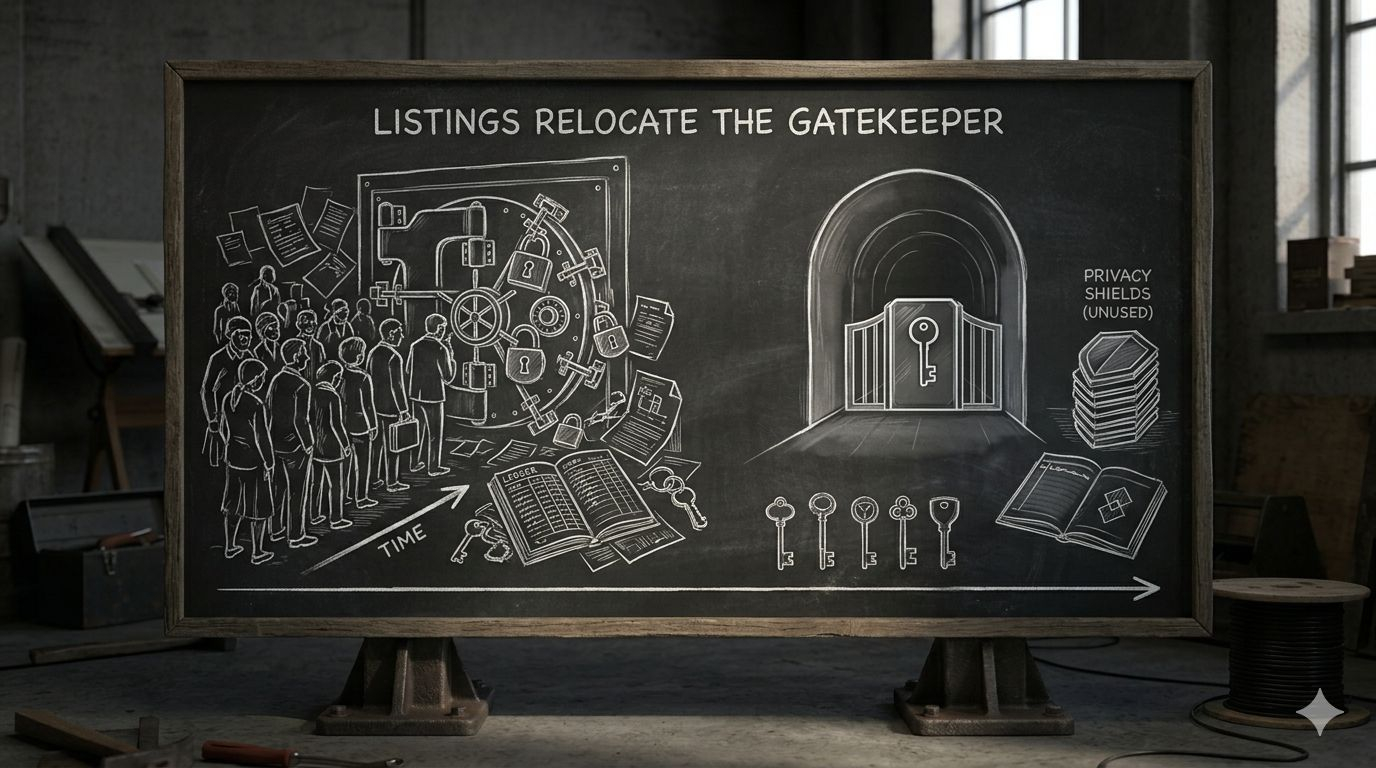
If a project as thoughtfully built as Midnight network $NIGHT sees its influence recalibrated this way, the question that remains is whether the biggest shifts in crypto are ever truly independent—or if they always circle back to one key platform's decision.