
Nos primeiros dias do Web3, todos nós fomos vendidos por uma grande promessa: total transparência, descentralização e propriedade dos dados. Mas, à medida que o ecossistema amadurece, uma realidade mais profunda e frustrante se instalou. Nosso problema não é a falta de dados - é a falta de dados significativos que realmente podemos usar para tomar decisões inteligentes.
A Armadilha dos Sinais "Superficiais"
Neste momento, qualquer endereço de carteira pode mostrar um longo histórico de transações, uma entrada precoce em um mercado específico ou um alto saldo de ativos. No cenário atual, estes são tratados como "provas" de valor. Mas sejamos sinceros: estes são apenas pegadas digitais. Eles nos dizem o que aconteceu, mas não nos dizem nada sobre quem está por trás da transação ou a qualidade de sua contribuição.
Muitos projetos construíram sistemas de recompensas inteiros e modelos de governança com base nesses sinais rasos, tratando um saldo alto como um proxy para confiabilidade. Temos construído sobre areia, fingindo que uma planilha de transações equivale a um roteiro de intenção humana.
Protocolo de Assinatura: Adicionando "Alma" à Máquina
É aqui que o Protocolo de Assinatura entra. Não está tentando ser outro banco de dados; é uma camada de contexto.
A mudança aqui é filosófica. Não se trata mais apenas de saber se uma informação é verdadeira ou falsa em um sentido binário. Trata-se do "Quem, Por quê e Como." Quem emitiu esta afirmação? Sob quais critérios? Para que propósito? Essas podem parecer perguntas secas e técnicas, mas são exatamente onde a maioria das aplicações Web3 atualmente falha.
Redefinindo a Lógica do Produto
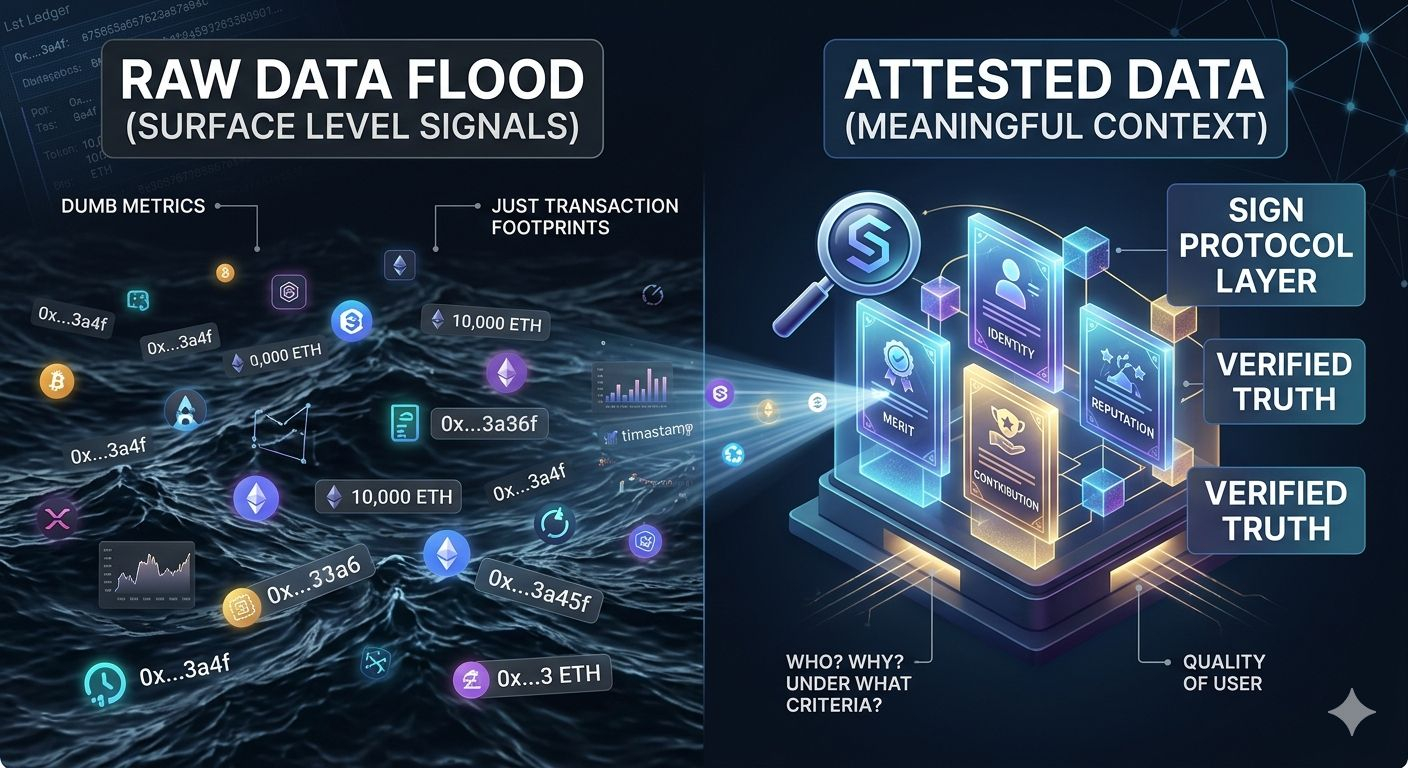
Uma das mudanças mais significativas que este protocolo introduz é como os produtos são realmente construídos. Em vez de depender de métricas "estúpidas"—como quantas vezes um usuário clicou em um botão ou quanto ETH eles possuem—os desenvolvedores podem usar Atestações.
Isso permite um nível cirúrgico de precisão. Projetos podem recompensar contribuintes genuínos com base em marcos verificados em vez de atividades superficiais. Mesmo uma pequena redução na "agricultura de airdrop" ou na interferência de bots usando essas atestações pode ser a diferença entre um ecossistema próspero e uma cidade fantasma.
Reputação Portátil: O Fim de "Recomeçar"
Talvez o elemento mais humano dessa abordagem seja a ideia de reputação portátil.
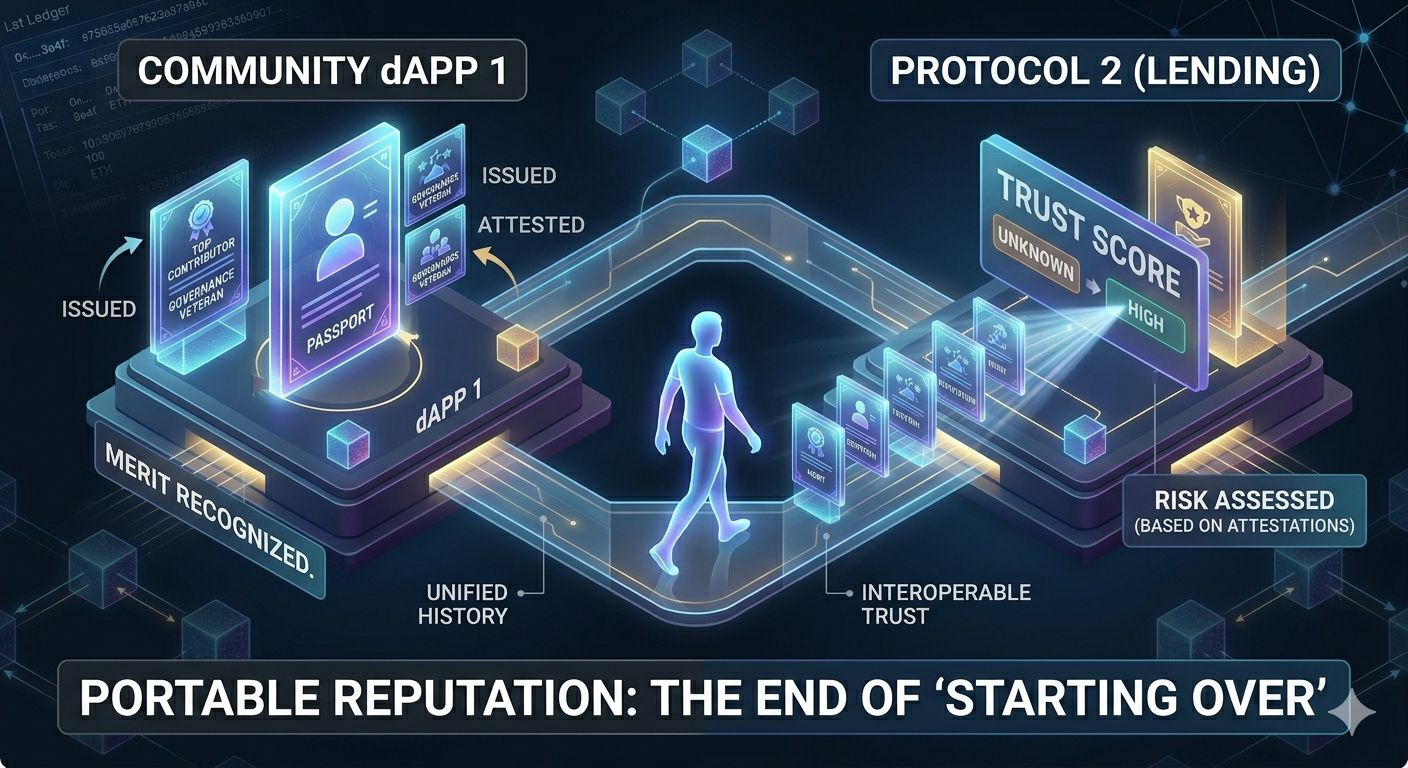
No atual mundo Web3, cada dApp é uma ilha. Você pode passar anos construindo valor e confiança em uma comunidade, mas no momento em que se muda para um novo projeto, você é um estranho novamente. É uma desconexão massiva que mina a própria ideia de uma internet aberta.
Com um sistema como o Protocolo de Assinatura, sua história e conquistas se tornam um "passaporte digital."
Protocolos de empréstimo podem avaliar risco com base em comportamentos passados verificados.
DAOs podem filtrar contas "mercenárias" em busca de recompensas rápidas.
Comunidades podem conceder acesso com base em mérito real e documentado.
Uma Nova Disciplina para Desenvolvedores
Da perspectiva de um construtor, essa abordagem exige um nível de disciplina que foi amplamente evitado até agora. Você não pode mais se esconder atrás de suposições vagas. Você tem que definir: Quem é uma fonte confiável? O que torna um certificado valioso? O que permanece privado e o que se torna público? Estas são perguntas difíceis, mas são a base de qualquer projeto que pretende durar mais do que um ciclo de alta.
A Conclusão
A lição final aqui não é apenas sobre o sucesso de um protocolo. É sobre forçar a indústria a repensar o que "Confiança" realmente significa em um mundo descentralizado.
A confiança não pode ser reduzida a uma linha de código ou a um slogan de marketing sobre "comunidade." Ela deve ser documentada, confirmada e colocada em um contexto claro que outros sistemas possam confiar sem serem enganados.
À medida que o Web3 avança para uma era de utilidade no mundo real, a questão permanece: Quais equipes são corajosas o suficiente para parar de perseguir "métricas de vaidade" e começar a construir sobre "verdade verificada"?
#SignDigitalSovereignInfra $SIGN @SignOfficial
