
Where Midnight Actually Gets It Right
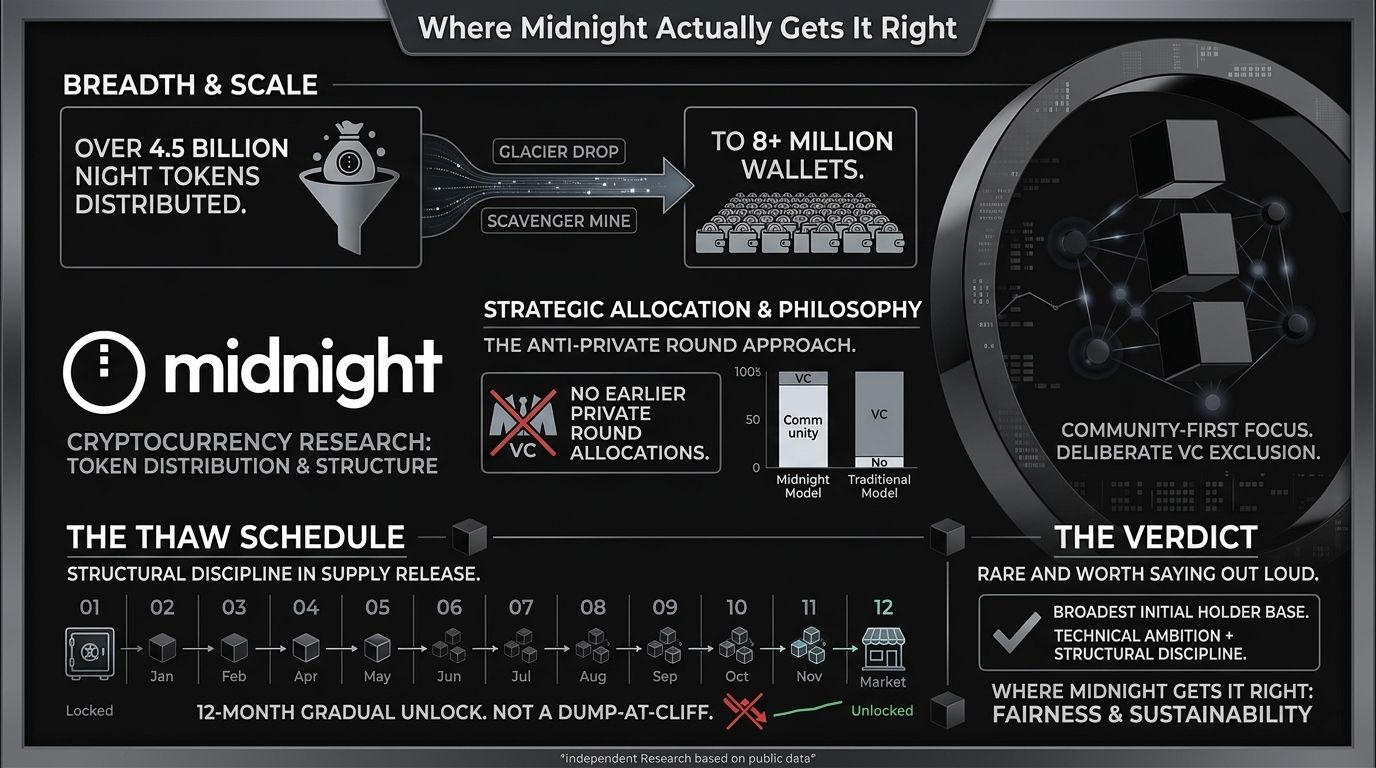
The distribution numbers behind Midnight Network are hard to dismiss honestly. Over 4.5 billion NIGHT tokens spread across more than eight million wallets through the Glacier Drop and Scavenger Mine one of the broadest initial holder bases in recent blockchain history by any reasonable measure. The team deliberately avoided the private round playbook, kept VCs out of the early allocation, and built a thaw schedule designed to release supply gradually across twelve months rather than dumping everything at a single cliff date where the chart breaks instantly. For a project at this stage carrying this level of technical ambition, that kind of structural discipline is genuinely rare and worth saying out loud.
The Problem Hiding Behind The Distribution Headline
But here is what keeps nagging at me when I look past that headline number.
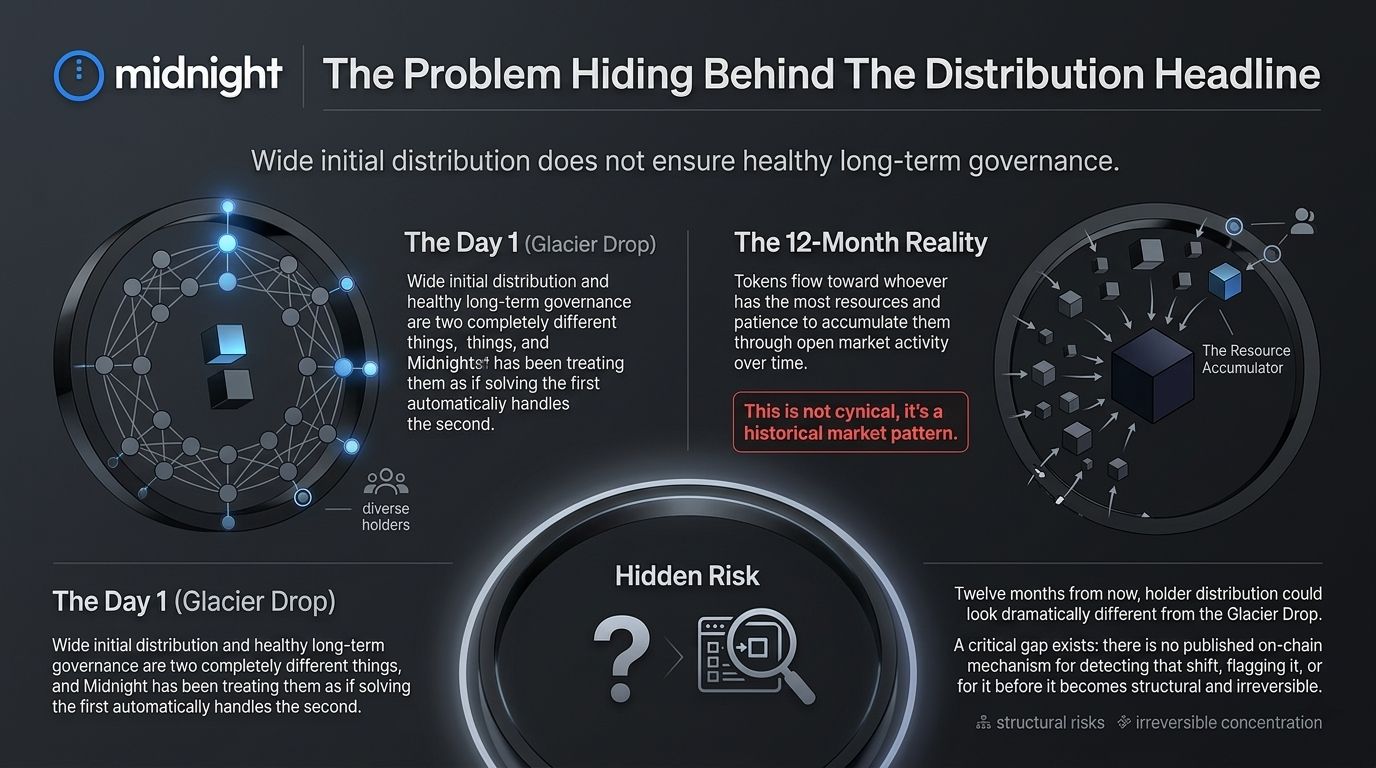
Wide initial distribution and healthy long-term governance are two completely different things, and Midnight has been treating them as if solving the first automatically handles the second. It does not. Tokens flow toward whoever has the most resources and patience to accumulate them through open market activity over time. That is not a cynical observation it is just how every open token market has worked in practice across every project that has tried this before. Twelve months from now the holder distribution could look dramatically different from what the Glacier Drop produced on day one, and there is no published on-chain mechanism for detecting that shift, flagging it, or correcting for it before it becomes structural and irreversible.
What A Real Developer Actually Faces
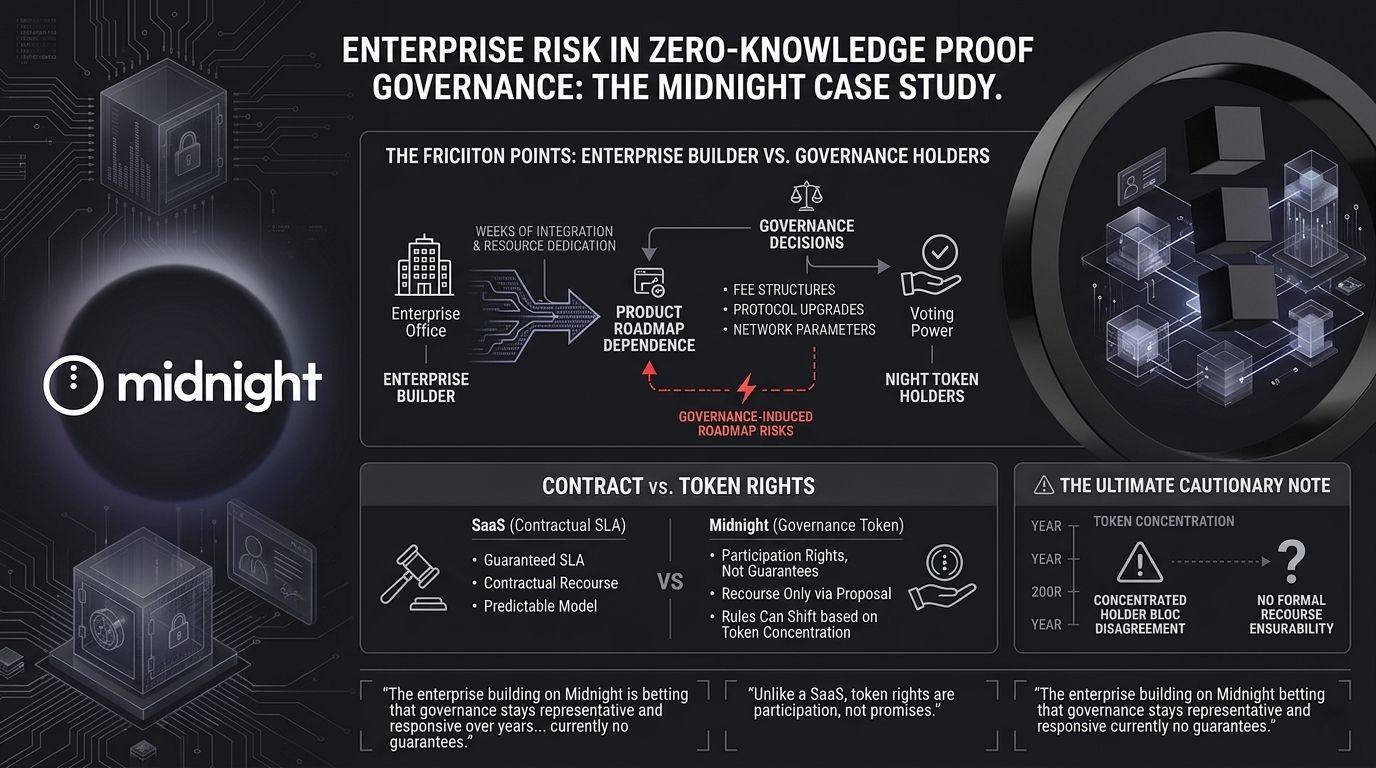
Think about what this means for an enterprise making a serious commitment to build on Midnight's infrastructure. A company decides to integrate the selective disclosure architecture into their identity verification workflow. They dedicate real engineering resources, spend weeks going deep into the documentation, and build out the integration properly. Their entire product roadmap now depends on governance decisions made by NIGHT holders fee structures, protocol upgrades, network parameters. If they need a governance outcome that a concentrated holder bloc disagrees with, they have no real recourse. They built their business on a foundation where the rules can shift and the people shifting them may not share their priorities or their commercial timeline.
This is not hypothetical friction either. It is the exact concern that keeps enterprise legal and procurement teams cautious when evaluating blockchain dependencies at a serious level. Unlike a SaaS provider with a contractual relationship and a documented SLA, governance tokens give participation rights not guarantees. The enterprise building on Midnight is betting that governance stays representative and responsive over years of natural token concentration. Right now there is nothing published that ensures that remains true.
Why BNB Solved This Problem And Midnight Hasn't
This is where looking at how BNB Chain handled the same challenge becomes genuinely instructive.
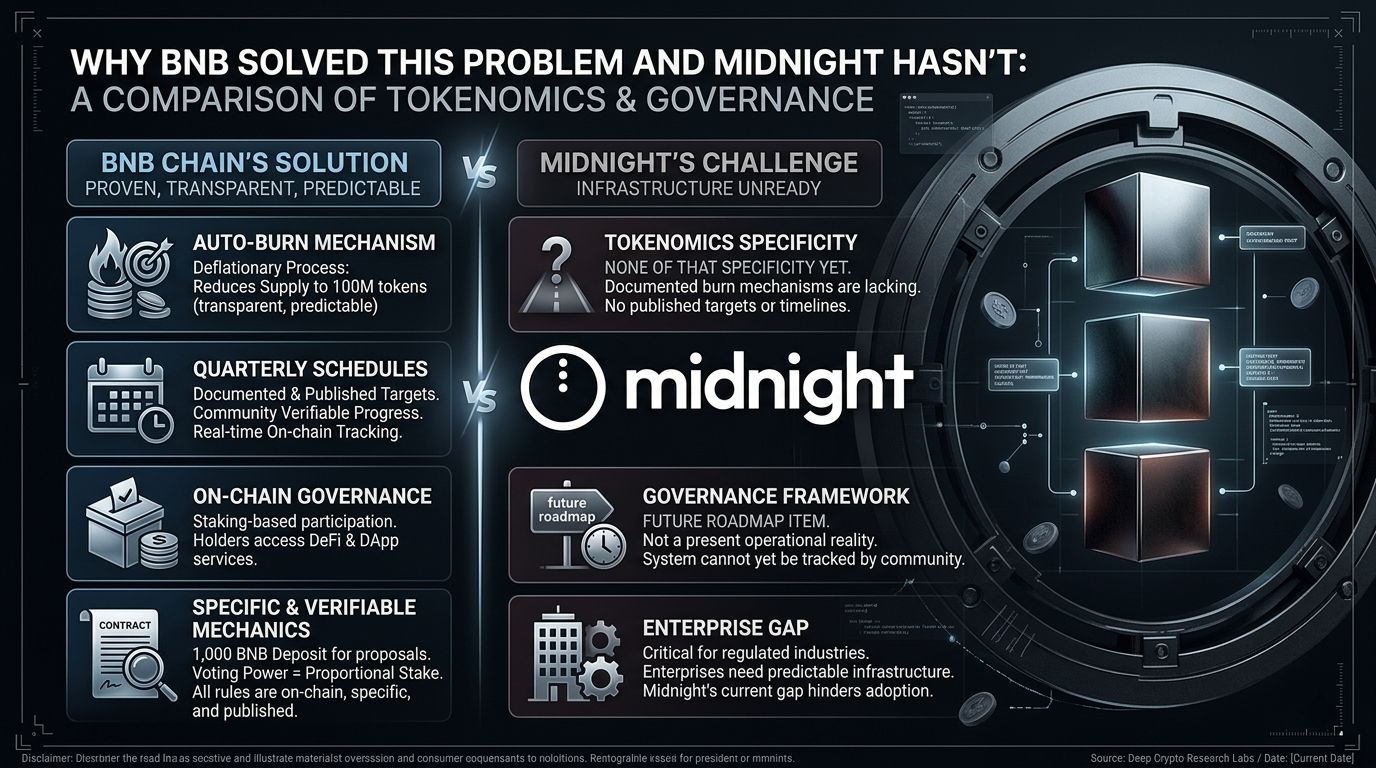
BNB employs an Auto-Burn mechanism specifically designed to reduce its total supply to 100 million tokens a deflationary process that is transparent and completely predictable. BNB's governance operates through staking, with holders participating in decentralized governance and accessing services across the BNB Chain DeFi and DApp landscape.The key difference is that BNB's tokenomics are built around documented, verifiable, publicly trackable mechanisms burns happen on a predictable quarterly schedule, the targets are published, and the community can verify progress in real time without trusting anyone's word for it.
On BNB Chain, governance proposals require a 1,000 BNB deposit to submit, voting power is defined proportionate to BNB stake, and the entire process runs through documented on-chain mechanics. The rules are specific, the thresholds are published, and anyone can track whether the system is working as designed. That predictability is exactly what enterprise procurement teams need when they're evaluating infrastructure they plan to build on for years.
Midnight has none of that specificity yet. The governance framework is stated as a future roadmap item rather than a present operational reality. For a project positioning itself as enterprise infrastructure for regulated industries, that gap matters more than it would for a consumer-facing DeFi protocol.
Where JCT Fits Into This Picture
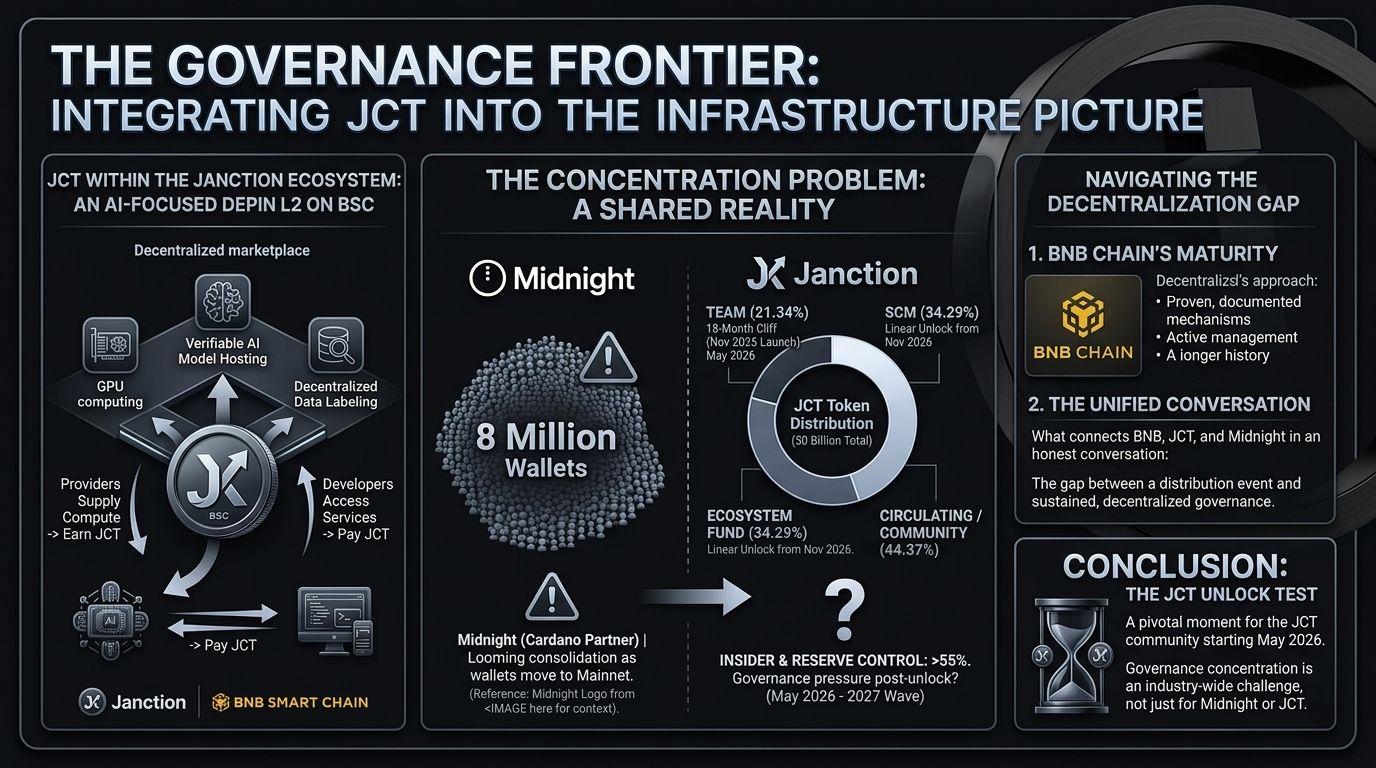
The governance concentration problem is not unique to Midnight and how other infrastructure projects are handling it reveals just how much work still needs to be done across the space. Janction, the AI-focused DePIN Layer 2 built on BNB Smart Chain, integrates GPU computing, verifiable AI model hosting, and decentralized data labeling into a marketplace where providers earn JCT by supplying compute and developers pay JCT to access it. The team holds 21.34% of the total 50 billion JCT supply behind an 18-month cliff from the November 2025 launch, with the first significant unlock arriving in May 2026. The ecosystem fund holds another 34.29%, beginning to unlock linearly from November 2026. That is over 55% of total supply controlled by insiders and reserves, releasing in waves through 2027 and the governance implications of that concentration when those tokens arrive into open market circulation is a question the JCT community will be asking very loudly starting this May.
What connects Midnight, $BNB , and $JCT in one honest conversation is this: every infrastructure project eventually confronts the gap between a distribution event that looks decentralized and governance that actually stays that way under real economic pressure over time. BNB has navigated this longer than anyone and built published mechanisms to manage it. JCT is approaching its first major unlock test with concentration questions still open. Midnight is carrying eight million wallets into a live mainnet without a documented on-chain answer to what happens when those tokens naturally consolidate through market activity.
The Question The Team Needs To Answer
The Glacier Drop solved the initial distribution problem beautifully genuinely, it did. The governance concentration risk is sitting right behind it, largely unaddressed, getting far less attention than it deserves as the network moves into live production with real enterprise conversations happening in the background.
So here is what I would put directly to the Midnight Foundation: what specific on-chain mechanisms are you building to detect and respond to governance concentration as it shifts through natural market activity and when does the community get to see them in production, not just in a roadmap document?