I’ve been thinking about Midnight in a pretty unstructured way, the kind where you read something, step away, and it just lingers. Not because it’s loud or impressive on the surface, but because something about it doesn’t feel like the usual pitch. Most blockchain ideas I come across try to overwhelm you with what they will change. This one felt different. It felt like it was asking a smaller, more specific questionwhat if usefulness didn’t always come at the cost of privacy?
The zero-knowledge part is something I’ve heard about before, but here it landed differently for me. The idea that you can prove something without exposing everything behind it sounds simple when you say it like that, but it changes how I picture trust in a system. I kept thinking about how much of today’s systems rely on over-sharing just to function. Midnight seems to be nudging in the opposite direction, and I’m not sure yet if that’s practical or just ideal.
There’s this phrase they use“rational privacy” and I found myself circling back to it more than anything else. It doesn’t sound dramatic. It sounds… balanced. Like privacy isn’t about hiding everything, but about choosing what actually needs to be seen. I like that idea, but I also wonder how easy it is to maintain that balance once real users and real constraints come into play. Things tend to get messy pretty quickly outside of controlled environments.
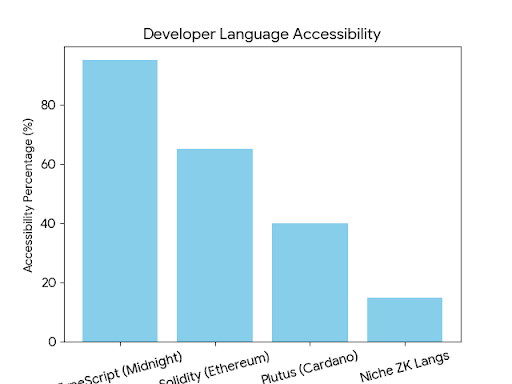
On the developer side, I noticed they’re trying to make things feel familiar, using tools and languages people already understand. That gave me a bit of confidence, at least on the surface. It suggests they’re thinking about adoption, not just architecture. But I’ve also seen how systems that look simple upfront can become complicated the moment you try to build something slightly unconventional. I’d be curious to see where the friction shows up.
The whole two-token setup also made me pause for a bit. Splitting things into a public side and a private, shielded side makes sense logically. It almost feels like separating identity from behavior. But then I think about actual users, and I’m not sure how intuitive that distinction will feel in practice. Sometimes what makes sense structurally doesn’t always translate into something people naturally understand.
What I keep coming back to, though, is that I haven’t really seen this under pressure yet. It’s one thing for an idea to feel clean and well thought out, and another for it to hold up when people start using it in unpredictable ways. I’d want to see how it handles edge cases, mistakes, and the kind of everyday usage that doesn’t follow ideal paths. That’s usually where things either click or fall apart.
Right now, I don’t feel strongly in either direction. It’s more like a quiet curiosity. Midnight doesn’t feel like it’s trying too hard to convince anyone, and maybe that’s part of why I’m still thinking about it. I’m just watching it, noticing the details, and waiting to see what actually takes shape beyond the idea.