

I keep coming back to Midnight because it is trying to solve a problem that many people can feel even if they would never put it into technical language. My basic question is simple because I want to know whether a network can confirm that something is true without forcing me to hand over all the details behind it. Midnight’s answer is that private data should stay private while the network still verifies the result. In its own documentation the project describes this as computing on private data locally and then sending a proof of correctness instead of sending the raw inputs themselves. Validators check the proof rather than the secret and that may sound abstract at first though the idea feels very human to me because it comes down to proving what matters while keeping the rest to yourself.
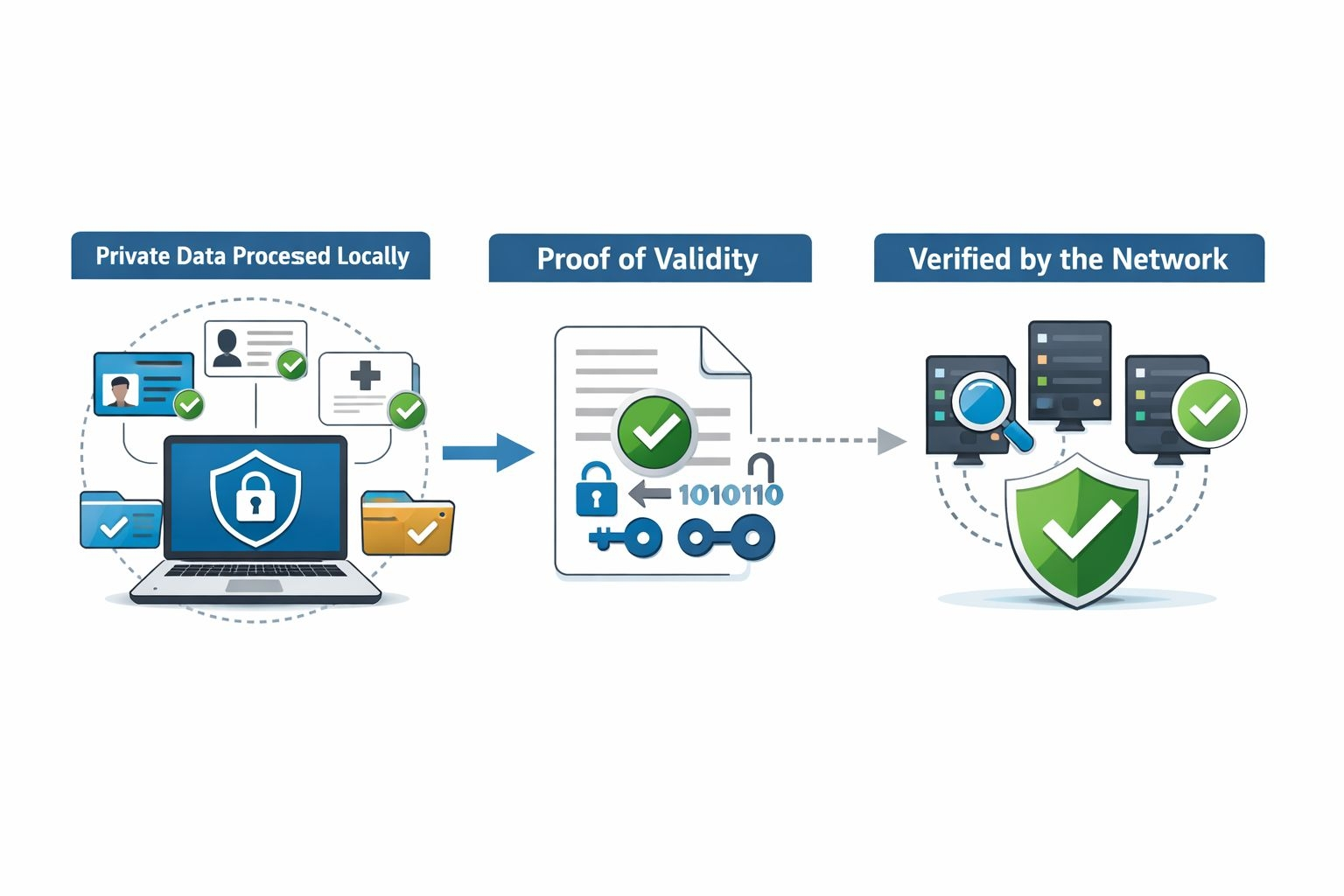
What makes this more interesting is that Midnight is not treating privacy as an all or nothing wall. Its docs and developer materials keep returning to the same principle that disclosure should be deliberate rather than accidental. In Compact which is the language used for Midnight contracts a developer has to explicitly mark when private data is allowed to cross into public view. That matters because many systems do the opposite by gathering everything and exposing more than they need to before asking users to trust that the excess visibility will not be abused later. Midnight is pushing back against the old habit by treating privacy as the normal state and disclosure as something that should happen carefully and on purpose. I find that useful because it gives privacy a real shape and makes it feel like a working principle rather than just a broad idea.
I used to think this kind of thing was mainly about hiding payments but the more I looked at Midnight’s examples the more the real theme seemed to be hidden data with verifiable outcomes. One example in the docs is a bulletin board app where someone can prove they are the original poster without revealing their identity to the network. Other examples on the project’s site point to age checks identity attributes compliance reporting supplier evaluation health data and even private voting. The pattern stays the same throughout because the network does not need the whole backstory and only needs enough proof to enforce the rule. That is a different ambition from older privacy systems which often focused on concealment first and practical business logic second. Midnight is clearly aiming at situations where people need confidentiality and accountability at the same time.
That helps explain why this angle is getting more attention now than it did five years ago. Back then a lot of blockchain thinking treated radical transparency as a virtue in itself and now the limits of that view are much harder to ignore. If businesses institutions identity systems and ordinary people are going to use shared digital infrastructure then it is hard to pretend that every balance credential contract condition or behavioral trace belongs on full public display forever. Midnight’s recent materials lean into that shift. Its own survey language says that a large volume of web3 activity still sits on transparent rails while the network’s current pitch is built around data protection selective disclosure and compliance ready use cases. I do not take any project’s framing as gospel though I do think it reflects a broader change in what people now expect from online systems.
It also matters that Midnight has moved from concept talk into a more concrete phase. The February 25 2026 network update suggests that Midnight was moving out of the concept stage with mainnet planned for late March 2026 and the roadmap turning toward production. Around the same time the developer docs introduced a Preview environment along with updated SDKs newer compiler versions and migration guidance for builders moving off earlier test setups. There is also a public simulation called Midnight City that launched in late February and uses AI agents to create a busy synthetic economy so people can see how privacy features behave under heavier activity. I would not confuse a simulation with proof of long term success but it still shows that the conversation has moved beyond white papers and into visible testing.
What surprises me is that the strongest part of the Midnight idea is not really secrecy but restraint. It is the claim that a system can reveal less while still functioning well enough to earn trust. Whether Midnight fully delivers on that is still an open question because real world use is the only serious test. Privacy networks often look elegant before they run into scale usability governance or regulatory pressure. Still I think Midnight is getting attention because it is trying to meet that pressure directly instead of pretending it does not exist. Hidden data with verifiable results is a modest phrase yet it points to something important because in a noisy digital world the most credible thing a system can do may be to show its work without exposing your life.
@MidnightNetwork #Night #night $NIGHT
