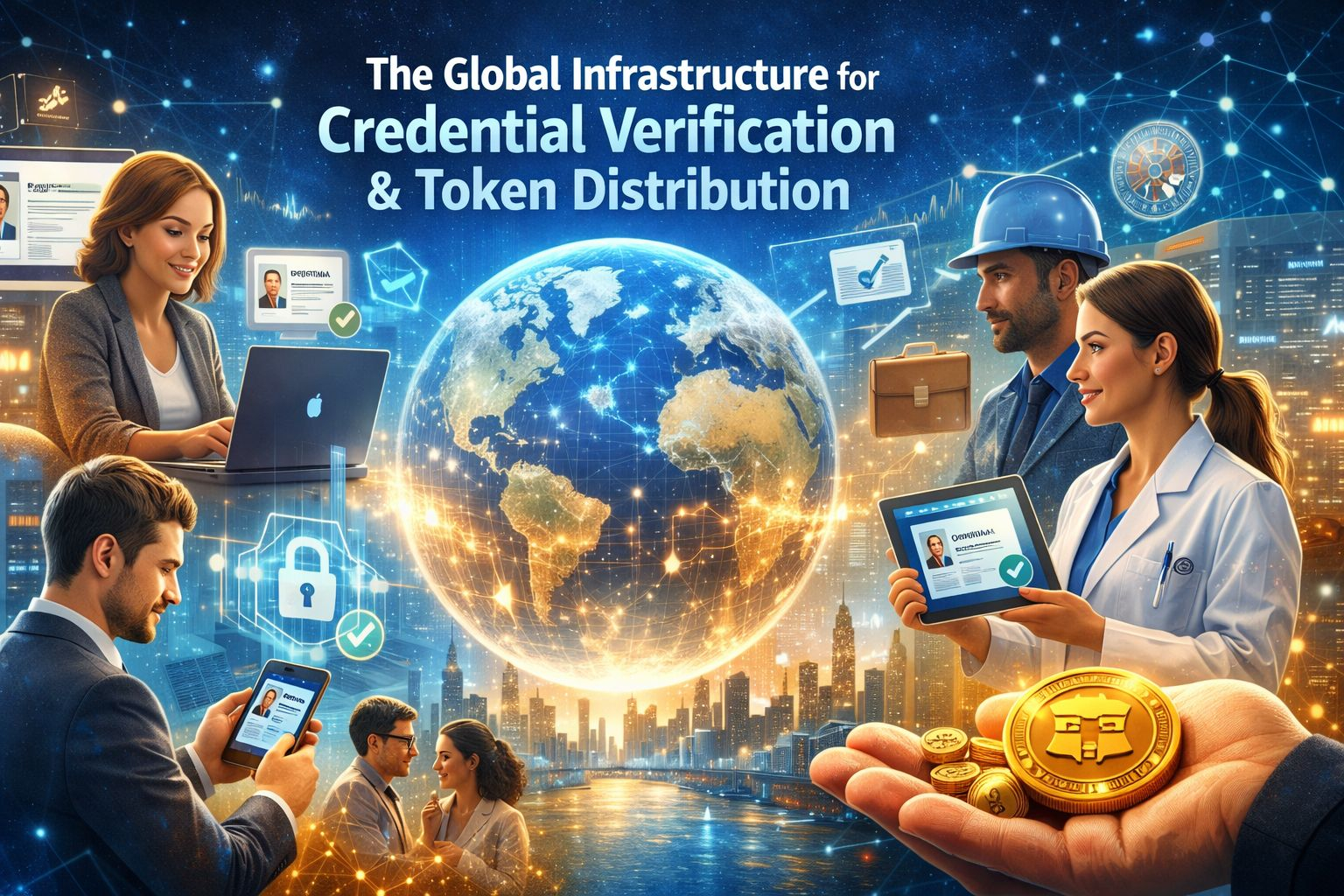
Our world is rapidly becoming digital, and with that comes a growing question: how can we prove who we are, what we know, and what we own in a secure and trustworthy way? Traditional systems are often slow, expensive, and prone to fraud. That’s why the Global Infrastructure for Credential Verification and Token Distribution has been created—to provide individuals and organizations with a reliable, transparent system to issue, verify, and exchange credentials and digital assets.
At its core, this infrastructure is built on a simple idea: trust and reliability. Whether someone is applying for a job, completing an online course, participating in a community, or earning digital rewards, the ability to verify credentials quickly and accurately is essential. Without trust, time is wasted, organizations face setbacks, and digital systems struggle to function.
This infrastructure ensures that credentials—like educational certificates, professional licenses, or work histories—can be issued wherever they are created and verified wherever they are needed. Individuals retain ownership and control of their credentials instead of having to request verification from a third party every time.
Token distribution is a key part of the system. Tokens are not just digital assets; they encourage participation, collaboration, and engagement. When distributed fairly and transparently, participants feel empowered and valued. This creates a positive cycle: more participation leads to better verification, which strengthens trust and system health.
The importance of this system cannot be overstated. In today’s digital economy, friction still exists. Students spend hours chasing transcripts, organizations receive fraudulent documents, and volunteers struggle to prove their contributions. A global verification system reduces these barriers, cuts costs, and instills confidence.
Trust is the foundation of society. We trust a doctor’s license because an institution verified it. We trust a university diploma because the institution is credible. This infrastructure extends that trust to the digital world, making verification simple, transparent, and reliable.
Its success depends on collaboration. Governments, universities, companies, and individuals all play a role. With common standards and interoperable protocols, credentials become meaningful and trusted anywhere. Imagine a student graduating in one country and having their qualifications instantly accepted in another, or a professional changing careers without starting verification from scratch. That is the promise of this global infrastructure.
Tokens are more than rewards—they represent participation and ownership. Contributors who help build the system, validators who ensure accuracy, and users who engage with services all earn tokens. Every transaction is transparent and auditable, maintaining fairness and accountability.
Tokens create real value. They acknowledge actions, encourage engagement, and give people a sense of shared purpose. When communities can reward participation transparently, people contribute more, trust more, and the ecosystem strengthens itself over time.
Humans have always sought ways to prove identity and achievements. From paper seals to digital signatures, every step has aimed to make verification easier and more trustworthy. This global infrastructure is the next step, giving individuals control over their credentials while allowing organizations to verify with confidence. It reduces barriers, increases opportunities, and strengthens digital society.
In conclusion, this infrastructure is more than technology—it’s a new way to interact in a global digital economy. Secure verification and fair token distribution ensure that individuals own their achievements, institutions can verify with confidence, and communities grow together. It is a humanized, trustworthy approach to connectivity and value in the digital age